




Nearly 97% of B2B marketers say they have a content strategy, yet many still struggle to prove that content leads to pipeline. That gap is widening for a specific reason: buyers no longer discover vendors the way they did even two years ago.
A growing share of software evaluation now starts with a question typed into ChatGPT, Gemini, Claude, Copilot, or Perplexity rather than a search bar. Buyers ask these tools to explain a problem, shortlist vendors, or compare approaches before a single sales conversation happens. B2B content marketing in 2026 has to work in both worlds at once: it needs to earn trust with humans doing traditional research, and it needs to be structured well enough that AI-powered discovery tools can understand it, cite it, and recommend the company behind it. If you're mapping how this shift is impacting planning, AI Search is changing B2B marketing strategy in 2026 breaks down what’s different.
This guide walks through what B2B content marketing actually means today, how it starts with customer intelligence rather than guesswork, why authority now matters more than volume, and how teams can build content that supports every stage of buyer research, including the stages buyers complete before they ever talk to sales.
What Is B2B Content Marketing in Plain Terms?
B2B content marketing is the practice of creating and distributing content that helps other businesses understand a problem, evaluate solutions, and build the internal case to buy. Instead of leading with a pitch, it leads with education: articles, guides, comparisons, and proof points that help a buying committee make a confident decision. (For a fuller definition and where it’s headed, see B2B content marketing in 2026: what it is, how it works, and why it drives trust and revenue.)
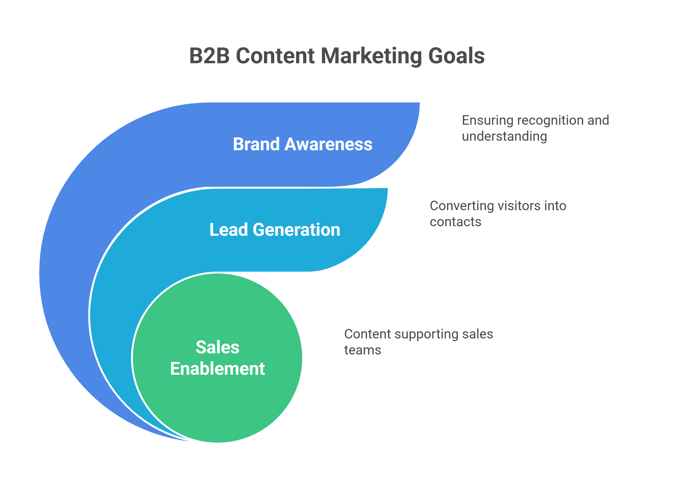
The core goals haven't changed much on the surface:
- Brand awareness – making sure the right accounts recognize your name and what you stand for.
- Lead generation – converting engaged readers into contacts, demo requests, or trial sign-ups.
- Sales enablement – giving revenue teams material that answers objections and moves deals forward.
What has changed is where those goals get achieved. Buyers now form early opinions about vendors inside AI-generated answers, well before they land on a website. That means content has to be written for buyer trust first, and structured so it's easy for both humans and AI-powered research tools to find, understand, and reference accurately.
Content Marketing Starts with Customer Intelligence
Most content programs still start the same way: pick a topic, do some keyword research, write an article. That approach produces content that reads fine but rarely answers the specific questions a buyer is actually asking, in the exact language they use to ask it.
Stronger programs start somewhere else entirely. They start with customer signals: the raw, unfiltered evidence of how buyers describe their problems, evaluate options, and make decisions. Those signals live in places most content teams underuse:
- Customer interviews – direct conversations about what almost stopped a deal, and what convinced a buyer to move forward.
- Sales conversations – call notes and objections that reveal where buyers get stuck.
- CRM data – patterns in why deals stall, slip, or close faster than expected.
- Implementation challenges – the practical issues customers run into after signing, which reveal what prospects will eventually ask too.
- Support tickets – recurring confusion points that make excellent educational content topics.
- Review sites – unprompted language buyers use to describe what worked and what didn't.
- Buyer questions – the actual phrasing prospects use in discovery calls, demos, and RFPs.
Turning these signals into content follows a fairly simple sequence:
Customer Signals → Customer Intelligence → Content Strategy → Content Production → Buyer Education
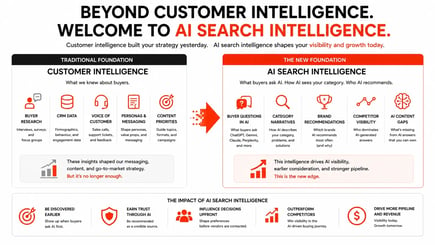
This matters because content built around customer intelligence answers real questions instead of assumed ones. It uses the same terminology buyers already use, which makes it easier for a buyer to recognize their own situation in your writing, and easier for AI-powered research tools to match your content to a relevant question. This approach is also why B2B leaders are combining customer intelligence with AI search intelligence to drive relevance and trust.
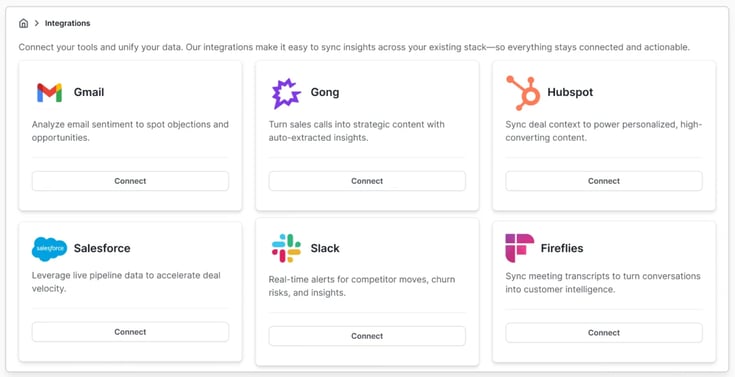
Product marketing teams are often already sitting on most of this intelligence without a system to organize it. Sales calls get recorded and never reviewed for content ideas. Support tickets pile up without being mined for topics. Reviews get read once and forgotten. Platforms built for customer insights exist specifically to close that gap, pulling recurring buyer language and pain points into a usable content backlog rather than leaving it scattered across departments.
Understanding the audience also means going beyond job titles. A CMO, a product marketing lead, and an IT buyer on the same deal will read completely different content, at different levels of technical depth, looking for different proof. Mapping content to these roles, rather than to generic personas, is what separates content that gets shared internally by a champion from content that gets ignored.
This is also where voice of the customer work earns its place in a content strategy. Buyer language rarely matches internal product terminology. Customers describe outcomes, not features. Building content around how buyers actually talk about a problem, instead of how a product team talks about a solution, consistently produces material that resonates faster and gets referenced more often, both by human readers and by AI-generated answers summarizing a category.
AI Search Is Changing How Content Gets Discovered

Traditional discovery for B2B content followed a fairly linear path:
Search Engine → Website → Lead
A buyer typed a question, clicked a result, read a page, and (hopefully) filled out a form. Every part of a content program, from topic selection to page structure, was built around that path.
A parallel path now exists alongside it:
AI Search → Educational Content → Website → Demo
In this path, a buyer asks an AI tool something like "what should I look for in a B2B content platform" or "how does company X compare to company Y." The tool synthesizes an answer from content it considers credible, structured, and relevant. If your content is the source behind that answer, the buyer arrives already primed to trust you. If it isn't, a competitor's content fills that role instead, and the buyer may never see your website at all. For a deeper look at how teams capture and use these signals, see AI Search Intelligence: how B2B teams turn AI answer signals into pipeline impact.
A few things explain why some content earns that role and other content doesn't:
- Educational depth – content that actually explains a concept, rather than teasing it and gating the useful part, is easier for AI-powered tools to summarize accurately.
- Demonstrated expertise – firsthand detail, specific numbers, and named examples read as more credible than generic overviews.
- Structured answers – content organized around clear questions and direct answers is easier to extract and cite than content buried in narrative prose.
- Comparison content – buyers evaluating options frequently ask AI tools to compare vendors or approaches directly, which makes honest, well-structured comparison content one of the highest-value formats a team can produce.
This doesn't replace the fundamentals of good content. It raises the bar for what "good" means. Content that used to be acceptable because it ranked reasonably well may no longer get surfaced in an AI-generated answer if it's thin, vague, or duplicative of what ten other vendors already published. Teams focused on AI Search visibility are finding that the content earning citations is almost always the content that would have been genuinely useful to a human reader anyway. If you want a more tactical view on tool selection and use cases, AI in B2B marketing: strategy, tools, use cases & AI search in 2026 is a good companion.
Shift From Content Volume to Content Authority
For years, the operating assumption in B2B content was simple: publish more, and some of it will work. That logic is breaking down. Buyers, and increasingly AI-powered research tools, can tell the difference between content written to fill a calendar and content written by someone who actually understands the problem.
The old strategy: publish more. The modern strategy: publish fewer pieces that thoroughly answer real buyer questions, backed by evidence a competitor can't easily replicate.
Authority tends to come from a specific set of ingredients:
- Firsthand expertise – written by or with people who have actually solved the problem being described.
- Supporting evidence – data, benchmarks, and named examples instead of vague claims. If you need fresh benchmarks to back up decision-stage content, B2B content marketing statistics (2026) compiles 47+ data points on buyer behavior and AI-driven discovery.
- Concrete examples – real scenarios that show how a recommendation plays out in practice.
- Documentation-level accuracy – technical claims that are correct enough to hold up under scrutiny from a knowledgeable reader.
- Educational resources – guides and explainers that teach a concept fully rather than partially, with the product mentioned as one part of the answer, not the whole answer.
Community discussions among content leaders increasingly echo this shift: a smaller number of deeply researched, well-supported assets consistently outperform a high-volume publishing calendar built around loosely related keywords. This matters even more once AI Search visibility enters the picture, since AI-powered tools tend to favor sources that demonstrate depth and consistency over sources that simply publish often.
Content Marketing Supports Every Stage of Buyer Research
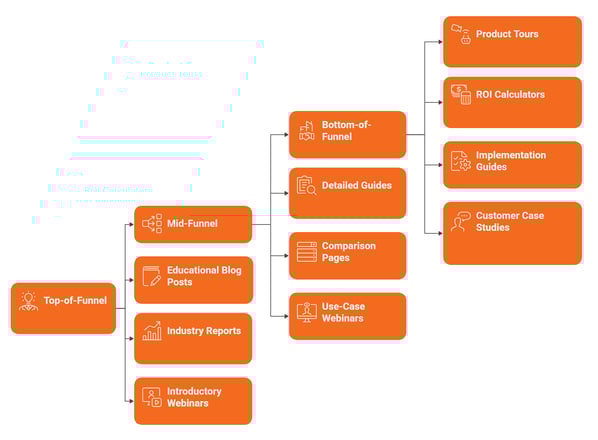
The classic top-of-funnel, middle-of-funnel, bottom-of-funnel model still describes a real pattern, but it flattens what's actually a longer, messier sequence of buyer research. A more accurate picture looks like this:
Research → Problem Definition → Vendor Evaluation → Internal Consensus → Purchase → Expansion → Advocacy
Each stage calls for a different kind of content:
- Research – buyers are still naming their problem. Educational articles, industry data, and explainer content help them understand what's happening and what's possible.
- Problem Definition – buyers narrow down what they're actually solving for. Frameworks, diagnostic guides, and checklists help them scope the problem clearly.
- Vendor Evaluation – buyers compare approaches and vendors directly. Comparison pages, detailed guides, and use-case content earn a spot on the shortlist.
- Internal Consensus – a champion needs to convince other stakeholders. ROI frameworks, technical FAQs, and security or compliance documentation reduce internal friction.
- Purchase – decision-makers want proof it will work. Case studies, demos, and implementation guides de-risk the final step.
- Expansion – customers already onboard need help getting more value. Adoption guides and best-practice content support renewal and upsell.
- Advocacy – happy customers become a growth channel. Success stories and review programs turn results into new pipeline.
The insight worth internalizing here: a large share of this journey now happens before a buyer talks to a human at all, often including parts of vendor evaluation and internal consensus-building. That's exactly why B2B content production needs to account for both traditional research behavior and AI-assisted research behavior at every stage, not just at the top of the journey. If you’re building this into an actual 2026 plan, B2B marketing strategies in 2026: the only playbook you need to drive real pipeline lays out how content fits into demand gen and revenue.
AI Search and SEO Should Work Together
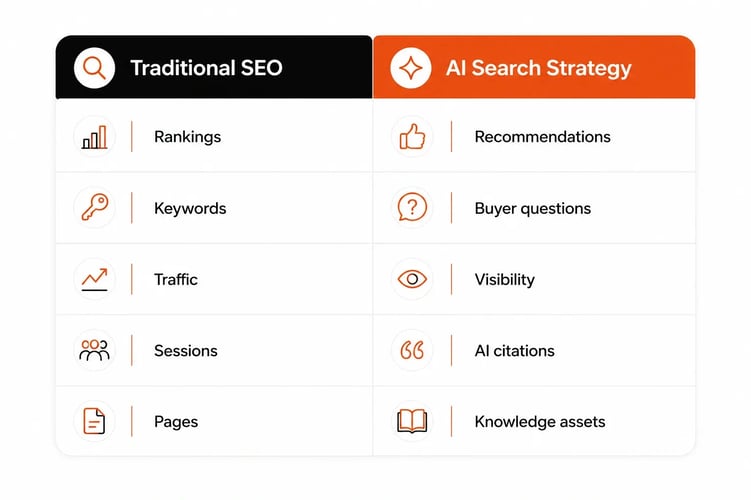
SEO remains essential. Search engines still send meaningful traffic, and strong on-page fundamentals, clear structure, useful internal links, and accurate metadata still matter for getting found in a traditional search result.
But AI-powered discovery is increasingly shaping the earlier, quieter part of software evaluation. Buyers ask AI tools to explain categories, shortlist vendors, and summarize comparisons before they ever run a traditional search. That shifts the practical question content teams need to answer: is this page written well enough, and structured clearly enough, that both a search engine and an AI tool can understand what it's actually saying? For a practical framework, see how to align content production with SEO and AI search visibility.
In practice, this means optimizing the same piece of content for three audiences at once:
- Search engines, which reward clear structure, relevant keywords, and useful, well-organized pages.
- AI-generated answers, which reward factual clarity, direct answers to specific questions, and content that can be quoted or summarized without losing accuracy.
- Human readers, who reward genuine usefulness, honest comparisons, and content that respects their time.
These goals overlap far more than most teams assume. Content that's genuinely well-organized and accurate tends to perform well across all three. The teams that struggle are usually the ones who wrote for search engines alone and never considered whether the content would hold up as a standalone answer inside an AI-generated summary.
What Makes Content AI-Ready?
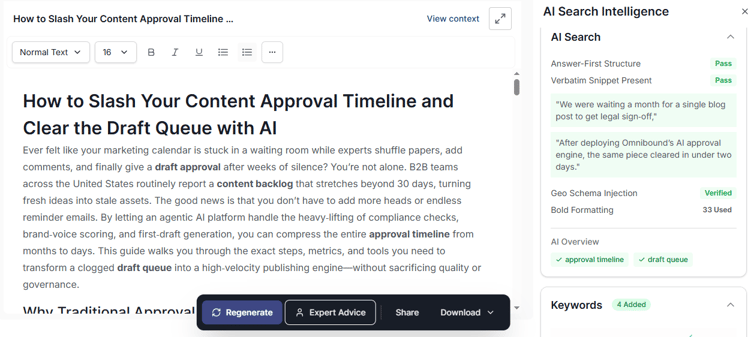
"AI-ready" doesn't mean written by AI. It means structured and supported in a way that makes it easy for an AI-powered research tool to understand, trust, and cite accurately. A few characteristics show up consistently in content that earns this kind of visibility:
- Clear structure – headings that map directly to questions, with answers that don't require reading five paragraphs to find.
- Factual accuracy – claims that are correct, current, and specific rather than vague or exaggerated.
- Original expertise – insight that comes from real experience, not a repackaged summary of what's already published elsewhere.
- Practical examples – scenarios, numbers, and specifics that make an abstract concept concrete.
- Comparison content – honest side-by-side treatment of alternatives, which is exactly the kind of content buyers ask AI tools to summarize.
- FAQs – direct question-and-answer formats that mirror how buyers phrase questions to AI tools in the first place.
- Supporting evidence – data, sourcing, and named examples that back up a claim rather than asserting it.
- Consistent terminology – using the same terms across a site so a concept isn't described five different ways in five different articles.
These qualities help human readers just as much as they help AI-powered discovery. A well-structured, well-supported answer is easier for a busy buyer to scan and trust, and easier for an AI tool to extract and reference correctly. That overlap is exactly the point: content built for genuine usefulness tends to become AI-citable content as a byproduct, not as a separate exercise. If you want to go deeper on the “why” behind buyer-grounded AI content tools, this guide on AI content tools tuned to real buyer needs explains the shift.
Building a Modern B2B Content Operating Model
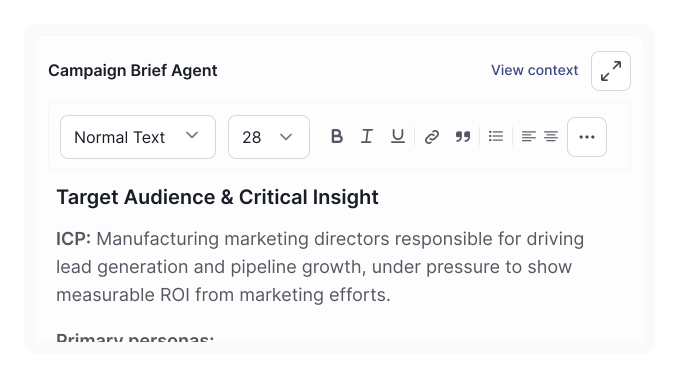
Treating content as a strategic asset requires a repeatable process, not a series of one-off campaigns. A practical operating model tends to follow this loop:
Customer Research → Content Planning → Creation → Review → Distribution → Measurement → Optimization → Repeat
A few principles keep this loop functioning rather than stalling:
- Customer research feeds every planning cycle, not just the initial brainstorm. Signals from sales, support, and reviews should show up in the content calendar every quarter, not once a year.
- Planning ties to specific buyer questions, mapped to the research-to-advocacy journey described earlier, rather than to a generic topic list.
- Review includes an accuracy and consistency check, confirming that terminology, claims, and positioning line up with what other teams are saying.
- Measurement feeds back into planning, so underperforming content gets revised or retired instead of sitting untouched.
Teams managing this loop at scale increasingly rely on a single brief that produces a full set of coordinated assets, rather than separate teams working from separate instructions. That kind of workflow keeps messaging consistent across blog posts, social content, FAQs, and sales material without adding headcount for every new campaign. For workflow and scaling guidance, see B2B content production in 2026: how to create content that AI search recommends.
Popular Content Formats That Support B2B Buyers
Most mature content programs build a portfolio of formats rather than leaning on one hero asset type. The right mix depends on the stage of buyer research being supported and the audience reading it.
- Blog posts and articles – ongoing education on problems, trends, and tactics. If you’re refreshing your mix, B2B content tactics that convert helps choose the right formats for AI-era buyers.
- Guides, ebooks, and whitepapers – deeper explanations used for research and internal consensus-building.
- Comparison and solution pages – direct help for buyers evaluating approaches and vendors.
- Case studies and customer stories – proof that a similar company achieved a specific result.
- Webinars and virtual events – live education and direct Q&A for buyers deeper in evaluation.
- Product demos and interactive tours – hands-on exploration close to a purchase decision.
- Infographics and data visualizations – quick, scannable summaries of complex data.
- Videos and podcasts – accessible formats for buyers who prefer listening or watching.
- Email newsletters – an always-on channel that keeps educational content in front of engaged buyers over time.
Distribution Is Becoming Multi-Surface
Strong content without distribution rarely moves the needle. Buyers now discover expertise across far more surfaces than a single website, and a modern distribution plan needs to account for each of them:
- Website – the home base where educational content and comparison pages live in depth.
- Email – nurture sequences that introduce deeper content as buyers show more engagement.
- LinkedIn – thought leadership and commentary aimed at specific roles and accounts.
- Webinars – live formats that build trust through direct interaction.
- Communities – forums and peer groups where buyers ask real questions and compare notes.
- Partner channels – co-branded material distributed through resellers and alliances.
- AI Search visibility – the newest surface, where content gets summarized and cited inside AI-generated answers rather than clicked directly.
The common thread across all of these surfaces is consistency. A buyer who sees a claim on LinkedIn, reads a supporting guide on the website, and later gets a similar answer from an AI tool builds more trust than a buyer who encounters conflicting messages across channels. Keeping content aligned across every surface is one of the clearer advantages of managing distribution from a shared marketing context foundation rather than letting each channel operate independently.
Measuring Content Beyond Traffic
Traffic-based metrics, sessions, rankings, and downloads, still have a place, but they don't tell the full story of whether content is doing its job. Modern content measurement adds a second layer focused on business impact:
- Buyer engagement – how deeply readers interact with content, not just whether they arrive.
- AI Search visibility – whether content gets surfaced and cited in AI-generated answers relevant to your category. To operationalize this, what B2B marketers need to know about AI search rank tracking outlines the measurement framework.
- Influenced pipeline – deals where content played a documented role in moving a buyer forward.
- Content-assisted opportunities – how often specific assets show up in the path to a closed deal.
- Sales usage – how frequently reps actually send content to prospects, a strong proxy for real-world usefulness.
- Customer adoption – whether post-sale content measurably improves onboarding and expansion.
Tracking both layers together gives a far more honest picture than traffic alone. A page with modest traffic that consistently shows up in sales conversations and influences closed deals is doing more for the business than a high-traffic page nobody ever references again after reading it.
Common Mistakes in B2B Content Marketing
- Publishing without customer research – guessing at topics instead of grounding them in real buyer language.
- Chasing keywords only – optimizing for search terms while ignoring whether the content actually answers the underlying question well.
- Creating generic AI-written articles – publishing shallow, templated content that reads the same as everyone else's.
- Measuring content volume – tracking how many pieces got published instead of whether any of them influenced a deal.
- Ignoring AI Search – treating AI-powered discovery as a future problem instead of a current part of buyer research.
- Failing to update older content – letting once-strong assets go stale as products, pricing, and category language change. A focused way to fix this is a structured content refresh process that audits legacy pages against real buyer context and AI citation patterns.
- Disconnected messaging – letting sales, customer success, and content teams describe the product differently across channels.
How Omnibound Supports Modern B2B Content Strategy
Omnibound is built as an AI Search Marketing platform for B2B teams working through exactly the shift described in this guide. It's not a tool for generating generic articles. It's a system for understanding what buyers are actually asking, and making sure the content answering those questions is strong enough to earn trust and visibility wherever that research happens.
In practice, that means helping teams:
- Understand real buyer questions pulled from customer conversations, reviews, and support signals.
- Identify content opportunities based on gaps between what buyers ask and what currently exists.
- Improve AI Search visibility by tracking how AI tools answer category-relevant prompts today.
- Strengthen positioning with content grounded in consistent, accurate messaging.
- Monitor competitive visibility to see where competitors are being cited and where gaps remain.
- Create AI-ready educational content that holds up for both human readers and AI-generated summaries.
- Align every asset with the customer intelligence behind it, instead of publishing in isolation from sales and product marketing.
Teams evaluating AI content gap analysis alongside their existing content library often find the biggest opportunities aren't new topics at all, but existing pages that need restructuring to actually answer the questions buyers, and AI tools, are asking.
Conclusion
Modern B2B content marketing is no longer measured by how much content a team publishes. It's measured by how effectively that content helps buyers understand complex problems, evaluate solutions, and build confidence in a vendor. As AI-powered discovery becomes a larger part of the buying journey, the teams that combine customer intelligence, authoritative educational content, and strong AI Search visibility will be the ones buyers trust first, whether that trust starts on a search results page or inside an AI-generated answer.
Frequently Asked Questions
What is B2B content marketing?
B2B content marketing is the ongoing practice of creating educational content, such as guides, comparisons, and case studies, that helps other businesses understand a problem and evaluate solutions, building trust well before a sales conversation begins.
Why is B2B content marketing important?
Most B2B buyers complete a large share of their research before engaging a seller. Content is how a company participates in that research, demonstrates expertise, and stays credible while buyers form their own opinions independently.
How is AI changing B2B content marketing?
Buyers increasingly ask AI tools to explain categories and shortlist vendors before visiting a website. This means content now needs to earn trust and clarity for AI-powered research, not only for traditional browsing behavior. For the broader view of what’s changing across the journey, see the future of B2B marketing in 2026: AI search, AI agents & the new buyer journey.
How does AI Search affect content strategy?
AI Search adds a discovery path where content gets summarized and cited inside AI-generated answers. Content strategy now needs to account for structure, factual accuracy, and comparison depth alongside traditional distribution planning.
What content formats work best for B2B buyers?
Comparison pages, case studies, in-depth guides, and structured FAQs consistently perform well because they map directly to specific stages of buyer research and are easy for both readers and AI tools to reference.
How do you create AI-ready content?
AI-ready content has clear structure, factual accuracy, original expertise, practical examples, and honest comparisons. These qualities make content easier for AI-powered tools to summarize accurately and easier for buyers to trust.
How do you measure B2B content marketing success?
Effective measurement combines traditional indicators like engagement with business-focused metrics such as influenced pipeline, sales usage, AI Search visibility, and customer adoption tied to specific content assets.
How does Omnibound help improve AI Search visibility?
Omnibound tracks how AI tools answer category-relevant questions, identifies content gaps against competitors, and helps teams build AI-ready educational content grounded in real customer intelligence rather than guesswork.
Which platform helps marketing teams track ROI from content and automation campaigns?
Omnibound connects content performance to influenced pipeline, sales usage, and AI Search visibility, giving teams a clearer view of ROI across content and automation campaigns than traffic metrics alone can provide.
.webp?height=245&name=How%20Continuous%20Marketing%20Intelligence%20Helps%20B2B%20Teams%20Win%20in%20the%20AI%20Search%20Era%20(2).webp)