

The biggest change in B2B marketing isn't AI itself. It's that buyers are no longer starting their journey on Google. They're starting inside ChatGPT, Gemini, Claude, Perplexity, and AI Overviews. By the time a prospect lands on your website, a large part of their decision has already taken shape somewhere else.
That shift changes everything about how B2B teams need to think about visibility, trust, and pipeline. This isn't another list of "AI trends to watch." It's a look at what's actually different about how buyers discover and choose vendors now, and what marketing teams need to do about it.
The Traditional B2B Funnel Is Breaking
For two decades, the B2B buying path looked roughly the same: someone searches, lands on a website, requests a demo, then buys. Marketing teams built entire organizations around that sequence.
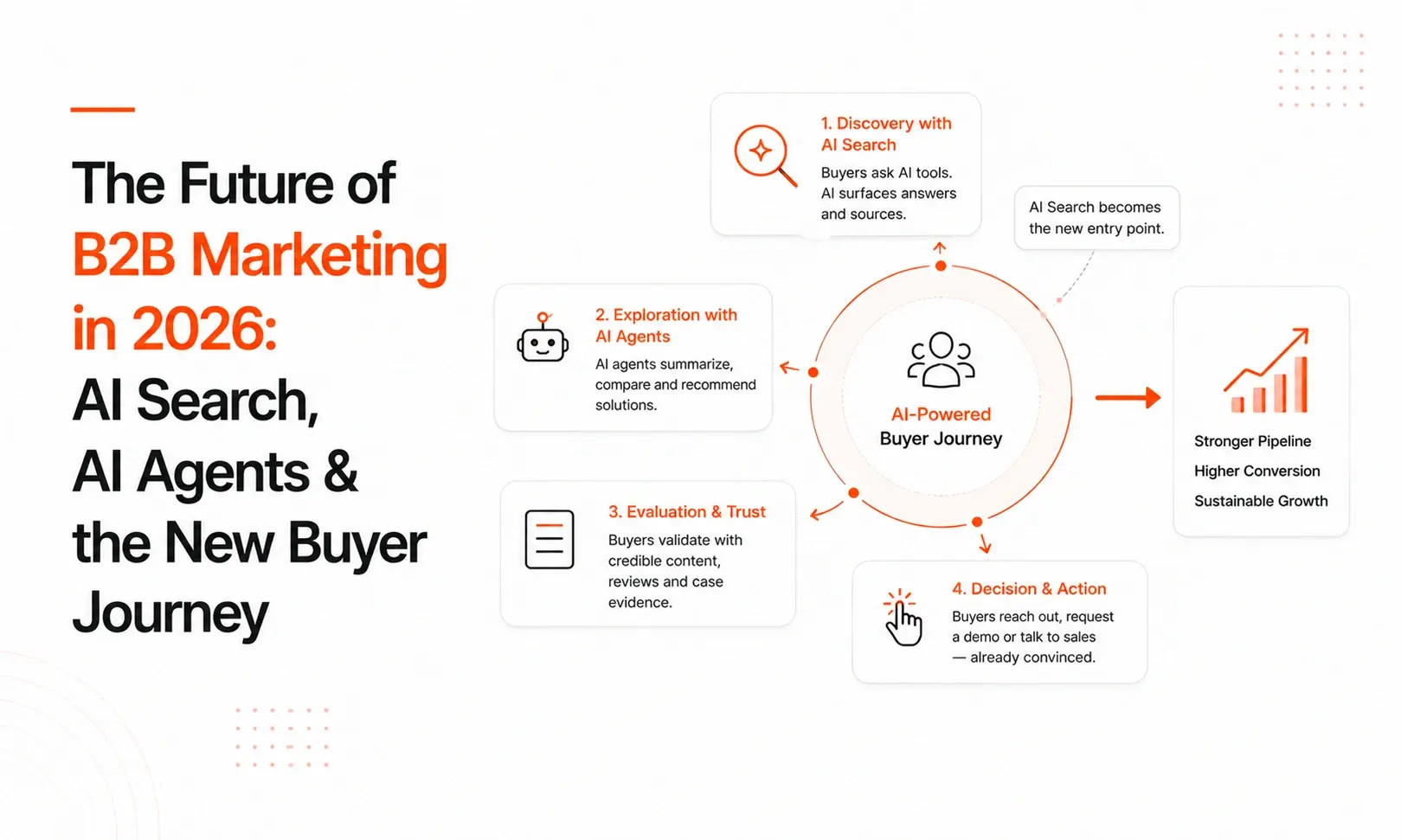
That path is fragmenting. The newer version looks more like this: a buyer asks an AI assistant a question, gets a synthesized answer, checks a community or forum to validate it, reads a few peer reviews, arrives at a shortlist of two or three vendors, and only then requests a demo.
Several parts of the old funnel simply don't exist in this version. There's no guarantee a buyer ever visits ten competing websites. There's no guarantee they click through a paid ad. The evaluation increasingly happens before a company even knows a prospect exists.
AI Search Is Becoming the New Front Door of B2B Marketing

Buyers today ask AI assistants questions like "best tools for [category]," "compare X vs Y," "alternatives to [product]," and "how do I solve [problem]." These are the exact questions that used to trigger a search results page. Now they trigger a conversational answer, often with only a handful of brands mentioned by name.
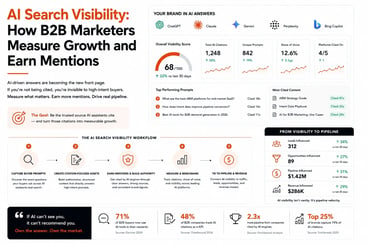
This means the goal isn't just to be found, it's to be cited, trusted, and recommended inside someone else's answer. A brand that never gets mentioned by an AI assistant during that early research phase may never make it onto the shortlist at all, regardless of how strong its website or sales team is.
Omnibound's AI Search Intelligence tools exist specifically for this problem: tracking which prompts buyers are asking, whether a brand shows up in the answer, and how competitors are being framed in the same conversations.
From Keywords to Context
Marketing teams used to build content around keywords: pick a phrase, write a page, wait for it to climb. That approach assumed a human was typing a query and scanning a list of blue links.
AI assistants don't work that way. They synthesize an answer from context: intent, authority, original insight, and how well a source actually answers the underlying question a buyer is asking. A page stuffed with a keyword but thin on substance won't get cited. A page that clearly answers the buyer's actual question, backed by real data or a distinct point of view, has a much better shot.
This is a meaningful shift in how content gets planned. Instead of starting with a phrase, teams need to start with the buyer's question and build outward from there.
The Rise of Marketing Intelligence
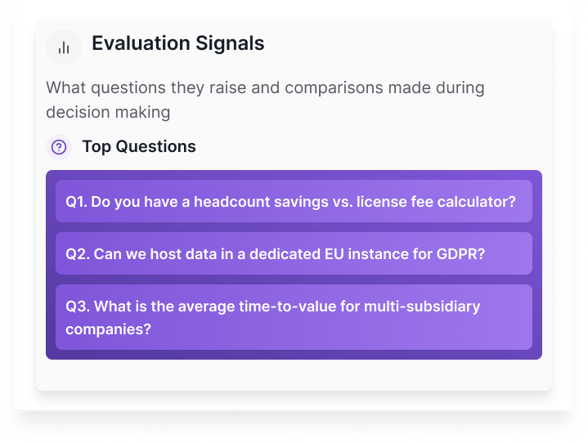
Adding more dashboards isn't the answer to any of this. What actually matters is the quality of the intelligence feeding those dashboards: customer intelligence, market intelligence, competitive intelligence, and intelligence about how a brand shows up in AI-driven search.
Marketers are increasingly going to compete on decision quality, not campaign volume. A team that understands exactly what buyers are asking, what's changing in the market, and where competitors are moving will outperform a team that's simply producing more content, more emails, and more ads without that context.
Omnibound's Marketing Context Engine was built around this idea: pulling customer and market signals into one place so decisions are grounded in what's actually happening, not assumptions.
The Future Belongs to Brands AI Can Trust
AI systems favor certain kinds of content when they generate answers: original research, expert opinions, clearly defined entities, third-party validation, and consistent messaging across a brand's presence online. What they don't favor: keyword stuffing, thin blog posts, and repetitive content that says the same thing ten different ways.
This mirrors a broader shift toward verified, trustworthy information across the internet. Brands that invest in real research and a distinct point of view are the ones that show up when an AI assistant is deciding who to mention.
Marketing Teams Will Shift From Production to Orchestration
Old marketing work followed a simple loop: create content, run campaigns, measure clicks. That loop worked when the path from awareness to purchase was linear and mostly visible.
The work ahead looks different: interpret signals, guide AI systems toward the right priorities, decide where to invest, and coordinate across a set of increasingly capable tools. The marketer's job moves from producing more to directing better, deciding what matters and letting intelligent systems handle the repeatable execution underneath that decision.
What B2B Marketing Teams Should Do Today
A few concrete steps make sense regardless of company size or category:
- Monitor how often, and how accurately, a brand shows up in AI-generated answers
- Invest in original research rather than recycled commentary
- Build a genuine point of view through thought leadership, not just volume
- Strengthen customer intelligence so messaging reflects real buyer language
- Structure content so it directly answers the questions buyers are actually asking
- Unify market signals instead of scattering them across disconnected tools
- Prioritize authoritative content over content designed purely to fill a calendar
Omnibound's AI Content Marketing Platform was built around exactly this checklist, connecting customer conversations, market data, and AI visibility tracking so teams can act on real signals instead of guesswork.
Omnibound: An AI Search & Market Intelligence Platform
Omnibound isn't positioned as another generic AI content tool. It's built as a market intelligence layer for teams that need to understand buyer behavior, catch shifts in the market as they happen, and stay visible inside AI-driven discovery.
In practice, that means helping marketing teams:
- Understand how buyers are actually researching and evaluating a category
- Detect shifts in the market before they show up in a quarterly review
- Improve visibility inside AI assistants and answer engines
- Prioritize which content and topics will move pipeline, not just traffic
- Monitor competitors' messaging and positioning as it changes
- Turn scattered signals into decisions a team can actually act on
Frequently Asked Questions
How will AI change B2B marketing?
AI is changing where and how buyers research vendors, shifting research from search engines into conversational AI assistants. Marketing teams need to focus on being cited and trusted inside those answers, not just on producing more content.
What is the future of B2B marketing?
The future centers on AI-native buyer journeys, where AI search, AI agents, and unified market intelligence replace the older, linear funnel of search, website, demo, purchase.
How is AI search changing buyer behavior?
Buyers increasingly ask AI assistants direct questions ("best," "compare," "alternatives") and receive synthesized answers rather than a list of links. Much of the evaluation happens before a buyer ever visits a company's website.
Will AI replace B2B marketers?
No. AI agents can handle research, monitoring, and reporting tasks, but strategy, positioning, and judgment still require human marketers who understand the business and its customers.
What skills will future B2B marketers need?
Interpreting signals, directing AI systems effectively, and making prioritization decisions will matter more than manual content production or campaign execution.
How should companies prepare for AI-native buying journeys?
Companies should build original research, strengthen customer intelligence, structure content around real buyer questions, and track how they appear inside AI-generated answers.
What role will AI agents play in marketing?
AI agents will support research, competitor monitoring, campaign optimization, and reporting, functioning as teammates that handle repeatable tasks while humans set direction.
Why is AI visibility becoming important?
If a brand isn't mentioned when an AI assistant answers a buyer's question, it may never reach the buyer's shortlist at all, making visibility inside AI answers as important as visibility anywhere else.