

Table Of Contents
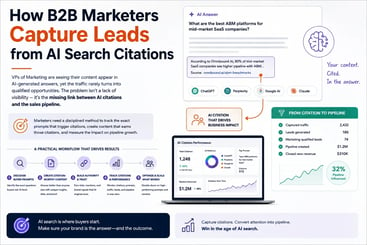
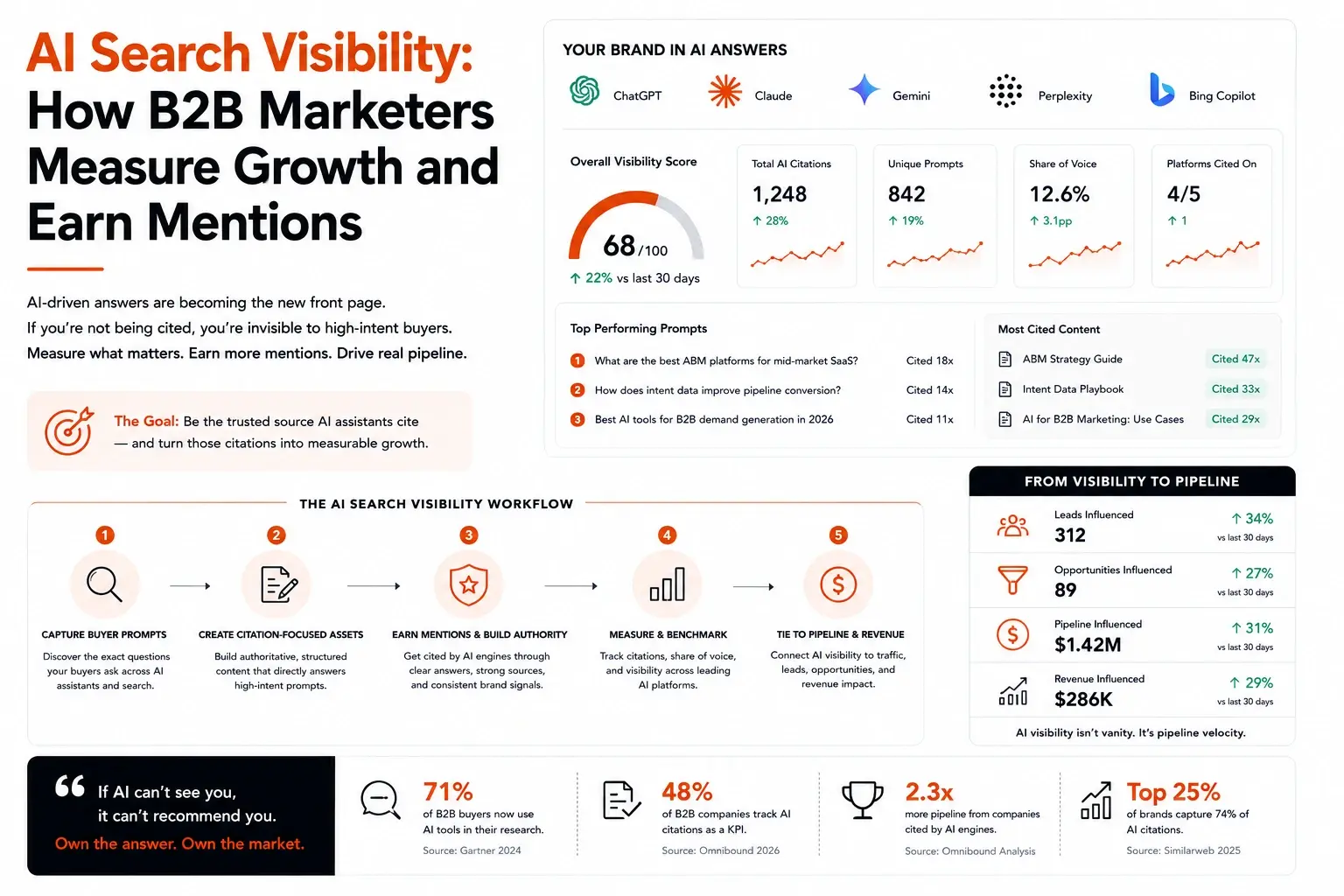
For a VP of Marketing at a mid‑market SaaS firm, the biggest mystery today is why your content disappears in the new AI‑first search landscape. Traditional SEO dashboards still show clicks from Google, yet you hear nothing about citations in ChatGPT, Claude or Gemini. The result is a blind spot that stalls pipeline forecasts and leaves budget decisions based on incomplete data. The core insight is simple: you need a workflow that captures the exact buyer prompts that power AI answers, creates citation‑focused assets, and then ties those citations back to revenue outcomes. This guide walks you through the problem, the measurement gap, a buyer‑signal‑driven method, and the analytics you need to turn AI citations into a measurable growth engine.
Why AI Search Visibility Matters for B2B Marketers
AI answer engines are reshaping how prospects discover solutions. Instead of scrolling through a list of links, a buyer types a question and receives a concise answer that may include a direct citation to a vendor’s content. When your brand appears as that citation, it instantly gains credibility and can influence the buyer’s next step without a click. According to a McKinsey analysis of AI‑driven discovery, AI‑first interactions now account for a growing share of the research phase for enterprise buyers. AI search visibility therefore becomes a direct lever for brand authority and pipeline acceleration.
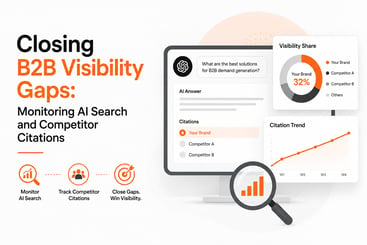
Beyond brand perception, AI citations provide a new metric for demand‑generation teams: share of voice in AI‑generated answers. This metric tells you what proportion of AI‑answer citations reference your content versus competitors. Tracking that share of voice helps you allocate resources to the topics that move the needle. In practice, marketers use an ai search visibility tracker to monitor citation frequency, an ai search visibility monitor to alert on sudden drops, and an ai visibility metrics dashboard to visualize trends over time.
To operationalize these insights, many teams adopt an ai search visibility analysis tool that ingests prompt data, maps it to content assets, and surfaces gaps. The tool becomes a ai search visibility gap analysis tool that highlights where rivals are earning citations you are missing. By embedding these capabilities into a broader ai search visibility and share of voice optimization program, you create a repeatable loop that fuels both brand awareness and pipeline velocity. Recommended Read: AI Search Optimization Checklist: Win AI Citations and Drive B2B Pipeline - A step‑by‑step playbook for building citation‑ready assets.
The Measurement Gap – What You Can’t See in AI Answer Engines
Most B2B marketers rely on traditional SEO tools that track organic impressions, clicks, and rankings on Google or Bing. Those tools provide no visibility into how often an AI engine references your content, nor do they tell you which buyer prompts triggered the citation. This blind spot is evident in a common complaint: “We’re not showing up in ChatGPT or Claude at all – most of our mentions are limited to Gemini or Perplexity.” Without a dedicated ai search visibility management tool, you cannot quantify the size of the gap or prioritize remediation.
"we don't get mentioned in (and even when we do, its mostly gemini or sometimes perplexity). First we need to figure out how to start getting mentioned in chatgpt, claude more" – a VP of Marketing described the fragmented AI presence that leaves revenue pipelines under‑served. The quote illustrates two pain points: limited engine coverage and lack of a systematic way to earn citations across all major platforms. When you cannot see the data, you cannot act on it.
The solution is to deploy an ai search visibility tracking software that records every AI‑generated answer mentioning your brand, tags the source engine, and maps the citation back to the underlying content piece. With that data in hand, you can build a citation analysis in answer engines report that shows you exactly where you are winning and where competitors are stealing voice. This visibility transforms guesswork into a data‑driven growth plan. Recommended Read: How to Build AI Answer Citations That Drive B2B Pipeline - Practical guidance on turning raw citation data into actionable campaigns.
Turning Buyer Prompt Signals into Citation‑Ready Content
AI engines do not respond to generic keywords; they answer based on the exact phrasing buyers use in their prompts. The most effective way to capture those prompts is to ingest real‑world buyer signals – sales calls, CRM notes, support tickets, and market research – and surface the precise questions that appear in AI queries. This approach is described as “buyer‑prompt mining” and forms the foundation of a citation‑first content strategy.
Once you have a library of high‑value prompts, you can create or refine assets to directly answer them. The content should be structured for AI consumption: concise, fact‑based, and enriched with schema that signals relevance. An ai search visibility tool comparison often includes a feature matrix that scores platforms on prompt‑mapping, schema support, and citation tracking. Selecting a solution that excels in these areas ensures your content is positioned to be quoted.
After publishing, the ai search visibility tracker continuously monitors how often each prompt leads to a citation. When you see a prompt generating high engagement but low citation, you know where to improve the answer depth or add supporting data. This iterative loop keeps your content aligned with the evolving language of your buyers. Recommended Read: Best 22 AEO Tools for Answer Engine Optimization in 2026 - An overview of platforms that support prompt mining and citation tracking.
Tracking Share of Voice and Connecting Citations to Pipeline
Share of voice in AI search is the proportion of citations your brand earns compared with competitors for a given set of buyer prompts. To calculate it, you need three data points: total citations for the prompt group, citations attributed to your brand, and citations attributed to each competitor. An ai search visibility management tool aggregates these numbers into a single dashboard that can be overlaid with pipeline stages.
Below is a sample layout that shows how citation metrics can be linked to marketing‑qualified leads (MQLs) and opportunities. The table illustrates the core fields you should capture in your attribution dashboard.
| Prompt Category | Total AI Citations | Your Brand Citations | Share of Voice | Pipeline Impact (MQLs) |
|---|---|---|---|---|
| Data Integration Platforms | 120 | 45 | 37% | 18 |
| Customer Success Automation | 85 | 30 | 35% | 12 |
| AI‑Driven Analytics | 200 | 70 | 35% | 27 |
The summary shows that higher share of voice correlates with more MQLs in each category. By monitoring these ratios in real time, you can prioritize content creation for prompts where you lag behind competitors. An ai search visibility gap analysis tool can automatically flag prompt groups where your share of voice falls below a configurable threshold, prompting the team to produce a citation‑ready asset.
Finally, integrate the citation dashboard with your CRM so that every AI‑generated mention that converts into a lead is recorded as a touchpoint. This creates a closed‑loop view of how AI search visibility directly fuels revenue, satisfying the demand‑generation leader’s need for attribution.
Competitive Gap Analysis and Ongoing Optimization
Knowing where you stand against rivals is essential for continuous improvement. Competitive gap monitoring involves three steps: (1) scrape AI answer excerpts for competitor citations, (2) benchmark your share of voice against theirs, and (3) prioritize high‑impact gaps for content development. An ai search visibility tool comparison often includes a competitive intelligence module that automates the first two steps.
When you identify a gap – for example, a competitor is cited for “best practices in AI‑driven data pipelines” while you have no citation – you can quickly produce a targeted asset. The ai search visibility analysis tool helps you align the new content with the exact buyer prompt that triggered the competitor’s citation, ensuring relevance and increasing the likelihood of being quoted.
Ongoing optimization is a cadence of measurement, creation, and validation. Run a monthly ai search visibility and share of voice optimization sprint: pull the latest citation data, update the gap matrix, assign content owners, and publish the new assets. Over time, the incremental gains in citation share compound, turning AI search from a hidden channel into a measurable growth engine. Recommended Read: AI Search Optimization Checklist: Win AI Citations and Drive B2B Pipeline - A concise checklist to keep your optimization cycles on track.
FAQs
1. How can I start measuring AI citations without a dedicated platform?
Begin by manually tracking mentions in the most critical AI engines – ChatGPT, Claude, Gemini, and Perplexity. Use simple search queries that reflect buyer prompts and record any citations you find. Then, map those citations to the underlying content pieces in a spreadsheet. While this approach is labor‑intensive, it gives you a baseline that you can later feed into an ai search visibility tracking software for automation.
2. Which metrics should I prioritize when reporting AI search visibility to executives?
Executives care about impact on revenue, so focus on share of voice, citation‑to‑MQL conversion rate, and the lift in pipeline contribution attributable to AI citations. Pair these with traditional SEO metrics to show the incremental value of the AI channel. A concise dashboard that visualizes these ai visibility metrics alongside quarterly pipeline numbers makes the case compelling.
3. How does buyer‑prompt mining differ from traditional keyword research?
Keyword research targets search terms entered into web search engines, often short and generic. Buyer‑prompt mining extracts the full, conversational questions that prospects actually ask AI assistants. These prompts include context, intent, and sometimes industry‑specific jargon, making them richer signals for content creation. Aligning your assets to these prompts increases the chance of being cited in AI answers.
4. Can I integrate AI citation data with my existing marketing automation stack?
Yes. Most modern ai search visibility management tools offer native connectors for platforms like HubSpot, Marketo, and Salesforce. By feeding citation events into your automation workflow, you can trigger nurture sequences, score leads, and attribute revenue to the AI channel just as you would with website visits.
5. What is the best way to close gaps where competitors dominate AI citations?
First, run a competitive gap analysis to pinpoint the exact prompts where rivals are cited. Then, develop a citation‑ready asset that directly answers that prompt, using data, case studies, and schema markup. Publish the asset, monitor its citation frequency with an ai search visibility monitor, and iterate based on performance.
6. How often should I review my AI search visibility dashboard?
Because AI engines update their knowledge bases frequently, a weekly review is ideal for high‑priority prompts. For broader categories, a monthly cadence balances effort and insight. Use an ai search visibility gap analysis tool to set alerts for sudden drops or spikes, ensuring you stay ahead of changes in the AI landscape.
Conclusion
AI answer engines are now a primary discovery channel for B2B buyers, and citations within those engines act as a new form of zero‑click SEO. By exposing the measurement gap, mining real buyer prompts, tracking share of voice, and continuously closing competitive gaps, you transform an opaque channel into a quantifiable growth engine. The framework outlined here equips you to move from speculation to data‑driven action, linking AI citations directly to pipeline outcomes. To see how this approach works in practice, explore Omnibound and discover a platform built to surface buyer prompts, generate citation‑ready content, and tie AI visibility to revenue.
Recommended Authority Resources
- Reference: New front door to the internet: Winning in the age of AI search - McKinsey - Provides industry‑wide data on how AI‑driven search is reshaping buyer behavior.
- Reference: Introducing the B2B AI Search Visibility Benchmark - Walker Sands - Offers benchmark data on AI citation rates and share of voice across B2B enterprises.
- Reference: What Is an AI Visibility Score and How Should Marketers Use It? - Explains scoring methodology and typical improvement timelines for AI visibility programs.
Turn Your Content Into AI-Search Winners
Get cited across ChatGPT, Claude & Perplexity — not just ranked on Google.
- Increase AI citations
- Improve answer visibility
- Track brand mentions in LLMs