

Table Of Contents
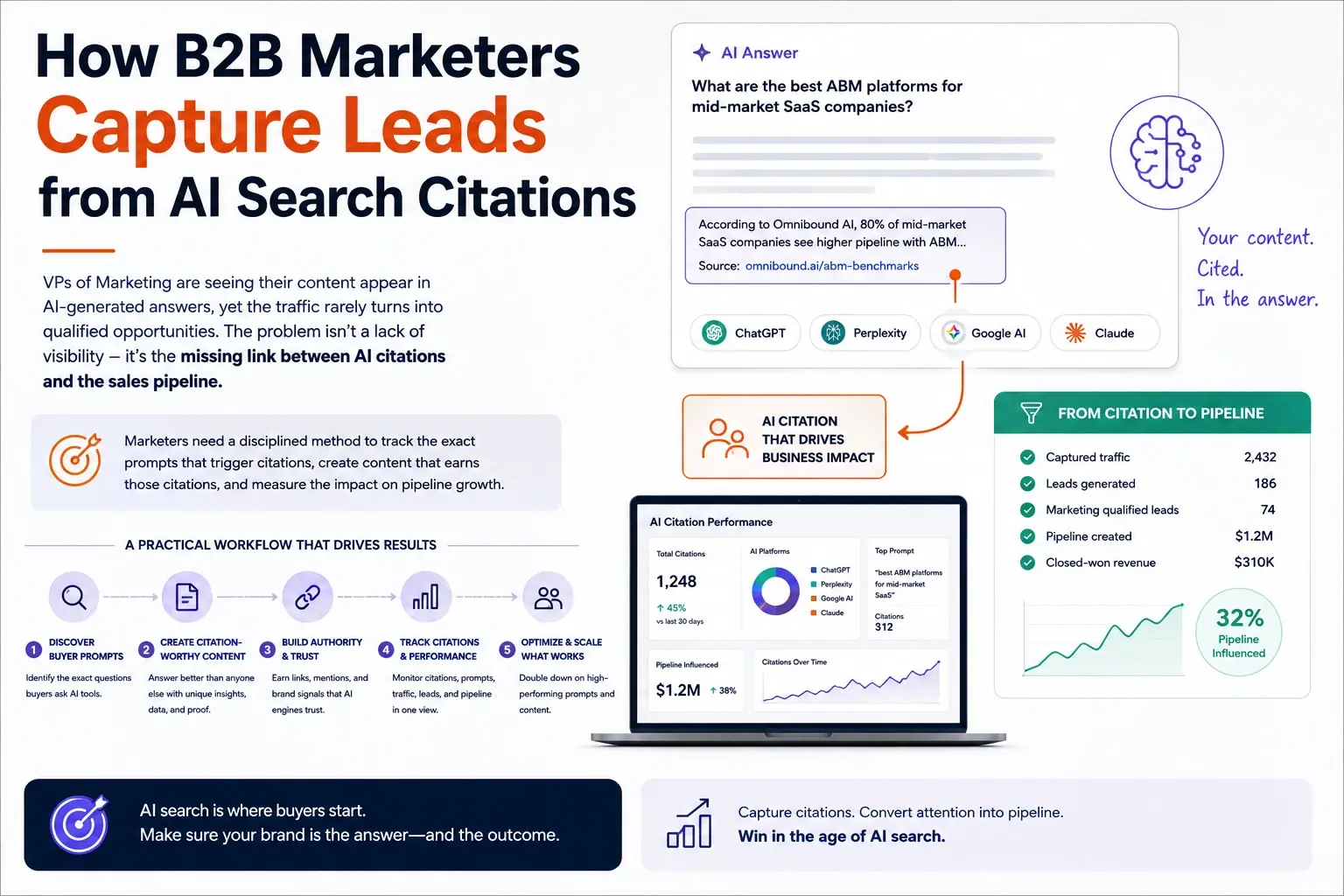
VPs of Marketing are seeing their content appear in AI‑generated answers, yet the traffic rarely turns into qualified opportunities. The problem isn’t a lack of visibility – it’s the missing link between AI citations and the sales pipeline. Marketers need a disciplined method to track the exact prompts that trigger citations, create content that earns those citations, and measure the impact on pipeline growth. This guide explains why AI‑search citations matter, shows how to map buyer prompts to content, outlines steps to build citation authority, and provides a practical workflow that reduces review delays and protects your pipeline from competitors.
Why AI‑search citations are the new lead source for B2B marketers
AI‑driven answer engines now dominate the research phase of the buyer journey. In the United States, zero‑click searches account for more than 60% of all Google queries, according to a zero‑click search study. When a buyer asks a question, the engine often returns a concise answer with a citation to a trusted source. That citation drives a click‑less impression, but it also creates a pathway for the cited brand to be seen as an authority.
For a mid‑market SaaS firm, each citation is an implicit endorsement that can influence the buying committee. However, without a system to capture who asked the question and which content was cited, the opportunity evaporates. As a result, many teams see awareness rise but pipeline remain flat.
To turn citations into pipeline growth, marketers must treat each AI citation as a lead‑generation touchpoint, just like a traditional ad click.
In practice, buyers trust the source that appears in the answer because the AI engine has already performed a relevance ranking. This implicit trust means that a citation from a well‑known brand can tip the scales even before a human decision maker sees the full content. By recognizing this dynamic, marketers can shift from a passive “hope we get cited” mindset to an active “engineer citations that feed the funnel” strategy.
Mapping buyer prompts to content opportunities
The first step is prompt tracking – capturing the exact language buyers use in AI platforms. By aggregating prompts from tools such as ChatGPT, Gemini, and Claude, you can identify recurring intent signals. For example, a surge in prompts like “best way to reduce churn for SaaS” signals a demand for churn‑reduction content.
"A full plan of action from prompts tracking in Omnibound's own software to how we can get cited and ideally end up with leads" captures the core need: a clear workflow from prompt capture to citation.
Once you have a list of high‑volume prompts, match them to existing assets or create new pieces that directly answer the question. Prioritize prompts that align with your ICP and the stages of the buying committee – executives care about ROI, while technical stakeholders look for integration details.
Our From AI Visibility to Pipeline: How Buyer-Focused AI Search Optimization Translates into Revenue provides a deeper dive on aligning prompts with content strategy.
To make the process repeatable, many teams cluster prompts into thematic buckets, then map each bucket to a content type – such as a whitepaper, a case study, or a quick‑start guide. By linking the bucket to the personas who most frequently ask those questions, you ensure that the resulting assets speak directly to the decision makers who are most likely to convert.
Building citation authority through optimized content
AI engines favor sources that demonstrate expertise, freshness, and structured data. To become a trusted citation source, focus on three pillars:
-
Structured workflows – A 2024 benchmark study showed that structured content workflows reduced rework by 24%.
-
Schema markup – Implement FAQPage and HowTo schema to surface answers directly in AI snippets.
-
Authority signals – Publish case studies, data‑backed insights, and clear author credentials.
When content is ready, ensure it is reviewed quickly. In pilot tests, teams cut review turnaround from 5 days to 2 days after using the new workflow, allowing you to claim citation opportunities before competitors do.
Adopting a fast, structured workflow also aligns with the findings of an AI adoption survey, which notes that organizations that streamline AI‑related processes see higher engagement.
Beyond schema, consider using internal linking patterns that reinforce the hierarchy of information. A well‑linked pillar page that references detailed sub‑pages can signal depth to the AI engine, increasing the likelihood of being chosen as a citation. Additionally, keeping the content up to date with quarterly refreshes signals freshness, another factor that AI models weigh when ranking sources.
Measuring and attributing leads from AI‑search interactions
Without measurement, citation efforts cannot be justified. Set up a dashboard that tracks four key metrics:
|
Metric |
Definition |
Data Source |
Typical Range |
|---|---|---|---|
|
Citation Impressions |
Number of times your content is cited in AI answers |
AI engine monitoring tool |
Varies by industry |
|
Click‑through Rate |
Percentage of citation impressions that result in a click |
Web analytics |
5‑15% |
|
Qualified Lead Conversion |
Leads that progress to MQL after clicking a citation |
CRM |
2‑8% |
|
Pipeline Influence |
Revenue attributed to citation‑derived leads |
Revenue ops |
10‑30% of new pipeline |
These metrics let you tie AI‑search activity to pipeline growth. An intent data market report highlights that companies leveraging intent signals see a measurable lift in qualified opportunities, reinforcing the value of tracking buyer prompts.
By regularly reviewing this data, you can refine prompt libraries, update content, and demonstrate ROI to leadership.
When attributing revenue, many organizations start with a first‑touch model that assigns credit to the first citation that generated a click. Over time, a multi‑touch model can be layered in to reflect the influence of subsequent citations that keep the prospect engaged throughout the buying cycle.
Implementing a faster, structured workflow to capture opportunities
Speed is critical because AI citation windows are short. The internal survey revealed that 68% of teams said manual review slowed publication timelines. Reducing review time frees up resources to respond to emerging prompts.
Adopt a three‑step workflow:
-
Capture prompts in a centralized repository.
-
Assign content creators with clear briefings and schema requirements.
-
Automate review approvals to achieve a 2‑day turnaround, as proven in pilot tests.
This approach not only improves citation capture but also safeguards your pipeline from competitors who might otherwise fill the gap.
Technology can further accelerate the process. Simple automation scripts can flag high‑priority prompts and route them to the appropriate writer, while collaboration platforms provide real‑time status updates. Aligning stakeholders early – product marketing, legal, and compliance – reduces the back‑and‑forth that typically extends review cycles.
Practical example: From prompt to closed deal
Imagine a prospect in the finance software space who types “how to automate regulatory reporting for mid market banks” into an AI chat. The engine returns a concise answer and cites a recent Omnibound case study that details a step‑by‑step automation framework. The prospect clicks the link, lands on a landing page with a clear call to action, and fills out a form requesting a demo. The lead is automatically tagged in the CRM as “AI citation – regulatory reporting” and routed to an account executive who references the same case study during the discovery call. Within two weeks, the prospect advances to a qualified opportunity, and the revenue operations team attributes the deal to the original AI citation in the pipeline influence report.
This scenario illustrates how each component – prompt tracking, citation‑optimized content, rapid workflow, and attribution – works together to convert a click‑less impression into a measurable revenue event.
FAQs
1. How can I start tracking AI‑search prompts without building a custom solution?
Begin by using existing AI‑monitoring tools that surface citation queries and export them to a spreadsheet. Align the prompts with your buyer personas, then prioritize content creation based on volume and strategic relevance. Integrate the list with your content calendar to ensure timely production.
2. What schema markup should I add to improve citation chances?
Implement FAQPage for question‑answer pairs, HowTo for step‑by‑step guides, and Product schema for detailed offering pages. Validate the markup with Google’s Rich Results Test to confirm it is correctly parsed by AI engines.
Conclusion
AI‑search citations are a powerful, yet underutilized, source of qualified leads for B2B marketers. By tracking buyer prompts, creating citation‑optimized content, and measuring impact with clear metrics, you can turn invisible AI mentions into measurable pipeline growth. A disciplined, fast workflow prevents competitors from seizing the same opportunities and ensures that every citation contributes to revenue. To explore how these practices work in a real environment, visit Omnibound and see the platform in action.
Recommended Authority Resources
-
Reference: Goodbye Clicks, Hello AI: Zero‑Click Search Redefines Marketing – provides the latest data on zero‑click search prevalence in the U.S.
-
Reference: The State of AI in B2B Marketing – surveys AI adoption rates among B2B marketers and links usage to pipeline outcomes.
Turn Your Content Into AI-Search Winners
Get cited across ChatGPT, Claude & Perplexity — not just ranked on Google.
- Increase AI citations
- Improve answer visibility
- Track brand mentions in LLMs