

For years, the conversation about AI in marketing focused on one idea: AI helps marketers work faster. Write faster. Automate faster. Analyze data faster.
That framing missed the bigger story. AI is not just changing how marketing teams operate internally. It is changing how B2B buyers discover, evaluate, and choose vendors in the first place. Buyers now ask ChatGPT, Gemini, Perplexity, and Copilot questions they used to type into a search bar, and the answers they get shape their shortlist before a single vendor website gets a visit.
This guide breaks down that shift across six areas that matter to modern go-to-market teams: buyer behavior, customer intelligence, content strategy, AI Search, marketing operations, and measurement. Each section is written to stand on its own, so whether you lead demand generation, product marketing, or revenue operations, you can find the part that applies to your team right away.
AI Is Changing How B2B Buyers Discover Vendors
The traditional B2B buying path looked something like this: a buyer searches for a solution, lands on a website, requests a demo, and talks to sales. That path assumed the buyer's research happened mostly on your domain, or at least within results you could influence directly.
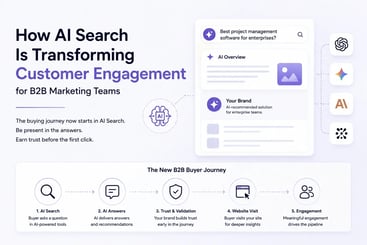
That assumption no longer holds. Buyers increasingly start with a question inside an AI Search experience: "What's the best customer intelligence platform for a mid-market SaaS company?" or "How do B2B teams track AI Search visibility?" The AI tool synthesizes an answer using content it trusts, and that answer often includes vendor names, comparisons, and recommendations before the buyer has visited a single website.
The modern discovery path looks more like this: a buyer starts with AI Search, works through educational content the AI surfaces, reviews comparisons, builds a shortlist, and only then visits vendor websites and requests demos. AI Search has effectively inserted itself as an earlier, more influential stage in the buying journey.
This changes what "getting found" means. A brand can rank well in traditional results and still be invisible in AI-generated answers, because AI Search models weigh different signals: how clearly a page answers a specific question, how well a topic is covered end-to-end, whether claims are backed by evidence, and whether the source is cited elsewhere as authoritative. How AI Search is changing B2B marketing strategy covers this shift in more depth, but the short version is that visibility inside AI-generated answers now functions as a distinct, measurable objective, separate from traditional website traffic.
This also changes how buyers form first impressions of a brand. Previously, a homepage, a piece of paid media, or a sales conversation often shaped that first impression. Now, an AI-generated summary frequently does. If that summary is accurate, specific, and favorable, it builds credibility before a human conversation even starts. If it's vague, outdated, or absent entirely, the brand starts the relationship at a disadvantage, regardless of how strong its website or sales team is.
Three practical implications follow from this shift.
First, content needs to be structured around real buyer questions, not just topics. AI Search tools reward content that gives a direct, complete answer to a specific question a buyer is likely to ask, rather than content that circles a broad topic without committing to a clear point of view.
Second, authority signals matter more than publishing frequency. A single well-documented comparison page, backed by customer evidence and specific detail, tends to outperform a dozen generic posts covering the same ground. AI Search models tend to cite sources that demonstrate depth on a subject, not sources that simply mention it often.
Third, marketing teams need visibility into what's actually happening inside AI Search results for their category. Most teams have no idea whether ChatGPT recommends them, ignores them, or recommends a competitor instead when a buyer asks a relevant question. AI Search visibility tracking closes that gap by showing which prompts trigger brand mentions, how a brand is described relative to competitors, and where content gaps leave a brand out of the conversation entirely.
None of this means traditional discovery channels disappear. Buyers still visit websites, read case studies, and talk to sales reps. But those steps now happen later in the journey, after a buyer has already formed an opinion based on what AI tools told them. Marketing strategy has to account for that earlier, less visible stage, or it risks optimizing for a buying journey that no longer matches reality.
AI Is Changing Customer Research
Marketing teams have relied on personas for a long time: a fictional buyer profile built from assumptions, a handful of interviews, and best guesses about pain points. Personas were never wrong exactly, but they were static, and they aged quickly.
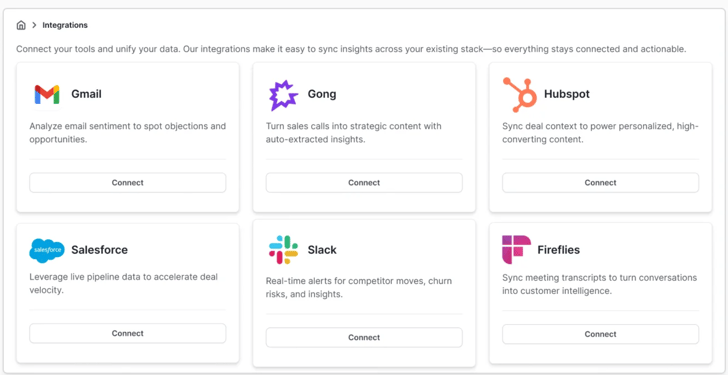
AI-powered research makes it practical to build a living picture of customers instead of a static one. Marketing teams can now pull signal from customer conversations, CRM notes, sales call feedback, support tickets, survey responses, review sites, market research, and the actual questions buyers ask during evaluation. Individually, none of these sources is new. What's new is the ability to process all of them together, continuously, without a research team spending weeks manually tagging transcripts.
This creates a clear flow: customer intelligence feeds marketing decisions, and marketing decisions shape campaigns. When a support ticket pattern reveals that buyers consistently misunderstand a pricing model, that's not just a support issue. It's a signal that campaign messaging, sales enablement, and even the pricing page need a second look.
Customer Insights AI exists precisely because this kind of signal used to sit in disconnected systems, each owned by a different team, none of it reaching marketing in a usable form. Bringing sales feedback, support data, and buyer language into one place gives marketing teams a much more current, evidence-based view of what customers actually care about, rather than what a persona document said two years ago.
This shift also changes how teams practice voice of the customer work. Instead of an annual survey summarized into a slide deck, voice of the customer becomes an ongoing input, updated as new conversations happen, new reviews get posted, and new questions come in from prospects during sales calls. That immediacy matters because buyer language shifts faster than most marketing calendars do.
The practical benefit shows up in campaign relevance. Messaging built from real, current customer language tends to resonate more than messaging built from internal assumptions about what buyers care about, because it reflects the actual words and concerns buyers use rather than the words marketing teams think they should use.
AI Is Changing Content Strategy
For a decade, the dominant content strategy in B2B marketing was straightforward: publish more. More blog posts, more landing pages, more gated assets. Volume was treated as a proxy for authority.
That approach is losing effectiveness, and AI Search is a big reason why. AI tools don't reward publishing volume. They reward depth, clarity, and evidence on a specific subject. A modern content strategy needs to start with better customer understanding, move to better educational content built on that understanding, and result in better visibility inside AI Search answers. Volume without that foundation just produces more content that gets ignored.
This is where authority starts to matter more than output. A page that answers a buyer's exact question thoroughly, backed by specific numbers, examples, and clear reasoning, is more likely to get cited by an AI tool than five shorter pages that each touch the topic lightly. AI Search models are essentially trying to identify the most trustworthy, complete source on a given question, and thin content rarely qualifies.

AI Content Gap Analysis helps teams identify exactly where this depth is missing, comparing the questions buyers are actually asking against the content a brand currently has (and doesn't have) to answer them. That's a more precise way to prioritize content investment than guessing at topics from a keyword list.
A useful test for any piece of content going forward: if someone asked an AI tool the exact question this page is meant to answer, would the AI have enough information on this page to give a complete, accurate response? If not, the page probably needs more specificity, more evidence, or a narrower focus, not more length for its own sake.
AI Is Changing Positioning
Positioning used to be treated as a foundational document: written once, reviewed maybe once a year, and then left largely untouched while campaigns ran on top of it. That approach made sense when market conditions and buyer language changed slowly.
They don't change slowly anymore. Competitors reposition constantly, buyer language shifts as new use cases emerge, and AI Search adds a new pressure entirely: if an AI tool consistently describes a brand using outdated or generic language, that description follows the brand into buyer conversations whether it's accurate or not.
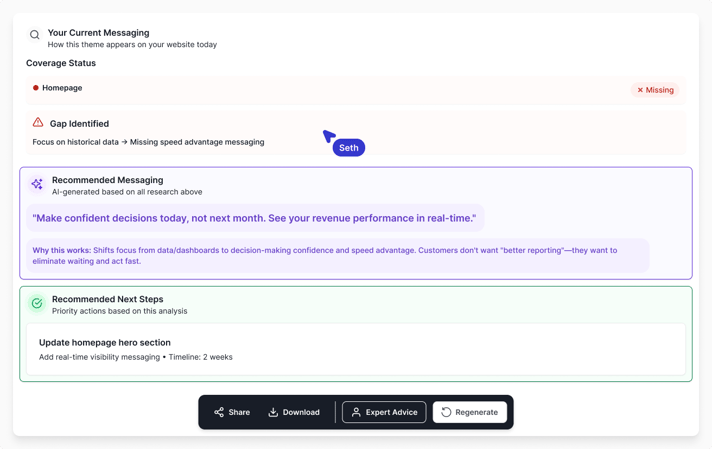
Modern positioning needs continuous refinement rather than an annual refresh. That means regularly revisiting messaging, differentiation, the specific language buyers use to describe their problems, the use cases gaining traction, and the proof points that actually move buyers (versus the ones marketing assumes are compelling). Customer and market intelligence should feed this process directly, rather than positioning being built in a workshop disconnected from what customers are actually saying.
AI-powered product positioning works best when it's grounded in the same customer signals discussed earlier: support tickets, sales call notes, review site language, and the questions buyers ask AI tools during evaluation. Positioning built on real evidence tends to hold up better than positioning built on internal opinion, and it's easier to defend when a competitor challenges it.
AI Is Changing Marketing Automation
Marketing automation was originally built to optimize execution: send the email, trigger the workflow, score the lead, move it to sales. Those functions still matter, but they were never really about understanding the customer. They were about moving customers through a predefined sequence efficiently.
AI is shifting the priority. Instead of optimizing purely for execution speed, automation now needs to optimize for relevance, timing, and actual customer understanding across the lifecycle. A workflow that sends the right message to the right segment at the wrong moment, or based on stale assumptions about what that segment cares about, is still a poorly performing workflow, no matter how efficiently it fires.
This means automation platforms increasingly need to draw on the same customer intelligence layer that informs content and positioning. When a lifecycle campaign is built using current buyer language and current pain points instead of a segmentation model built two years ago, it performs meaningfully better, because it's responding to who the customer actually is right now.
B2B marketing automation conversations should increasingly center on this question: is the automation reflecting current customer understanding, or is it running on assumptions that were true when the workflow was first built? Teams that keep asking that question tend to get more out of their automation investment than teams that treat automation as "set it up once and let it run."
AI Search Is Becoming a New Marketing Channel
Marketing teams historically split their visibility efforts into two buckets: traditional discoverability practices aimed at getting found online, and the website itself as the destination that converted that visibility into pipeline. That model still applies, but it's no longer the whole picture.
AI Search now functions as a distinct channel that sits alongside it. Instead of just optimizing for how a brand appears in traditional results and on its own website, marketing teams also need to think about how a brand appears in AI-generated recommendations, how those recommendations shape buyer research, and how they influence which vendors make it onto an evaluation shortlist in the first place.
This is a real behavioral shift, not a minor addition to an existing process. When a buyer asks an AI tool "What are the best options for [category] for a company like mine?", the AI tool doesn't send the buyer to ten links to sort through. It gives a synthesized answer, often naming two or three vendors, with brief reasoning for each. If a brand isn't part of that answer, it may never make the buyer's shortlist, regardless of how strong its actual product or traditional presence is.
Three factors determine whether a brand shows up favorably in these answers.
The first is trusted sources. AI models tend to weight information from sources they've learned to treat as reliable, including third-party mentions, review platforms, industry publications, and a brand's own content when it demonstrates real expertise rather than promotional language.
The second is educational content that gives complete answers. A page that partially addresses a question, or requires the reader to piece together an answer from multiple vague sections, is less useful to an AI model trying to generate a confident response than a page that answers the question directly and completely in one place.
The third is structured expertise: content organized so that specific claims, comparisons, and evidence are easy to extract and cite accurately. This doesn't mean writing for machines instead of people. It means being precise, specific, and well-organized, which tends to serve both human readers and AI systems well at the same time.
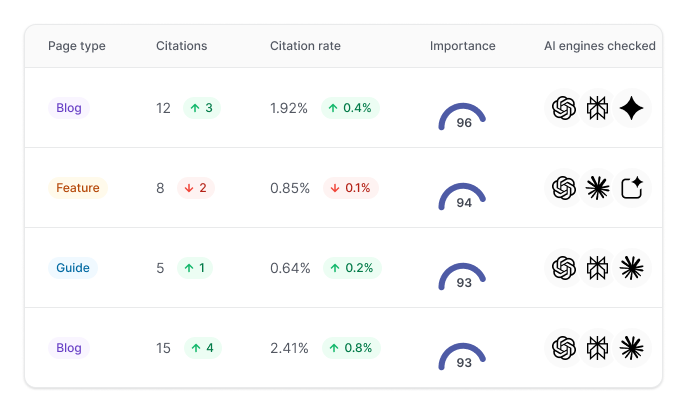
Marketing teams that treat AI Search as a channel worth measuring, rather than an abstract trend, gain a real advantage. That starts with knowing which questions buyers are actually asking, which sources AI tools currently trust for those questions, and where a brand's own content currently falls short of giving a complete, citable answer. How AI Search is changing B2B buyer behavior walks through how this plays out for specific categories and buyer segments.
AI Changes Marketing Teams More Than It Changes Marketing Jobs
A lot of AI commentary jumps straight to speculation about job losses. In practice, what's actually changing inside B2B marketing teams looks less dramatic and more useful: the balance of how time gets spent.
Marketing teams are spending less time on manual research, the kind that used to mean combing through spreadsheets of survey data or reading dozens of support tickets by hand to find a pattern. They're also spending less time on repetitive production work, like drafting the tenth variation of a similar email or reformatting the same content for different channels.
That time is shifting toward work that's harder to automate and arguably more valuable: refining positioning, building a deeper understanding of customers, making decisions about what to prioritize, running experiments to see what actually resonates, and thinking through strategy rather than executing a predefined plan. Teams that use AI-assisted research well tend to end up doing more strategic work, not less marketing work overall.
This is a more credible way to describe the change than predicting fewer marketing jobs. The work itself is shifting upstream, toward judgment and decision-making, and away from manual execution that AI-powered research and drafting tools now handle faster and more consistently than a person doing it by hand.
Customer Intelligence Becomes the Foundation
Everything discussed so far, buyer discovery, content strategy, positioning, automation, AI Search visibility, depends on the same underlying input: accurate, current customer intelligence. Without it, each of those efforts is guessing.
A useful way to think about this is as a flow. Customer conversations, CRM data, sales feedback, support interactions, and market research all feed into a unified layer of customer intelligence. That intelligence then informs marketing strategy. Strategy shapes content. Content earns visibility in AI Search. And visibility, ultimately, drives pipeline.
Each link in that chain depends on the one before it. A brand can produce excellent content, but if it's built on outdated customer intelligence, it will answer questions buyers stopped asking a year ago. A brand can have strong AI Search visibility, but if the underlying positioning doesn't match what buyers actually need, that visibility won't convert into meaningful pipeline.
Marketing context is the practical mechanism for keeping this chain connected: a shared, current understanding of customers and market conditions that content, positioning, and campaign decisions can all draw from, instead of each team working from its own separate, aging set of assumptions. Teams that centralize this context tend to make faster, more consistent decisions across content, product marketing, and demand generation, because everyone is working from the same current picture of the customer.
AI Makes Trust More Important, Not Less
As AI-generated answers become a normal part of buyer research, it's tempting to assume trust matters less, since an algorithm is doing some of the vetting. The opposite is closer to true.
When a buyer gets a quick AI-generated summary of a vendor, that summary raises the stakes on everything that comes after it. If the buyer clicks through and finds vague claims, no real evidence, or generic messaging that doesn't match what the AI just told them, trust erodes immediately. Buyers increasingly expect the evidence behind a claim to be easy to find and specific: customer stories with real detail, documentation that answers technical questions directly, and educational resources that demonstrate expertise rather than just asserting it.
This raises the bar for what counts as credible content. A case study with only a logo and a vague quote no longer does the job. Buyers, and the AI tools summarizing content on their behalf, respond better to specific numbers, named use cases, and documented outcomes. This applies directly to categories like B2B SaaS marketing, where buyers frequently compare multiple similar-sounding vendors and rely heavily on evidence to differentiate between them.
Trust, in this environment, becomes a real competitive advantage rather than a soft brand attribute. Brands that consistently back their claims with specific, verifiable evidence tend to earn more favorable treatment both from buyers doing their own research and from AI tools trying to generate accurate, defensible answers.
How AI Is Reshaping Marketing Across Regulated and Complex Industries
The mechanics of this transformation, customer intelligence, AI Search visibility, content depth, and trust, play out differently depending on the industry. Four sectors illustrate this well.
Healthcare. Buyers in healthcare marketing and technology research decisions carefully, often across multiple stakeholders with compliance concerns. Customer intelligence here needs to account for regulatory constraints alongside buyer pain points, and educational content needs to address compliance questions directly and accurately, since AI tools summarizing healthcare-related questions tend to favor sources that demonstrate clear regulatory awareness.
Financial services. Trust signals matter even more here, given the sensitivity of the buying decision. Content needs to combine buyer education with clear evidence of security and compliance practices, and customer intelligence should track the specific concerns that come up repeatedly in sales conversations around risk, since those concerns often differ from what generic industry content assumes.
Manufacturing. Buying committees in manufacturing are often technical and skeptical of marketing language. Content needs real specificity, actual specs, integration details, and use cases described in operational terms, rather than broad value propositions. Customer intelligence pulled from support tickets and sales engineering conversations tends to be especially valuable here, since it surfaces the practical questions buyers actually ask.
Professional services. Positioning matters more than almost anywhere else, since the product is expertise itself. Educational content needs to demonstrate that expertise directly rather than describing it abstractly, and AI Search visibility often hinges on whether a firm's content reads as genuinely authoritative or as generic thought leadership that could have come from any competitor.
Across all four, the common thread is the same: generic content performs worse, specific and evidence-backed content performs better, and customer intelligence is what makes that specificity possible in the first place.
Common Mistakes B2B Marketing Teams Make With AI
Most missteps in this space fall into a handful of recognizable patterns.
Creating AI-generated content without real expertise behind it. Content produced quickly, without grounding in actual customer or product knowledge, tends to read as generic, and both buyers and AI Search tools are increasingly good at recognizing that.
Weak or outdated positioning. Teams that haven't revisited positioning in over a year often don't realize how disconnected it's become from current buyer language and competitive reality.
Ignoring AI Search entirely. Many teams still measure visibility only through traditional website metrics, with no idea how their brand appears (or doesn't appear) inside AI-generated answers.
Relying on prompts instead of real customer understanding. Writing a clever prompt is not a substitute for actually knowing what customers care about. Content built on assumptions, even AI-assisted assumptions, still misses the mark if it's not grounded in real signal.
Disconnected marketing data. When customer intelligence lives in five different systems that don't talk to each other, no single team has an accurate picture of the customer, and decisions end up based on whichever data happens to be most accessible rather than most relevant.
Measuring productivity instead of business outcomes. Publishing more content faster is not the same as generating more pipeline. Teams that track output volume as a success metric often miss that the content isn't actually influencing buyer decisions.
Measuring Success in the AI Search Era
Traditional marketing measurement leaned heavily on three metrics: content volume, marketing qualified leads, and traffic. Those numbers still get reported, but on their own, they no longer tell the full story of whether marketing is actually influencing buyer decisions.
Modern measurement needs to expand to include AI Search visibility (how often and how favorably a brand appears in AI-generated answers), pipeline influenced by educational content, depth of customer understanding reflected in messaging and campaigns, the strength and consistency of positioning across channels, how well specific pieces of educational content perform against the buyer questions they were built to answer, and branded demand (how often buyers search for a brand by name, which often signals that AI Search or word of mouth already introduced them to it before they searched directly).
This shift also changes how campaign optimization works. Instead of optimizing primarily for click-through rates or open rates, teams increasingly need to optimize for whether a campaign reflects current, accurate customer understanding, and whether it's actually connected to how buyers are researching the category right now. A campaign built on stale segmentation can look fine on paper (decent open rates, decent clicks) while completely missing what buyers currently care about.
The broader point: measurement needs to answer a harder question than "did this get engagement." It needs to answer "did this move a real buyer closer to choosing us, at a stage of their research we may not have directly seen."
How Omnibound Helps B2B Marketing Teams Adapt
Omnibound is built specifically for this shift. Rather than functioning as a general-purpose AI writing tool or a workflow automation platform, Omnibound works as an AI Search Marketing platform that connects customer intelligence, market intelligence, competitive intelligence, and AI Search intelligence into one working system for B2B marketing teams.
In practice, that means helping teams understand the actual questions buyers are asking, both in AI Search and across sales conversations, support tickets, and reviews. It means unifying customer signal that would otherwise sit scattered across CRM, support, and sales tools, so marketing decisions are based on current reality rather than outdated assumptions.
It also means tracking AI Search visibility directly: which prompts surface a brand, how competitors are described in comparison, and where content gaps leave a brand out of AI-generated recommendations entirely. That visibility data feeds directly into content prioritization, so teams know exactly which buyer questions to address next and why.
On the positioning side, Omnibound helps teams strengthen and continuously refine messaging using real customer and market signal rather than internal opinion, which keeps positioning current as buyer language and competitive dynamics shift. And on content, the platform helps teams build educational, evidence-backed material designed to be genuinely useful to buyers and citable by the AI tools those buyers increasingly rely on.
Frequently Asked Questions
How is AI changing B2B marketing?
AI is changing B2B marketing on two levels: it's giving teams faster access to customer intelligence and content production, and it's changing how buyers discover vendors through AI Search before ever visiting a website. Both shifts require marketing strategy to adapt, not just marketing tools.
What is the biggest impact of AI on B2B marketing?
The biggest impact is the shift in where buyer research begins. AI Search tools now influence vendor shortlists earlier than traditional discovery channels did, making AI Search visibility and educational, evidence-backed content essential to being considered at all.
How is AI Search changing buyer behavior?
Buyers increasingly ask AI tools direct questions about vendors and categories instead of browsing multiple websites themselves. The AI-generated answer often shapes their shortlist, meaning brands need to be visible and accurately represented inside those answers, not just on their own site.
How should B2B marketers adapt to AI Search?
Marketers should build content that directly and completely answers specific buyer questions, back claims with real evidence, and track how their brand appears in AI-generated recommendations. Omnibound helps teams identify these gaps and prioritize content based on actual buyer questions.
How does AI improve customer intelligence?
AI-powered research can process customer conversations, CRM data, sales feedback, support tickets, and reviews continuously, replacing static personas with a current, evidence-based understanding of what customers actually care about right now.
What marketing activities benefit most from AI?
Customer research, content gap identification, positioning refinement, and AI Search visibility tracking benefit the most, since each depends on processing large amounts of signal that would take a human team far longer to review manually.
How should marketing teams prepare for AI-driven buying journeys?
Teams should build educational content around real buyer questions, keep positioning current using customer signal, and start measuring AI Search visibility alongside traditional metrics like pipeline and branded demand.
How does Omnibound help B2B marketers improve AI Search visibility?
Omnibound tracks which prompts and buyer questions surface a brand in AI Search, compares how competitors are described, and identifies content gaps, giving marketing teams a clear, prioritized plan to close those gaps with evidence-backed content.
Final Thought
AI is not simply making marketing teams faster at the work they already did. It's changing where buyers begin their research, what they trust once they get there, and what marketing teams need to understand about their customers to earn a place on the shortlist at all.
Teams that treat AI Search visibility, customer intelligence, and positioning as connected parts of one strategy, rather than separate initiatives, will be the ones buyers actually find, trust, and choose. That's the real transformation underway, and it has very little to do with speculation about the future and everything to do with what buyers are already doing today.