.png)


Table Of Contents
AI‑driven answer engines such as ChatGPT and Gemini have become the primary discovery channel for many B2B buyers. Traditional keyword‑centric SEO tools no longer reveal whether your content appears in the synthesized answers that prospects rely on. This shift leaves demand‑generation leaders operating in the dark, unable to connect content performance to pipeline outcomes. In this guide we explore how AI search rank tracking transforms that opacity into clear, actionable insight. You will learn why citation signals matter, how to capture the exact buyer prompts that drive AI answers, and which metrics turn visibility into measurable revenue impact.
Understanding AI‑Driven Answer Engines and Their Impact on B2B Visibility
Answer engines generate responses by pulling from a curated set of web content rather than presenting a list of links. For a VP of Marketing, this means that brand presence is now measured by whether the engine cites your assets in its answers, not by click‑through rates on a SERP. The lack of traditional ranking signals creates a blind spot that hampers strategic planning and budget allocation. Recognizing this new reality is the first step toward reclaiming visibility in the AI‑first landscape.
Because the engines operate on relevance models, the content that gets quoted must align closely with the natural‑language queries buyers submit. A recent industry analysis highlights that firms that adopt ai search visibility tracking software gain a clearer view of how their assets are referenced across multiple AI platforms. According to a AI search visibility study, understanding citation patterns unlocks opportunities to refine messaging and improve AI‑driven discovery. This insight underscores the need for a dedicated tracking approach rather than relying on conventional SEO dashboards.
To address the gap, start by mapping the AI engines that matter to your target audience and auditing existing content for citation readiness. Identify gaps where your brand is absent from AI answers and prioritize those topics for optimization. By establishing a baseline of AI visibility, you create a reference point for measuring improvement over time.
Recommended Read: Best 22 AEO Tools for Answer Engine Optimization in 2026 - A comprehensive overview of platforms that support AI citation tracking and visibility analysis.
Citation‑Focused Ranking and Why Citations Matter
In the AI answer engine model, citations act as the primary ranking signal. When an engine selects a source to quote, it signals authority and relevance to the underlying query. For B2B marketers, this translates directly into brand credibility in the buyer’s decision journey. Without visibility into citation performance, teams cannot assess whether their content is influencing AI‑generated recommendations.
Adopting a citation tracking for ai search engines capability allows you to monitor which pieces of content are being quoted and how often. A leading market report notes that organizations that implement citation monitoring see clearer connections between content investments and pipeline growth. This monitoring also reveals competitor citation share, highlighting where rivals dominate AI‑driven answers. Understanding these dynamics enables you to allocate resources toward high‑impact content that the engine prefers to cite.
Begin by integrating a citation capture layer into your content workflow. Tag key assets, set up automated alerts for new citations, and regularly review the citation log to spot emerging trends. Over time, refine your content strategy to produce citation‑ready assets such as data‑rich whitepapers, expert quotes, and structured summaries that align with the engine’s preference for authoritative sources.
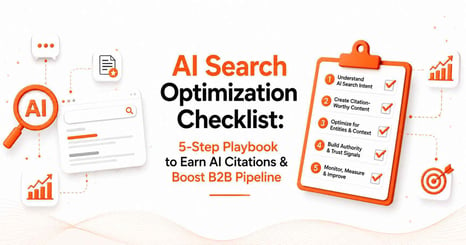
Recommended Read: AI Search Optimization Checklist: Win AI Citations and Drive B2B Pipeline - A step‑by‑step playbook for creating citation‑friendly content.
Buyer Prompt Intelligence and Share of Voice
Buyer prompt intelligence is the practice of extracting the exact natural‑language questions prospects use when interacting with AI assistants. These prompts differ markedly from the short‑tail keywords that traditional SEO tools track. For a demand‑generation leader, aligning content with real buyer prompts ensures that the engine can match your assets to the query, increasing the likelihood of citation.
Measuring share of voice optimization in ai search involves calculating the proportion of AI‑generated answers that reference your brand versus competitors for a given set of prompts. This metric provides a clear view of competitive positioning in the AI space. An analysis from a reputable research firm indicates that firms that track share of voice can pinpoint gaps where competitors dominate citations and act swiftly to close those gaps.
To operationalize prompt intelligence, collect real buyer language from sales calls, support tickets, and webinar Q&A sessions. Cluster similar prompts, prioritize those with high intent, and map them to existing content assets. Then, monitor how often your content appears in AI answers for each prompt cluster, adjusting your creation strategy to fill missing coverage.
Practical Framework for Implementing AI Search Rank Tracking
Establishing a sustainable AI search rank tracking program requires a repeatable framework that blends technology, data, and process. The core steps include baseline assessment, prompt mapping, citation monitoring, share of voice analysis, and continuous optimization. By following this structure, marketers can move from ad‑hoc observation to systematic performance management.
Below is a concise matrix that outlines the key activities, responsible roles, and typical output for each stage of the framework.
| Stage | Primary Activity | Owner | Output |
|---|---|---|---|
| Baseline Assessment | Audit existing AI citations and prompt coverage | Demand‑generation team | Visibility report |
| Prompt Mapping | Extract and cluster buyer queries | Content strategists | Prompt library |
| Citation Monitoring | Track citations across AI engines | SEO analysts | Citation dashboard |
| Share of Voice Analysis | Calculate brand citation share per prompt | Marketing ops | Competitive gap matrix |
| Continuous Optimization | Iterate content based on insights | Content creators | Updated assets |
The table illustrates how each stage produces a tangible deliverable that feeds the next step. Implementing an ai search visibility analysis tool that automates citation capture and prompt tracking accelerates this cycle, allowing teams to respond to shifts in AI engine behavior without manual spreadsheet consolidation.
Finally, embed the framework into your regular reporting cadence. Schedule quarterly reviews of citation trends, update the prompt library with emerging buyer language, and adjust content priorities based on share of voice shifts. This disciplined approach turns AI visibility into a predictable driver of pipeline growth.
FAQs
1. How can I start measuring AI citation performance without a dedicated tool?
Begin by manually sampling AI‑generated answers for key buyer prompts and noting which of your assets are referenced. Track these observations in a simple spreadsheet, then look for patterns in content type and topic. Over time, expand the sample size and consider adopting an ai search visibility monitoring platform to automate extraction and reporting.
2. What is the difference between traditional SEO rank tracking and AI search rank tracking?
Traditional SEO focuses on position within a list of links on a search results page. AI search rank tracking, by contrast, measures whether your content is quoted within a synthesized answer. The key metric shifts from URL rank to citation frequency and relevance to the specific buyer prompt.
3. Which teams should be involved in an AI search rank tracking program?
A cross‑functional effort works best. Demand‑generation leaders define business goals, content strategists map buyer prompts, SEO analysts set up citation monitoring, and marketing operations maintain the reporting cadence. Collaboration ensures that insights translate into actionable content updates.
4. How often should I review AI citation data?
Because AI models are updated regularly, a quarterly review balances the need for fresh insights with operational efficiency. During each review, assess changes in citation share, update the prompt library with new buyer language, and prioritize content revisions based on emerging gaps.
5. Can AI search rank tracking help improve overall SEO performance?
Yes. Insights from citation monitoring often reveal high‑value topics and language that also perform well in traditional search. By aligning content to both AI prompts and conventional keywords, you create a unified strategy that strengthens visibility across all search channels.
Conclusion
AI‑driven answer engines have reshaped how B2B buyers discover solutions, making citation visibility the new cornerstone of search success. By adopting an ai search visibility gap analysis tool, mapping authentic buyer prompts, and measuring share of voice, marketers can turn opaque AI rankings into a clear pipeline driver. Implement the practical framework outlined above, monitor citation trends, and continuously refine your content to stay ahead of competitors in the AI search landscape. Applying these principles will empower your team to capture the AI‑first opportunities that are rapidly becoming the primary source of inbound demand.
Recommended Authority Resources
- Reference: AI Search Visibility Stats That Might Surprise You in 2026 - Provides recent data on AI search adoption and citation trends, supporting the need for dedicated visibility tracking.
- Reference: New front door to the internet: Winning in the age of AI search - McKinsey - Offers strategic insight into how AI search is reshaping the marketing funnel and why citation share matters.
Turn Your Content Into AI-Search Winners
Get cited across ChatGPT, Claude & Perplexity — not just ranked on Google.
- Increase AI citations
- Improve answer visibility
- Track brand mentions in LLMs