


In 2026, 94% of B2B buyers use large language models during their buying process, and 72% encounter AI-generated research summaries while evaluating vendors. The real surprise is where the best answers come from, because the richest source of buyer insight already sits inside most companies: their CRM.
Key Takeaways
|
Question |
Answer |
|
What are B2B AI search signals? |
They are real buyer questions, objections, and context signals that AI systems use to synthesize answers about vendors, solutions, and categories. |
|
Why does CRM data matter for AI discovery? |
CRM records contain first‑party evidence about buyer problems, language, and decision triggers. |
|
What kind of CRM data helps the most? |
Sales call notes, deal objections, competitor comparisons, and product use cases. |
|
How can marketing teams use CRM insights? |
We convert them into topic clusters, knowledge pages, and problem‑focused content. |
|
What platforms help unify these signals? |
Systems like Omnibound’s unified intelligence sources platform combine CRM signals with market data. |
|
Where should teams start? |
Build a structured knowledge layer that turns CRM conversations into public buyer education. |
Why AI Search Is Changing How B2B Knowledge Is Discovered
Traditional discovery systems organized information around pages and links. AI systems synthesize answers directly from trusted knowledge sources.
This shift changes the signal hierarchy. Buyer context now matters more than simple keyword repetition.
B2B teams need deeper knowledge sources. Real conversations, questions, and decisions provide that depth.
This is why first‑party data matters more in 2026 than ever before.
Most B2B Teams Look in the Wrong Place for AI Search Insights
Many marketing teams still rely on keyword tools, competitive blog analysis, and trend reports. Those inputs describe what the internet is saying.
They rarely show what buyers are actually asking. That knowledge lives inside your pipeline data.
Sales conversations expose real friction. Buyers explain their priorities, confusion, and constraints in detail.
Those conversations generate the most valuable B2B AI search signals.
What Your CRM Actually Knows About Your Market
Your CRM is not just a revenue system. It is a living record of buyer behavior.
Every opportunity contains language that describes how customers think about problems.
Hidden inside those records are signals such as:
- Sales call questions
- Deal blockers
- Competitor comparisons
- Feature requests
- Industry‑specific use cases
- Budget triggers
These signals represent authentic buyer vocabulary. AI systems value that authenticity because it reflects real market intent.
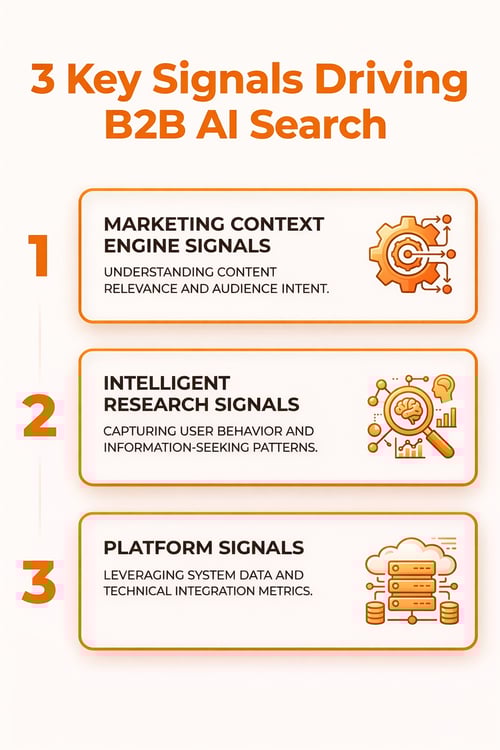
This infographic highlights the three signals driving B2B AI search. It helps buyers and marketers prioritize where to focus.
Why CRM Data Is Perfect for AI Search Optimization
CRM insights reveal the full buyer logic. They show the sequence of problem, context, and solution.
For example, a sales note might read: “How does marketing orchestration integrate with Salesforce?”
This is not a keyword. It is a complete research question.
When teams build content around these questions, they align directly with how buyers ask AI systems for help.
Did You Know?
Generative search queries average 23 words in length, compared to just 4 words in traditional search behavior.
How CRM Insights Shape AI‑Optimized Content Strategy
CRM signals provide the raw material for strategic content development. Instead of guessing topics, we work from buyer evidence.
This approach ensures every page addresses a real question that emerged during the buying process.
|
CRM Signal |
Content Opportunity |
|
Deal objections |
Problem explanation pages |
|
Competitor comparisons |
Vendor comparison guides |
|
Industry challenges |
Vertical use‑case pages |
|
Integration questions |
Technical documentation and guides |
Each piece contributes to a deeper knowledge footprint around the category.
CRM Data Reveals Real Buyer Intent Signals
Marketing analytics show behavior. CRM conversations show reasoning.
Intent signals often appear in notes before they show up anywhere else. Buyers explain why they care about certain features or capabilities.
Capturing those patterns creates a map of buyer priorities.
That map becomes a strategic advantage when building knowledge resources for the market.
How Leading B2B Teams Operationalize CRM Knowledge
High performing marketing teams operationalize buyer knowledge. They treat CRM insights as a strategic data layer.
This process creates alignment between sales and marketing.
Common operational practices include:
- Tagging sales calls by topic
- Tracking recurring objections
- Extracting buyer quotes
- Mapping questions to knowledge pages
- Updating personas with live signals
- Extract buyer questions from CRM conversations
- Group questions into topic clusters
- Create structured knowledge pages
- Continuously update insights as new conversations appear
Platforms such as the Omnibound Marketing Context Engine unify these signals into a single context layer.
AI‑Driven Marketing Signals Require Structured Knowledge
AI systems prefer structured, evidence‑based knowledge. Random blog content rarely provides the depth needed.
CRM insights provide the missing context layer. They show the reasoning behind buyer decisions.
When teams organize this intelligence into structured knowledge hubs, they dramatically improve their visibility in AI‑driven research tools.
Did You Know?
Only 11% of B2B marketers say that most of their content is prepared for AI discovery and generative answer engines.
A Simple Framework to Turn CRM Data Into AI Search Advantage
Turning CRM insight into market knowledge does not require complex infrastructure. It requires a disciplined process.
We recommend a four‑step framework:
Solutions such as Omnibound Intelligent Research automate this process by converting signals into living ICP intelligence.
The Future of B2B Discovery Runs on First‑Party Buyer Intelligence
The companies that dominate AI discovery in 2026 are not publishing the most content. They understand their buyers better than anyone else.
CRM systems capture the raw truth of the market. They record the exact problems buyers are trying to solve.
When that knowledge becomes structured and public, it becomes a powerful signal in AI‑driven research systems.
This is why the most valuable dataset in B2B marketing is not external trend data. It is the conversation history already sitting in your pipeline.
Conclusion
The biggest competitive advantage in AI discovery is not more keywords or more content. It is deeper buyer intelligence.
Your CRM already contains the questions, objections, and comparisons that shape buying decisions.
B2B teams that convert this intelligence into structured knowledge will lead the next generation of AI‑driven discovery.
At Omnibound, we focus on turning those signals into a unified marketing intelligence layer, so every piece of content reflects real customer truth.