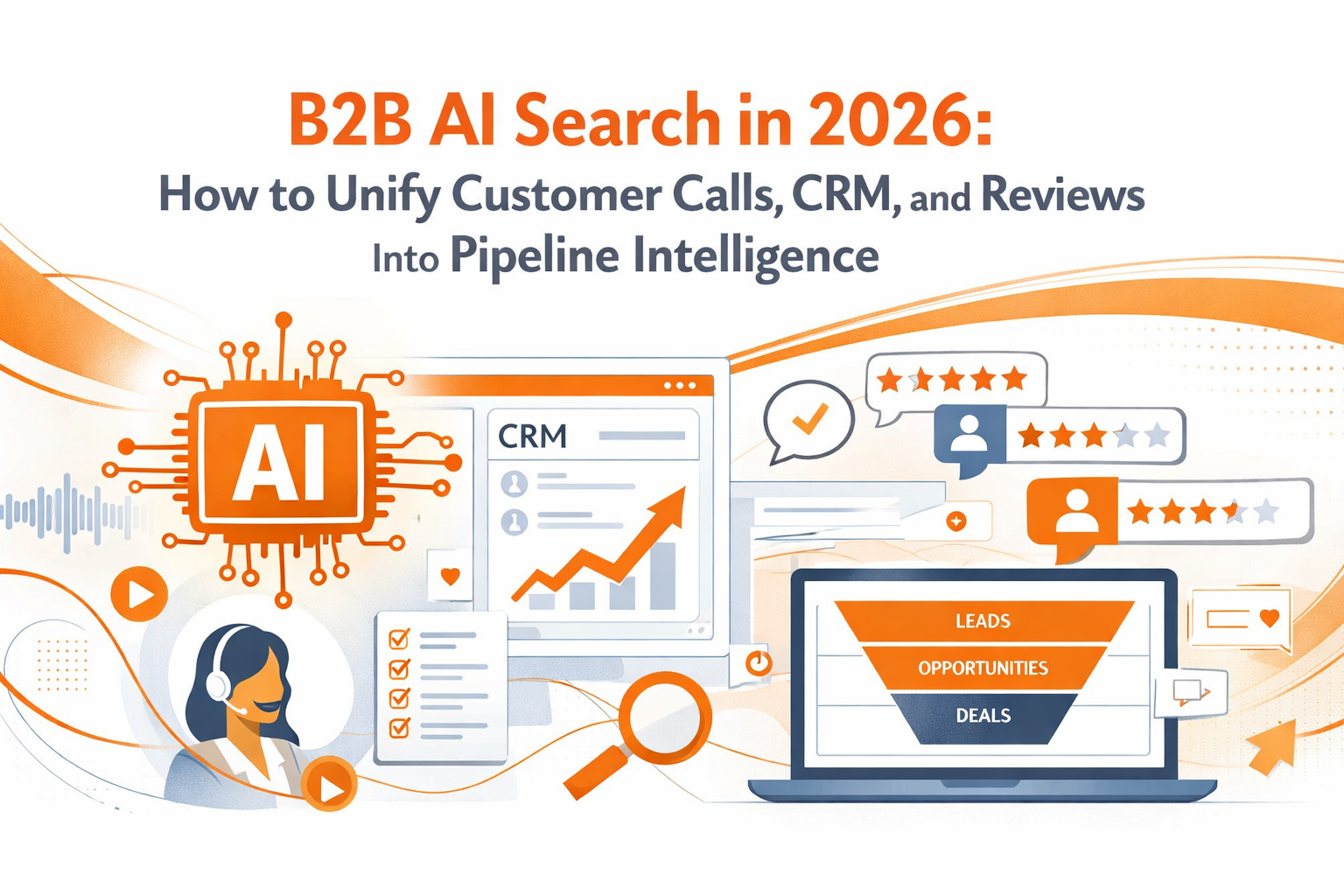


67% of B2B buyers now use AI search tools during their purchase research process, a 180% increase since early 2024, and this shift is exposing a major problem. B2B teams already have the data, but it is scattered across systems and impossible to act on.
Key Takeaways
|
Question |
Answer |
|---|---|
|
What is B2B AI search? |
It is how buyers use AI tools to research vendors using real intent-driven queries. |
|
Why is data fragmented? |
CRM, calls, and reviews exist in silos with no shared intelligence layer. |
|
How does AI unify customer data? |
It combines structured and unstructured signals into actionable insights. |
|
What is a unified customer view AI? |
A system that connects all touchpoints into one intelligence layer. |
|
What enables better pipeline outcomes? |
AI-powered unified data platforms that convert insights into content and strategy. |
|
Where to learn more? |
Intelligent research systems that evolve with customer signals. |
The Real Problem: Data Exists Everywhere but Intelligence Exists Nowhere
B2B teams are sitting on massive volumes of data from sales calls, CRM entries, reviews, and support conversations.
The issue is not data scarcity, it is the absence of unified intelligence.
Fragmentation creates blind spots:
- CRM holds structured deal data
- Calls contain real buyer intent
- Reviews reveal product truth
- Support logs expose friction
When these signals stay disconnected, insights never surface.
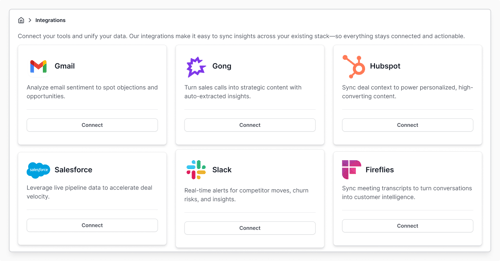
Why Customer Data Is Broken in B2B Organizations?
Most companies struggle because their systems were never designed to work together.
This creates gaps between data collection and decision making.
Siloed systems
CRM platforms, call tools, and review platforms operate independently.
Unstructured data
Calls and reviews are rich but difficult to analyze at scale.
No intelligence layer
Data is stored but not translated into insight.
What It Means to Unify Customer Calls, CRM, and Reviews with AI?
Unification means combining structured and unstructured data into one system.
AI extracts patterns, connects signals, and produces usable insights.
The shift is clear:
- From storage to intelligence
- From data to decisions
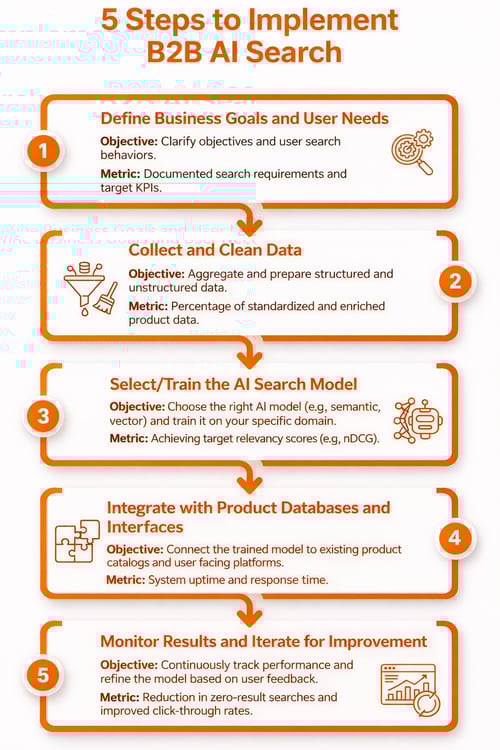
Visual guide outlining the five steps to implement B2B AI search.
Traditional vs AI-Driven Data Systems
Traditional systems rely on dashboards and manual analysis.
AI-driven systems deliver real-time, predictive intelligence.
|
Traditional |
AI-Driven |
|---|---|
|
Static dashboards |
Real-time insights |
|
Structured only |
Structured + unstructured |
|
Reactive |
Predictive |
Did You Know?
AI search visitors convert 4.4x better than traditional visitors and spend up to 3x longer engaging with content.
What Insights Become Possible After Unification?
Once data is unified, entirely new insights emerge.
These insights reflect real buyer behavior, not assumptions.
- Buyer intent from calls
- Objection patterns across deals
- Product feedback from reviews
- Messaging gaps in conversations
Why Insights Alone Are Not Enough?
Most platforms stop at generating insights.
But insights must drive execution to create impact.
They must:
- Shape content
- Guide messaging
- Influence visibility
How Unified Data Powers AI Search Visibility?
AI systems prioritize content that reflects real user language and intent.
Unified data provides exactly those signals.
Loop:
- Data → Insights → Content → Visibility → Pipeline
Did You Know?
Digitally mature B2B companies that unify data exceed growth targets by 110% more than competitors.
Why Most B2B Teams Fail at AI Search?
Teams are misaligned across data, content, and go-to-market strategy.
This disconnect prevents execution.
- Data teams do not influence content
- Insights do not reach marketing
- CRM data is not used for messaging
How Omnibound AI Turns Unified Data into Pipeline?
We connect customer calls, CRM data, reviews, and engagement signals into one intelligence layer.
This enables direct pipeline impact.
- Identify real buyer questions automatically
- Create AI-aligned content
- Align messaging with real language
- Improve visibility and pipeline influence
Implementation Framework for B2B AI Search
Execution requires a structured approach.
Each step builds on unified intelligence.
- Integrate CRM, calls, and reviews
- Apply AI analysis
- Extract insights
- Map insights to content
- Optimize for AI-driven discovery
New metrics that matter:
- Insight-to-content ratio
- Pipeline influenced
- Messaging alignment
Conclusion
The companies that win in B2B AI search in 2026 are not the ones with the most data.
They are the ones that connect their data, turn it into insight, and use it to drive pipeline.