

94% of buying groups rank their shortlist in order of preference before they initiate contact with sales, and the top-ranked vendor wins 80% of the time. Most B2B teams do not lose deals because of bad products, they lose because they tell the wrong value story at the wrong buying stage.
Modern go-to-market strategies in 2026 require a shift from static positioning to dynamic value narratives. We believe that an effective AI positioning and messaging tool is essential for teams that want to deliver the right context at every touchpoint.
Key Takeaways
|
Topic |
Strategic Insight |
|---|---|
|
What is a value narrative? |
A value narrative is an evolving story that frames why change matters, rather than just what you sell. You can build these effectively using marketing strategy frameworks. |
|
How is messaging different by stage? |
Early stage focuses on problem framing and risk, while late stage focuses on justification and business impact. Our AI content marketing platform helps automate this shift. |
|
How do you align narratives with intent? |
Use real-time signals to detect where a buyer is in their journey. This ensures your demand generation efforts remain relevant. |
|
Why use an AI positioning tool? |
These tools analyze customer conversations and market signals to keep narratives fresh. It is the core of our B2B marketing context engine. |
|
How to scale narratives? |
Operationalize narratives by mapping them directly to assets like battle cards and landing pages. Explore AI agents for automated deployment. |
What is a Value Narrative? (And Why It Is Not Just Messaging)
A value narrative is a story that frames the necessity of change for your buyer. While a value proposition defines your offer, the narrative explains the market shift that makes your offer mandatory in 2026. Messaging often focuses on features or isolated benefits that lack context. A narrative connects those benefits to a larger industry arc, making the decision to buy feel like a logical evolution for the business.
Complex B2B decisions involve multiple stakeholders who all perceive value differently. Using an AI positioning and messaging tool allows us to tailor these narratives to different personas while maintaining a consistent core story.
Why Buying Stage Context Changes How Value is Perceived?
Buyers do not evaluate your product the same way on day one as they do on day ninety. In the early stages, value is defined by the clarity of the problem and the potential risks of staying the same.
Mid-stage buyers look for differentiation logic and frameworks that prove your approach is superior to alternatives. By the final stage, value shifts toward internal justification and the reduction of perceived implementation risk.
We use intelligent research to understand these shifting mindsets. This ensures that our value narratives remain aligned with the specific questions buyers are asking at each moment.
Stage 1: Creating Value Narratives for the Awareness Stage
At the awareness stage, the primary goal is to frame the problem in a way that creates a sense of urgency. We focus on market signals and emerging risks that make the status quo untenable for the prospect.
Narratives here should include a description of an industry shift and the cost of inaction. Avoid product claims or ROI promises at this point, as they can feel premature and reduce trust.
Our AI positioning and messaging tool helps identify the specific language customers use when they first realize they have a problem. This ensures the narrative feels authentic and resonates with their immediate pains.
Stage 2: Creating Value Narratives for the Consideration Stage
When buyers enter the consideration stage, they are looking for differentiation logic and trade-offs. The narrative must pivot to explain why your specific path is the most logical choice compared to other categories. Use frameworks rather than just facts to help the buyer organize their thinking. This is where product marketing teams excel by creating battle-ready narratives that handle competitive pressure.
Consistency is vital as the buyer begins to compare multiple solutions. We recommend using unified intelligence to ensure that every asset reflects the same strategic narrative throughout the funnel.
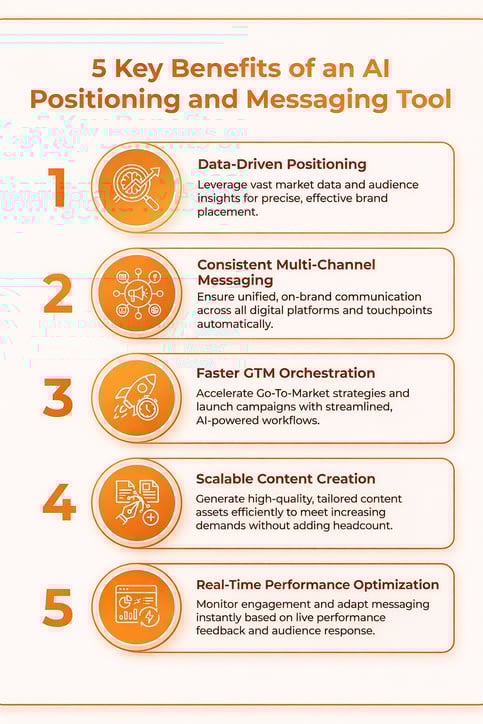
This infographic highlights five essential benefits of using an AI positioning and messaging tool. It explains how automated insights can sharpen messaging, improve positioning, and speed go-to-market.
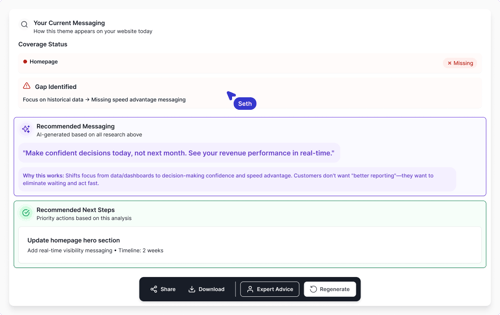
Stage 3: Creating Value Narratives for the Decision Stage
In the decision stage, the narrative must empower the champion to sell the solution internally. Focus on risk reduction, social proof, and business impact framing that aligns with executive priorities. Narrative components should include clear change enablement plans and evidence of past success. We use customer marketing signals to ground these late-stage stories in real outcomes.
Buyers at this stage are often looking for reasons to say no to avoid making a mistake. Your narrative must provide the psychological safety required to sign the contract with confidence.
Did You Know?
86% of B2B purchases stall during the buying process, and 81% of buyers are dissatisfied with the provider they ultimately choose.
Mapping Value Narratives to Channels & Assets
Consistency across channels ensures that your narrative remains persuasive as the buyer moves between touchpoints. We recommend mapping each stage-specific narrative to corresponding website pages and sales decks.
For example, awareness narratives belong on high-level blog posts, while decision narratives should dominate your product pages and demos. An AI positioning and messaging tool can help maintain this alignment automatically. Using content marketing tools allows us to turn positioning into launch pages and battle cards instantly. This ensures that the narrative you designed in the boardroom is what actually reaches the customer.
Common Mistakes Teams Make with Value Narratives
One of the most frequent mistakes is using a single, static narrative across the entire funnel. This leads to sending irrelevant outreach that 73% of B2B buyers now actively avoid. Another common error is leading with proof or ROI too early in the journey. When you jump into the solution before the buyer has fully accepted the problem, you reduce the effectiveness of your engagement.
Many teams also fail to update their narratives based on real-time buying signals. We suggest using a context engine to ensure your messaging stays grounded in current market reality.
How to Operationalize Value Narratives at Scale
Operationalization requires moving beyond manual messaging spreadsheets and adopting automated intelligence. By using an AI positioning and messaging tool, teams can detect buying stages from CRM signals and update narratives dynamically. We align marketing and sales teams around a single source of truth for every persona. This prevents the "messaging drift" that often happens during long B2B sales cycles in 2026.
The goal is to move from static PDFs to living narratives that adapt to every interaction. This level of orchestration ensures that your value story is always working to move the deal forward.
Did You Know?
73% of B2B buyers actively avoid suppliers that send irrelevant outreach.
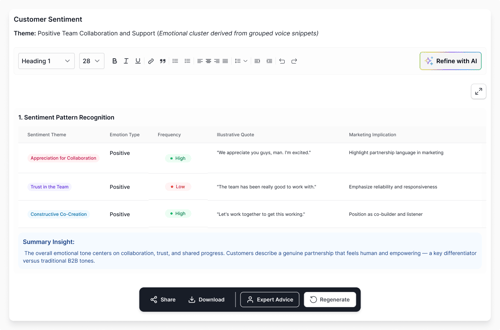
Future of Value Narratives: From Static Messaging to Living Narratives
The future of B2B messaging lies in signal-driven narrative shifts that happen in real-time. As AI agents become more sophisticated, they will orchestrate narratives across thousands of touchpoints simultaneously.
Static positioning is becoming a relic of the past as markets move faster than ever. We focus on building enterprise-grade solutions that keep narratives compliant yet flexible. Teams that embrace living narratives will be able to maintain a competitive edge by responding to market changes instantly. This ensures that your brand always sounds relevant, regardless of how the industry evolves.
Conclusion: A Simple Value Narrative Playbook
Creating value narratives by buying stage is not a luxury, it is a requirement for B2B success in 2026. By aligning your story with the buyer's mindset, you move from being a vendor to a trusted advisor. Start by auditing your current content and identifying where narratives lack stage-specific context. Use an AI positioning and messaging tool to bridge the gap between your strategy and your execution.