.webp)


Most B2B teams are working hard but not winning consistently. With buyers nearly 70% through their purchasing process before engaging with sellers, there is almost no room for strategic mistakes anymore. The teams that win treat B2B marketing as an interconnected system where research, strategy, content, and execution share one source of truth. The teams that struggle usually have the same handful of gaps in their approach, and those gaps are widening as buying behavior shifts toward AI-powered search experiences.
Why Most B2B Marketing Strategies Fail Before They Even Launch
Most B2B marketing strategies do not fail from lack of effort. They fail because strategy, data, execution, and measurement operate on different islands. Campaigns run, budgets burn, but because teams cannot see a unified picture of customers, pipeline, and signals, they cannot course correct in time.
Strategy Without Context Is Just Guessing
Too many plans start in a slide deck, not in customer reality, and they stay static while buyers and markets change weekly. High-growth teams solve this by grounding strategy in a single, living context layer that unifies customer, pipeline, and market signals into something every team member can act on.
Tools Do Not Fix Broken Strategy
Buying more tools without a clear process usually adds complexity, not clarity. Teams end up with disconnected data and inconsistent execution. Modern B2B leaders instead use a platform approach, where systems connect natively and feed a single intelligence layer that drives decisions.
Mistake #1: No Clear ICP or Buyer Understanding
One of the most common B2B marketing strategy mistakes is building plans around vague personas like "mid-market IT leaders" instead of precise ICPs grounded in live data. This leads to campaigns that try to talk to everyone and end up resonating with no one, which hurts engagement, lead quality, and sales confidence.
Why Vague Targeting Breaks Your Pipeline
When your ICP is a static slide, not a living profile, you miss shifts in budget ownership, job titles, and buying triggers inside your target accounts. Sales then receives leads that look right on paper but are not actually in-market or aligned with your best-fit customers.
How High-Growth Teams Fix ICP and Buyer Insight
Winning teams treat ICPs and personas as dynamic assets, refreshed by real customer persona research that captures buyer conversations, CRM data, win and loss feedback, and market signals. Customer Intelligence means your ICPs, pains, and desired outcomes stay updated in real time instead of once a year. As buyer questions evolve, your targeting evolves with them.
Practical Fix: Build a Living ICP Using Intelligent Research
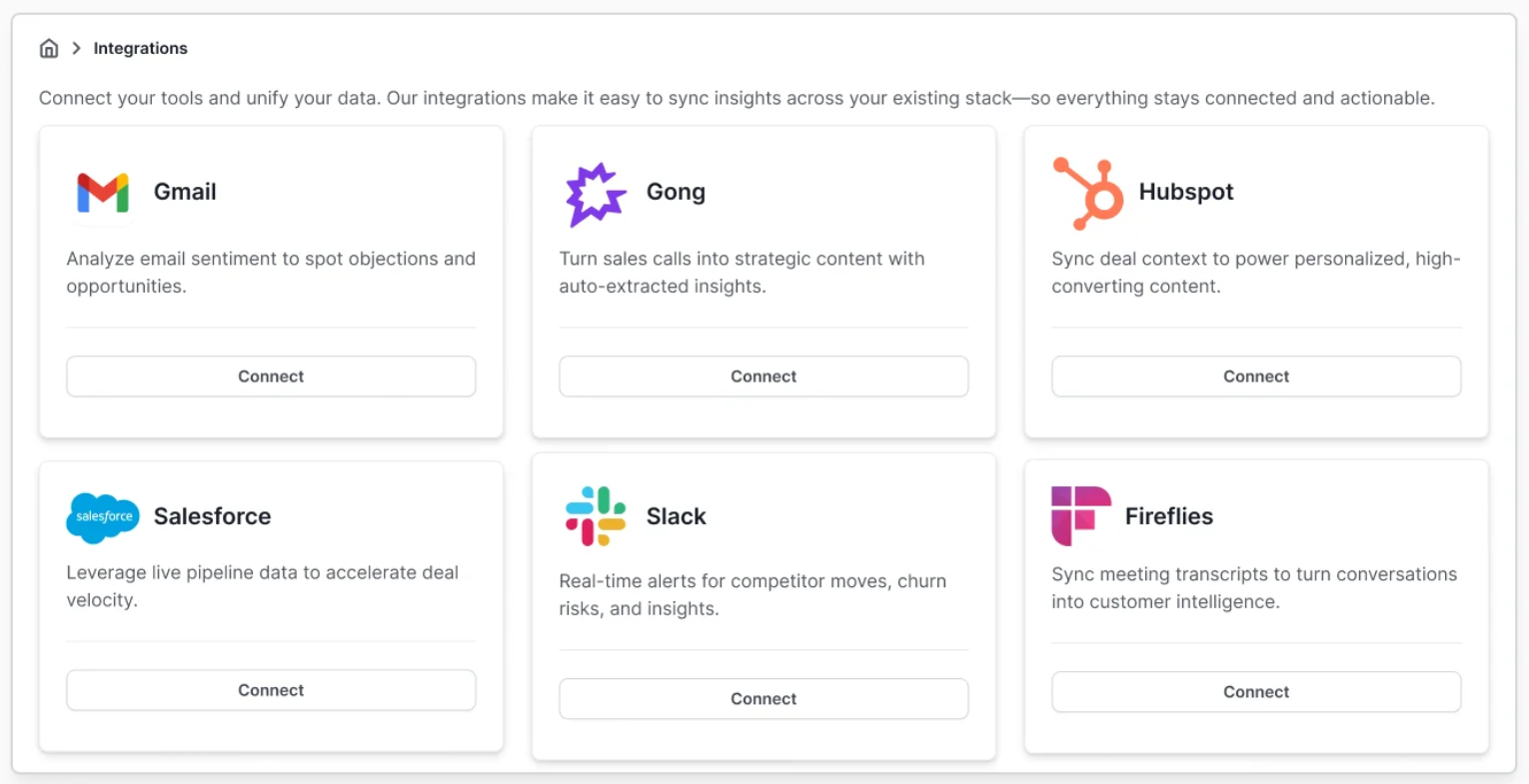
- Connect CRM, call recordings, tickets, and external sources into one research layer.
- Track goals, pains, decision barriers, and language your buyers actually use.
- Identify buying triggers and signals that indicate when an account is moving into an active cycle.
This is where a capability like Omnibound Intelligent Research shines, since it turns those signals into continuously updated ICPs and personas that your whole team can execute against.
Mistake #2: Confusing Tactics with Strategy
Another frequent B2B marketing mistake is jumping straight into channel decisions, like "let us run LinkedIn ads" or "let us publish more content", without a clear strategic spine. This creates a patchwork of activities that are hard to measure and almost impossible to scale.
Why Tactic-First Planning Fails
Channels are multipliers, not saviors. If your positioning, ICP, and value narrative are unclear, more tactics just amplify confusion. You also lose the compounding effect of campaigns that build on each other across quarters and buying stages.
How To Build Strategy Before Tactics
High-growth teams start by answering four questions clearly: who are we for, what problems do we solve, how are we different, and how will we create and capture demand over time. They then translate those answers into specific content, campaign, and channel plays that serve pipeline stages, not internal preferences.
Practical Fix: Use a Strategy Engine to Orchestrate Tactics
We recommend building or adopting a strategy engine that converts research and context into concrete strategic outputs like positioning, value narratives by audience and stage, GTM motion, and campaign roadmaps. With that in place, tactics stop being random bets and start acting as coordinated plays marching toward the same revenue goals.
Mistake #3: Chasing Vanity Metrics Instead of Revenue Metrics
Many teams celebrate increases in traffic, followers, or impressions, but still miss pipeline and revenue targets. This erodes internal trust in marketing. The real issue is not activity volume. It is measurement that is disconnected from the buying journey and revenue outcomes.
Vanity Metrics vs. Business Metrics
Pageviews, impressions, and email opens feel good on a dashboard but tell you nothing about whether marketing is influencing pipeline. Sales accepted opportunities, qualified pipeline in ICP accounts, stage progression, and win rate impact are the metrics that actually matter to your revenue team.
How High-Growth Teams Measure What Matters
Strong B2B teams align marketing KPIs with the same revenue goals sales and finance use, such as qualified pipeline, expansion revenue, and deal velocity. They use funnel-based views and multi-touch thinking to understand which programs move accounts from unaware, to engaged, to opportunity, to closed and expanded.
Practical Fix: Build a Revenue-Aligned Measurement Model
This requires data flowing cleanly between systems, which is why an integrated context and execution platform often replaces a patchwork of disconnected point tools. When your marketing data turns into actionable insights, you can finally connect every campaign to revenue impact.
Mistake #4: Siloed Teams and Disconnected Systems
One of the more hidden B2B marketing strategy challenges is that marketing, sales, RevOps, and product teams each see a different version of the truth. When systems do not talk to each other, handoffs break, customer journeys feel disjointed, and insights stay trapped in one department.
How Silos Show Up in Day-to-Day Execution
Marketing runs campaigns without access to detailed win and loss data, while sales calls reveal objections that never reach content teams. Support hears recurring pains and product feedback that would be gold for messaging, but there is no easy way to feed that back into strategy.
How a Unified Context Layer Fixes Silos
High-growth B2B organizations centralize signals from CRM, calls, tickets, reviews, and external sources into one context engine that everyone can tap into. Marketing then plans content and campaigns based on the same reality that sales, success, and product are experiencing every day.
Mistake #5: One Size Fits All Messaging
Sending the same message to every persona, industry, and stage is one of the fastest ways to lose attention in long B2B buying cycles. With the average buying cycle lasting 11.3 months and involving about 11 people, generic messaging simply cannot do the job alone.
Why Generic Messaging Fails in Complex Buying Groups
Different members of the buying group care about very different outcomes, risks, and metrics, which means a single broad value proposition rarely resonates deeply. Over time, this creates buyer fatigue, where decision makers see your brand as "just another vendor" and tune you out.
How High-Growth Teams Use Stage and Role-Based Messaging
Modern B2B marketers build value narratives that are specific to role, industry, and buying stage, then deploy them consistently across every surface where buyers encounter the brand. That includes your website, LinkedIn presence, knowledge base, and the AI-powered search experiences where buyers now conduct research. Messaging consistency across all of these channels reinforces brand marketing authority and makes it easier for buyers to trust your perspective at every touchpoint.
Mistake #6: Ignoring Buyer Intent and Signals
Many teams treat marketing as a linear funnel instead of an always-on system tuned to buyer intent signals across channels. The result is reactive marketing, where outreach starts only after a demo request, even though buyers behave and research long before that moment.
Why Waiting to Engage Costs You Deals
Studies show that 92% of buyers start with at least one vendor in mind, and 41% already have a single preferred vendor before formal evaluation begins. If you are not visible and useful while they are defining requirements and exploring the problem, you are playing catch up against vendors who shaped the conversation earlier.
How High-Growth Teams Use Intent to Prioritize Effort
Winning teams connect signals like content consumption, site behavior, sales conversations, support tickets, reviews, and market shifts into one intent picture at the account level. They then prioritize engagement, personalization, and sales outreach based on those signals, rather than simple lead scores or form fills alone.
Mistake #7: Over Reliance on Tools Without Process
Buying a new platform or AI tool without clear use cases and workflows is one of the most expensive B2B marketing strategy pitfalls. Underused martech stacks drain budget and time, while teams keep working from spreadsheets and manual processes because nothing feels integrated.
Why Tools Alone Do Not Create Impact
Technology multiplies whatever process you give it. If your process is unclear or inconsistent, the tool will simply scale that inconsistency. This is why many organizations report having many tools but still struggle to get timely insights, content, or campaigns out the door.
How High-Growth Teams Design Process Before Platform
Modern teams first define workflows for research, strategy, content planning, production, distribution, and optimization, then select tools that support those flows. They prefer platforms where research, context, and execution connect, so marketers do not have to stitch systems together manually.
Mistake #8: Treating Content as a One-Off Project
Many B2B organizations treat content as a campaign asset factory instead of as an ongoing, evidence-based engine that drives awareness, consideration, and expansion. This creates disjointed buyer experiences and makes it hard to build authority in the topics that matter most to your ICP.
Why Ad Hoc Content Fails to Support Long Buying Cycles
With buyers consuming multiple content formats across an 11-month average cycle, sporadic content drops leave big gaps in the journey. Short campaigns optimized for a single quarter rarely match the longer timelines buyers follow to educate themselves and align internal stakeholders.
How High-Growth Teams Build Connected Content Engines
Winning teams design content around ICP problems, buying triggers, and journey stages, then connect research, strategy, and production in one flow. They also think deliberately about AI Search discoverability. Content that is grounded in real buyer questions and market context is more likely to earn citations in AI-powered search experiences. This means building AI-ready content that answers specific buyer questions with evidence and clarity, rather than producing generic thought leadership that disappears into the noise.
Practical Fix: Link Content Production Directly to Strategy and Signals
An AI-supported content production workflow lets you scale this kind of programmatic content without sacrificing quality or alignment. When every asset is tied to ICP, stage, and signal, content becomes a compounding asset that builds authority over time.
Mistake #9: Ignoring Governance, Security, and Scalability
As B2B marketing strategies become more data-driven and AI-powered, governance, security, and scalability are no longer optional. Teams that overlook these foundations risk inconsistent messaging, compliance issues, and stalled adoption across regions or business units.
How High-Growth Teams Build a Secure, Scalable Foundation
Leading organizations standardize how they handle customer data, how AI is used in workflows, and how messaging frameworks are approved and distributed. They also choose partners that meet enterprise standards for security, privacy, and compliance, so marketing can move fast without creating risk.
Mistake #10: No Simple Diagnostic Framework to Course Correct
Perhaps the most overlooked B2B marketing problem is the lack of a simple, repeatable way to diagnose what is working and what is broken in your strategy. Without a framework, every quarter feels like starting from scratch with new ideas, instead of refining a proven system.
How To Audit Your Current B2B Marketing Strategy
Start by asking a few direct diagnostic questions with your team:
- Are we targeting the right accounts and buyers based on current data, not last year's assumptions?
- Do we know which programs actually drive pipeline, velocity, and expansion for our ICP?
- Are marketing, sales, RevOps, and product aligned on definitions, stages, and core narratives?
- Can we see and act on buyer signals in near real time across systems?
Mistake #11: Ignoring AI Search in Your Marketing Strategy
Many companies still optimize only for traditional search rankings, paid campaigns, and website traffic. That approach made sense five years ago. Today, modern buyers increasingly begin their research inside ChatGPT, Google AI Overviews, Gemini, Claude, and Perplexity. These AI-powered search experiences are where buyers form initial opinions, shortlist vendors, and define requirements before they ever visit your website.

Ignoring AI Search creates a visibility gap that compounds over time. If your brand is not cited or recommended in the answers buyers receive from these tools, you are invisible at the exact moment purchase intent is forming. This is not about replacing your current search strategy. It is about extending it to cover the surfaces where buyers now start their journeys.
How High-Growth Teams Build AI Search Visibility
Leading teams track the real prompts their buyers use across ICPs and personas. They monitor which sources earn citations in AI-generated answers and where gaps exist. With AI Search visibility tools, they can see every prompt, every citation, and every gap, then prioritize content that fills those gaps with authoritative, AI-citable answers.
Competitive Intelligence also plays a role here. Modern teams monitor competitor positioning, AI visibility, and AI citations to understand where rivals are winning recommendations and where their own brand has an opening. This is not about chasing every prompt. It is about focusing on the buyer questions that matter most to your ICP and making sure your content answers them better than anyone else.
Mistake #12: Building Content Around Keywords Instead of Buyer Questions
Traditional content planning often follows a simple pattern: find a keyword, write an article, optimize for that term. That approach worked when buyers relied on keyword-based search to find information. It works less well when buyers ask conversational questions in AI-powered tools and expect comprehensive, contextual answers.
The modern approach flips the workflow. Instead of starting with a keyword, start with a buyer question. Run customer research to understand what buyers actually ask at each stage of their journey. Layer in market context to understand how the competitive landscape shapes those questions. Then produce AI-ready content that answers the question thoroughly, with evidence and perspective that earns citations in both traditional and AI-powered search experiences.
This approach reinforces your entire content ecosystem. When every piece of content is anchored to a real buyer question, your strategy becomes more coherent, your authority grows, and your visibility improves across every channel where buyers look for answers. Teams that use a B2B AI Search playbook can operationalize this workflow instead of leaving it to individual content creators.
Mistake #13: Treating Marketing and GTM as Separate Strategies
One of the most damaging execution gaps in B2B companies is the separation between marketing strategy and go-to-market strategy. When marketing plans in isolation from sales, product, and revenue targets, the result is a collection of execution failures that quietly erode pipeline.
Common symptoms include sales misalignment, where marketing generates leads that sales does not trust or follow up on. Product misalignment shows up as messaging that overpromises or misses the actual value buyers experience. Messaging inconsistency means the story buyers hear on your website differs from what they hear from sales, which differs from what they read on LinkedIn. Campaign fragmentation and channel conflicts further dilute impact, as teams compete for the same audience without coordination.
Why Unified Intelligence Matters
The fix is not more meetings. It is shared intelligence. When marketing, sales, and product teams work from the same customer intelligence, market intelligence, and competitive intelligence, execution becomes coordinated by default. Everyone understands the same buyer questions, the same competitive gaps, and the same strategic priorities. This is the foundation of a unified B2B marketing strategy that drives revenue instead of activity.
Mistake #14: Measuring Only Traffic and Ignoring Modern Visibility Metrics
Traditional marketing dashboards focus on sessions, rankings, and MQL counts. These metrics still matter, but they no longer capture the full picture of how buyers discover and evaluate B2B brands. Modern measurement needs to account for visibility in the places where buyers actually start their research.
Forward-thinking teams now track AI visibility, which measures how often their brand appears in AI-generated answers to buyer questions. They monitor recommendation frequency, or how often AI-powered tools recommend their product relative to competitors. Share of voice has expanded beyond traditional search results to include AI citations. Buyer engagement metrics now include interactions with AI-assisted research tools.
Branded discovery tracks whether buyers arrive at your brand through AI recommendations or through traditional channels alone.
Adding these metrics to your dashboard does not replace revenue measurement. It complements it. When you can see both pipeline impact and visibility across emerging search experiences, you get a clearer picture of where your strategy is working and where gaps are forming before they hurt revenue.
Mistake #15: Never Updating Your Strategy After Launch
Many B2B teams treat strategy as a launch event. They build a plan, kick it off, and then shift into execution mode without revisiting the strategy until the next annual planning cycle. This is one of the most common execution gaps supported by real search data. Strategies fail not because they were wrong at launch, but because the market shifted and the strategy did not shift with it.
Successful teams continuously review customer feedback, market changes, competitor messaging, AI Search visibility, and content performance. They treat strategy as a living system that learns from results, not a document that sits untouched for months. This approach aligns with what high-growth teams call continuous optimization, and it is central to how Omnibound helps marketers identify competitive gaps, understand customer questions, and monitor market shifts without starting over every quarter.
Modern B2B Strategy Checklist
Instead of the traditional planning-to-execution model, modern B2B teams follow a more dynamic sequence. This framework replaces static planning with continuous intelligence and optimization:
- Customer Intelligence - Understand buyer questions, pains, goals, and language through living research that updates as conversations change.
- Market Intelligence - Track category trends, analyst shifts, and industry signals that affect how buyers frame their problems.
- Competitive Intelligence - Monitor competitor positioning, messaging changes, and share of voice across traditional and AI-powered channels.
- AI Search Intelligence - Track buyer prompts, citation gaps, and recommendation frequency across AI-powered search experiences.
- Strategy - Translate all of this intelligence into positioning, messaging, GTM direction, and campaign roadmaps.
- Execution - Orchestrate content, campaigns, and channels from one shared context layer.
- Continuous Optimization - Review performance, feedback, and market shifts regularly and adjust strategy in real time.
Teams that use a living research engine can power this entire checklist from a single platform, ensuring that every decision is grounded in current buyer and market reality rather than assumptions from last quarter.
Conclusion
Common B2B marketing strategy mistakes are not a sign that your team is not working hard. They are signals that strategy, data, execution, and measurement are not fully connected yet. The biggest mistakes are no longer just poor messaging or weak execution. Modern teams also lose visibility when they ignore how buyers discover brands through AI-powered search experiences.
High-growth teams win because they fix the fundamentals, use unified context to guide every decision, and treat marketing as an orchestrated revenue engine instead of a collection of tactics. If your team is feeling the gap between effort and pipeline, now is the right time to revisit how you define ICPs, build strategy, produce content, measure success, and extend your visibility into the AI-powered search environments where buyers now start their journeys.
FAQ
What Are the Most Common Mistakes Brands Make with Answer Engine Optimization?
The most common Answer Engine Optimization (AEO) mistakes are optimizing only for traditional search, creating keyword-first instead of question-first content, ignoring AI citation opportunities, and failing to monitor AI visibility. Omnibound helps teams identify buyer prompts, citation gaps, and competitor recommendations so they can build content that earns visibility across AI-powered search experiences.
What Are the Biggest Mistakes B2B Companies Make When Adopting Intent Data Platforms?
Many B2B companies treat intent data as an isolated dataset instead of combining it with customer, market, competitive, and AI Search intelligence. This creates disconnected decisions and weak execution. Omnibound unifies these signals into a shared intelligence layer, enabling teams to prioritize high-intent opportunities with greater context and accuracy.
What's the Best B2B SaaS Marketing Strategy?
The best B2B SaaS marketing strategy is built on continuous customer, market, competitive, and AI Search intelligence rather than static annual plans. High-performing teams translate these insights into positioning, content, campaigns, and measurement that evolve with buyer behavior. Omnibound supports this continuous strategy by keeping decisions aligned with real-time market signals.
What Are the Key Components of a Solid Marketing Strategy Roadmap for a B2B SaaS Company?
A strong B2B SaaS marketing strategy roadmap includes customer intelligence, market intelligence, competitive intelligence, AI Search intelligence, clear positioning, coordinated execution, revenue-focused measurement, and continuous optimization. Omnibound connects these components into a single workflow, helping marketing teams move from fragmented planning to an adaptive, intelligence-driven growth strategy.
What are the biggest B2B marketing strategy mistakes?
The most damaging mistakes are unclear ICPs, tactic-first planning, vanity metrics, siloed teams, generic messaging, ignored intent signals, tool overload without process, one-off content, weak governance, no diagnostic framework, ignoring AI Search, keyword-first content planning, separating marketing from GTM, measuring only traffic, and never updating strategy after launch.
Why do B2B GTM strategies fail?
B2B GTM strategies fail most often from execution gaps: sales misalignment, product misalignment, messaging inconsistency, campaign fragmentation, and channel conflicts. These failures happen when marketing, sales, and product teams operate from different data and different assumptions instead of shared intelligence.
How do you avoid execution gaps in B2B marketing?
Avoid execution gaps by building a unified context layer that every team can access. When marketing, sales, RevOps, and product share the same customer intelligence, market intelligence, and competitive intelligence, execution becomes coordinated by design rather than by force.
How is AI Search changing B2B marketing strategy?
AI Search is changing where buyers discover brands and form purchase intent. Buyers now start research in tools like ChatGPT, Google AI Overviews, and Perplexity. Teams that ignore AI Search visibility risk being invisible at the moment buyers are defining requirements and shortlisting vendors.
Why is customer intelligence important for B2B marketing?
Customer intelligence ensures your ICPs, messaging, and content reflect what buyers actually care about right now, not what they cared about last year. It captures real buyer questions, pains, and language so every campaign is grounded in reality instead of assumptions.
What metrics should modern B2B marketing teams track?
Modern teams should track qualified pipeline, opportunity progression, deal velocity, win rate, and expansion revenue. They should also track AI visibility, recommendation frequency, share of voice in AI-generated answers, buyer engagement, and branded discovery through AI-powered search experiences.
How often should B2B marketing strategies be reviewed?
Successful teams review strategy continuously, not annually. They monitor customer feedback, market changes, competitor messaging, AI Search visibility, and content performance on a regular cadence and adjust their approach as signals shift.
What is the difference between a successful and unsuccessful B2B marketing strategy?
A successful strategy connects research, strategy, content, execution, and measurement around a living ICP and shared revenue goals. An unsuccessful strategy relies on static assumptions, disconnected tactics, vanity metrics, and siloed teams that cannot see or act on the same buyer reality.

.png?height=245&name=Why%20B2B%20AI%20Search%20Requires%20More%20Than%20a%20CMS%20(And%20What%20Modern%20Marketing%20Stacks%20Must%20Do%20Instead).png)