Omnibound analyzes your customer context, company data, and competitor movements to surface content worth making, from blog posts and social posts to battlecards and testimonials. Every idea comes with its signals, a score, and the agent that can build it.
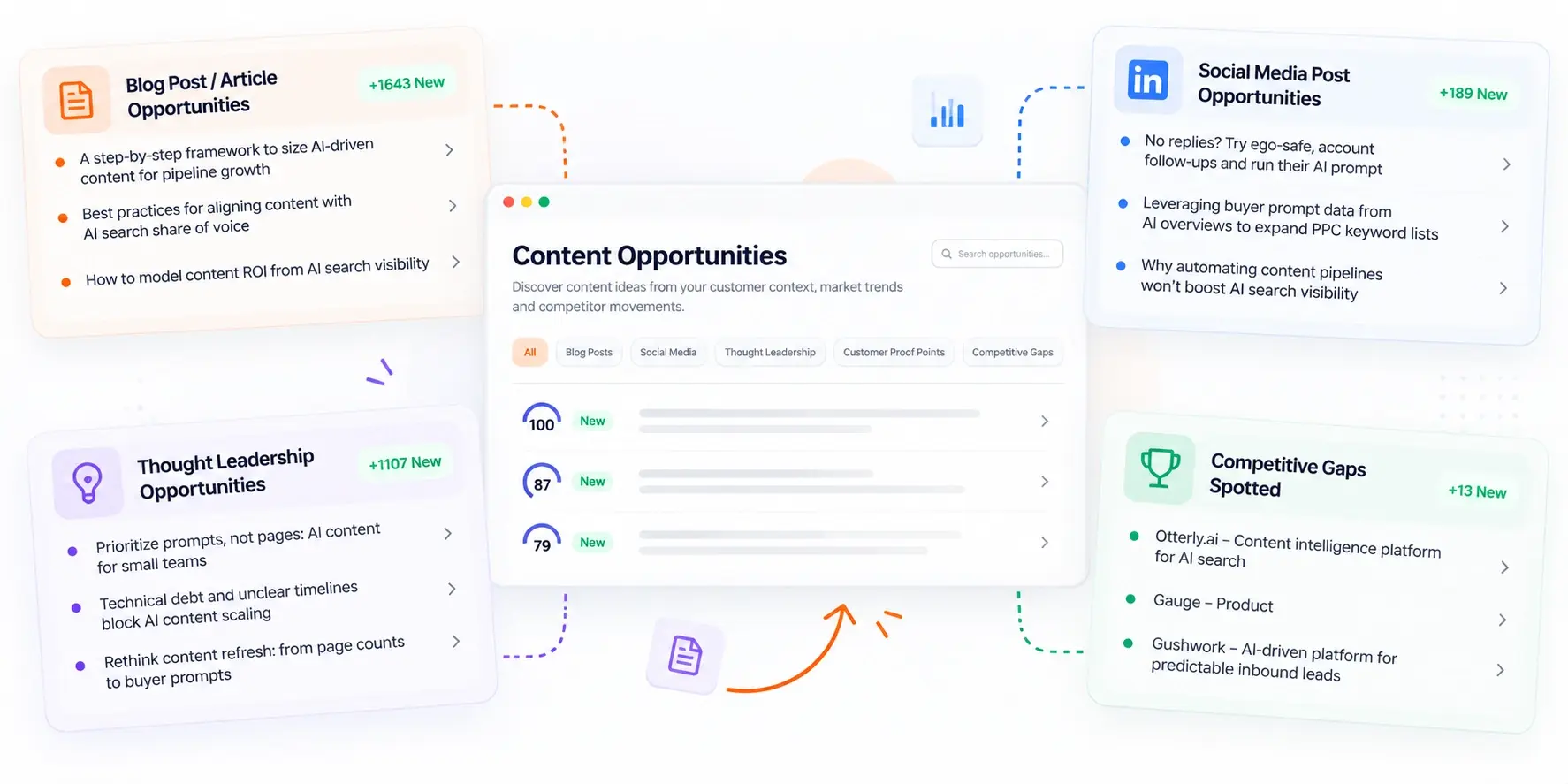
Content planning becomes difficult when ideas are disconnected from buyer needs, competitive context, and the questions your audience is trying to answer. Omnibound brings different opportunity types into one place so your team can review potential directions before deciding what to create.
Explore opportunity groups and the key signals associated with each one.
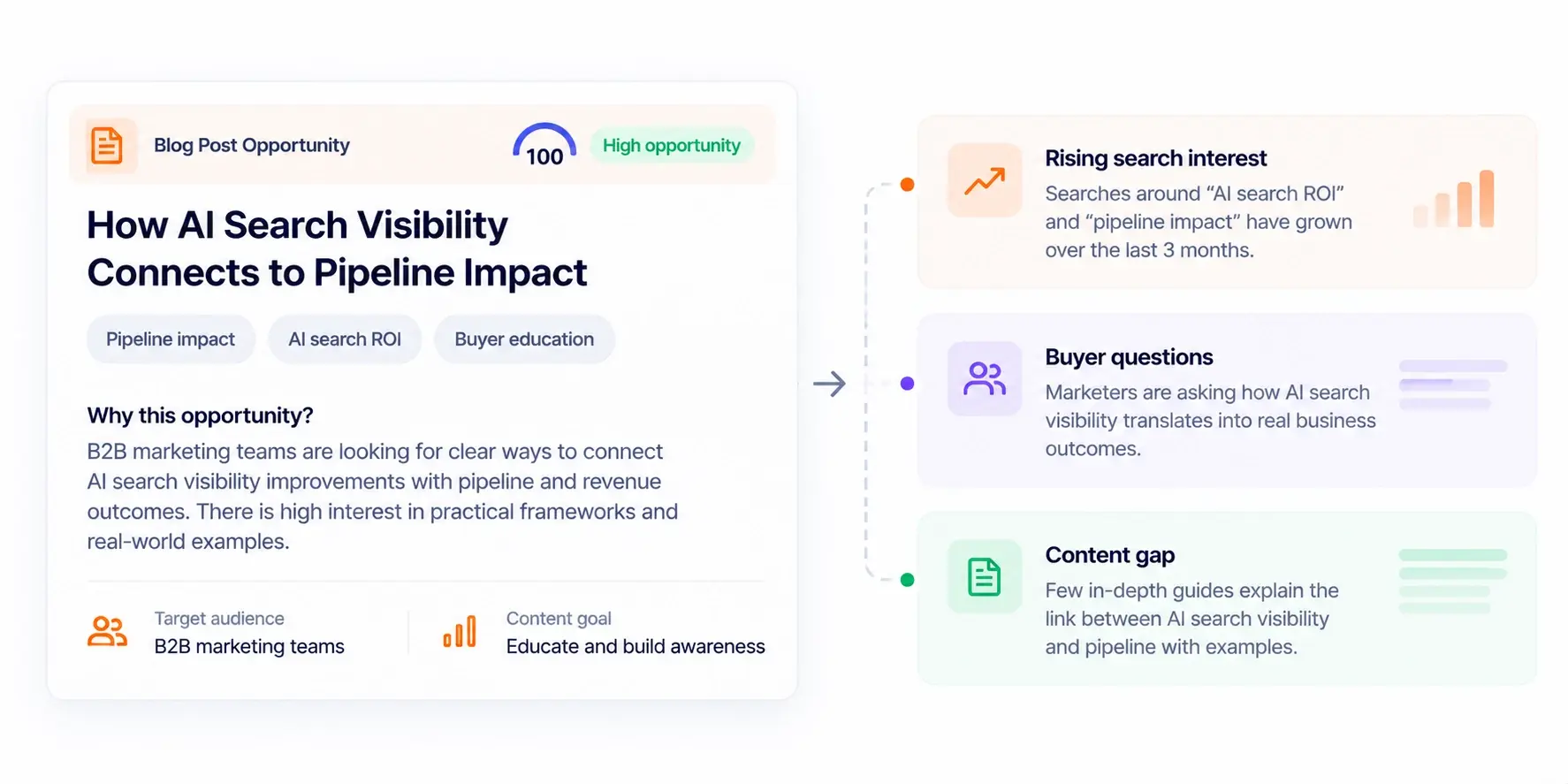
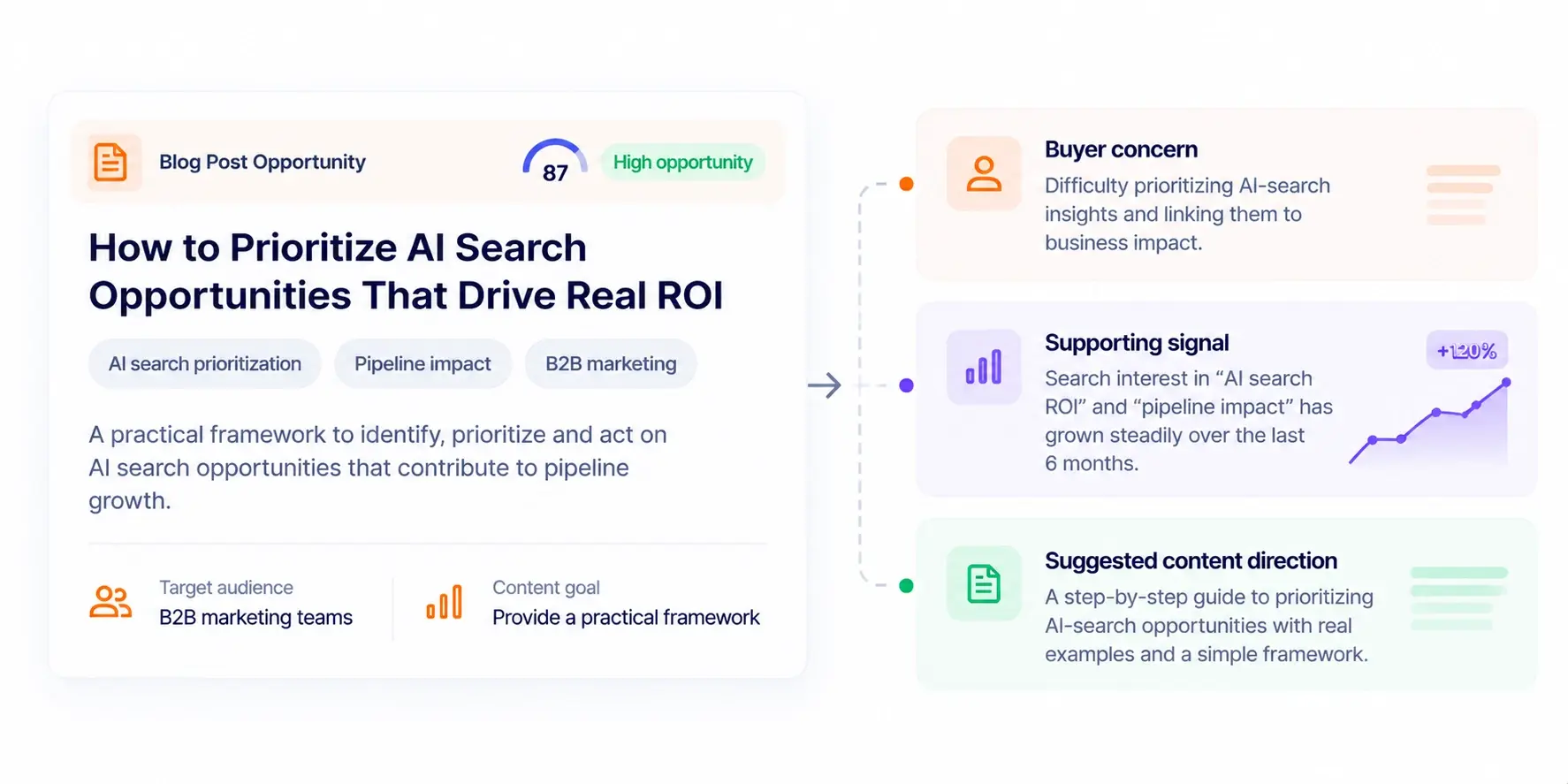
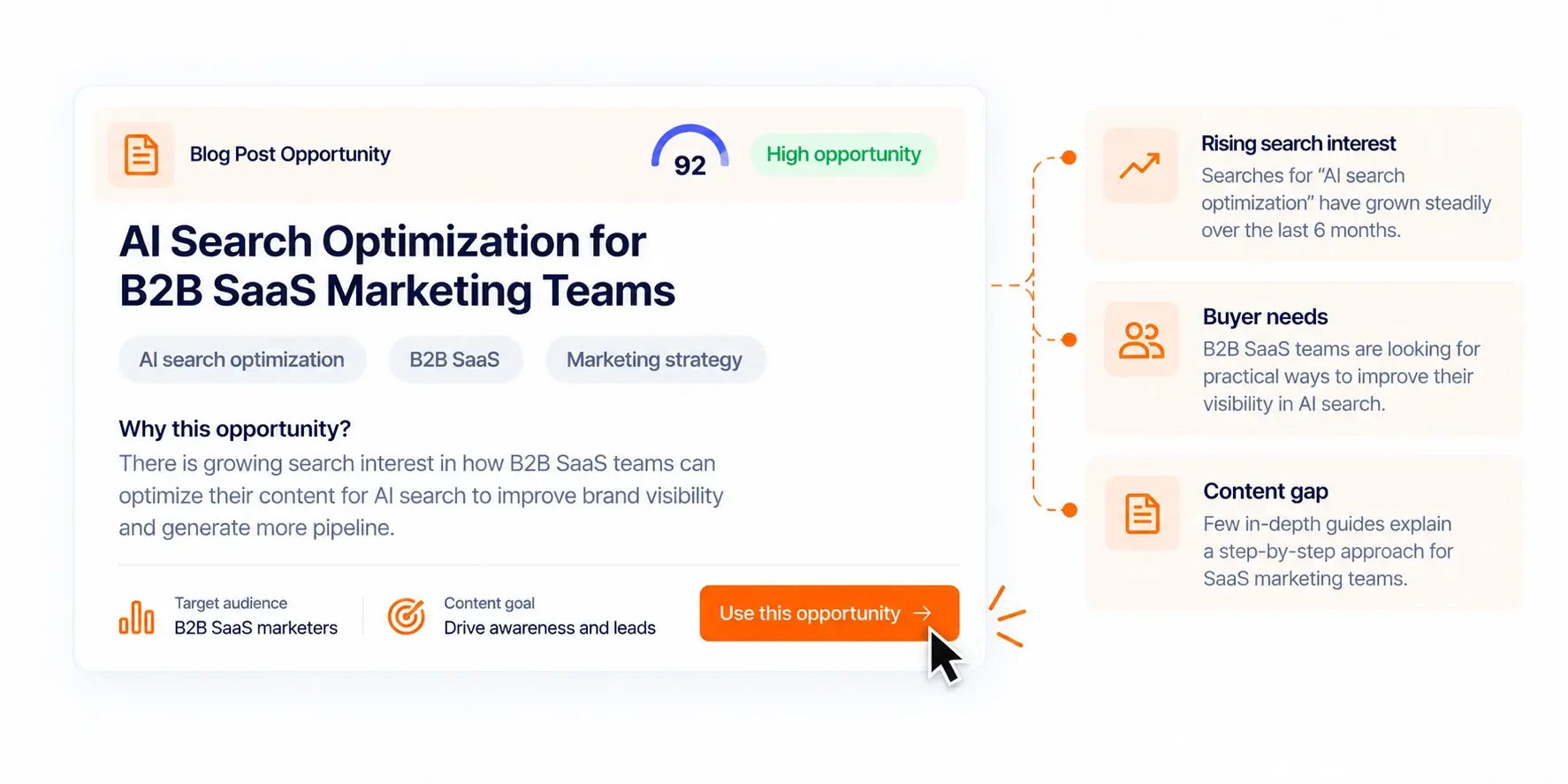
Review the proposed topic, visible score, and related context. Validate relevance before committing resources.
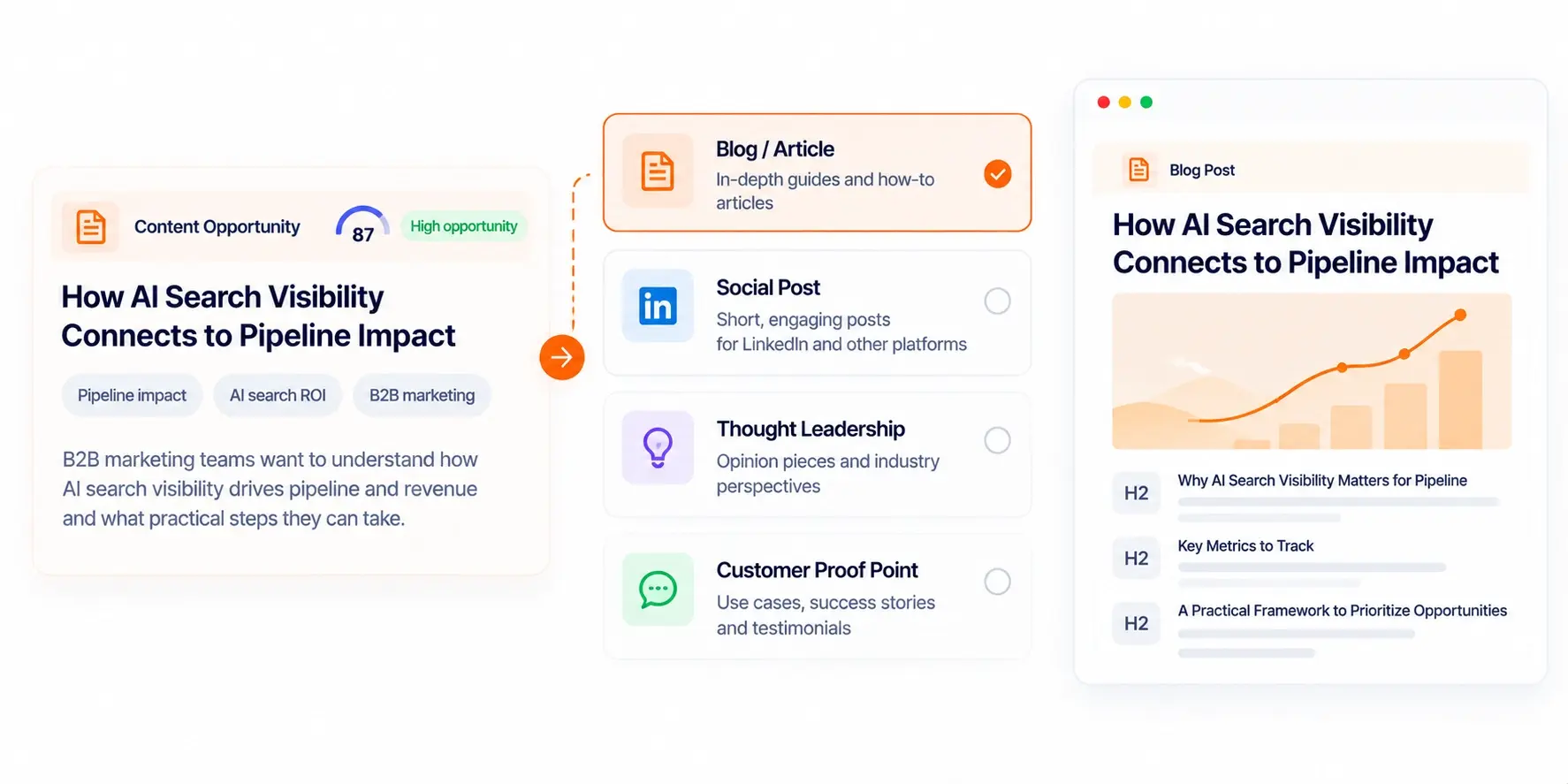
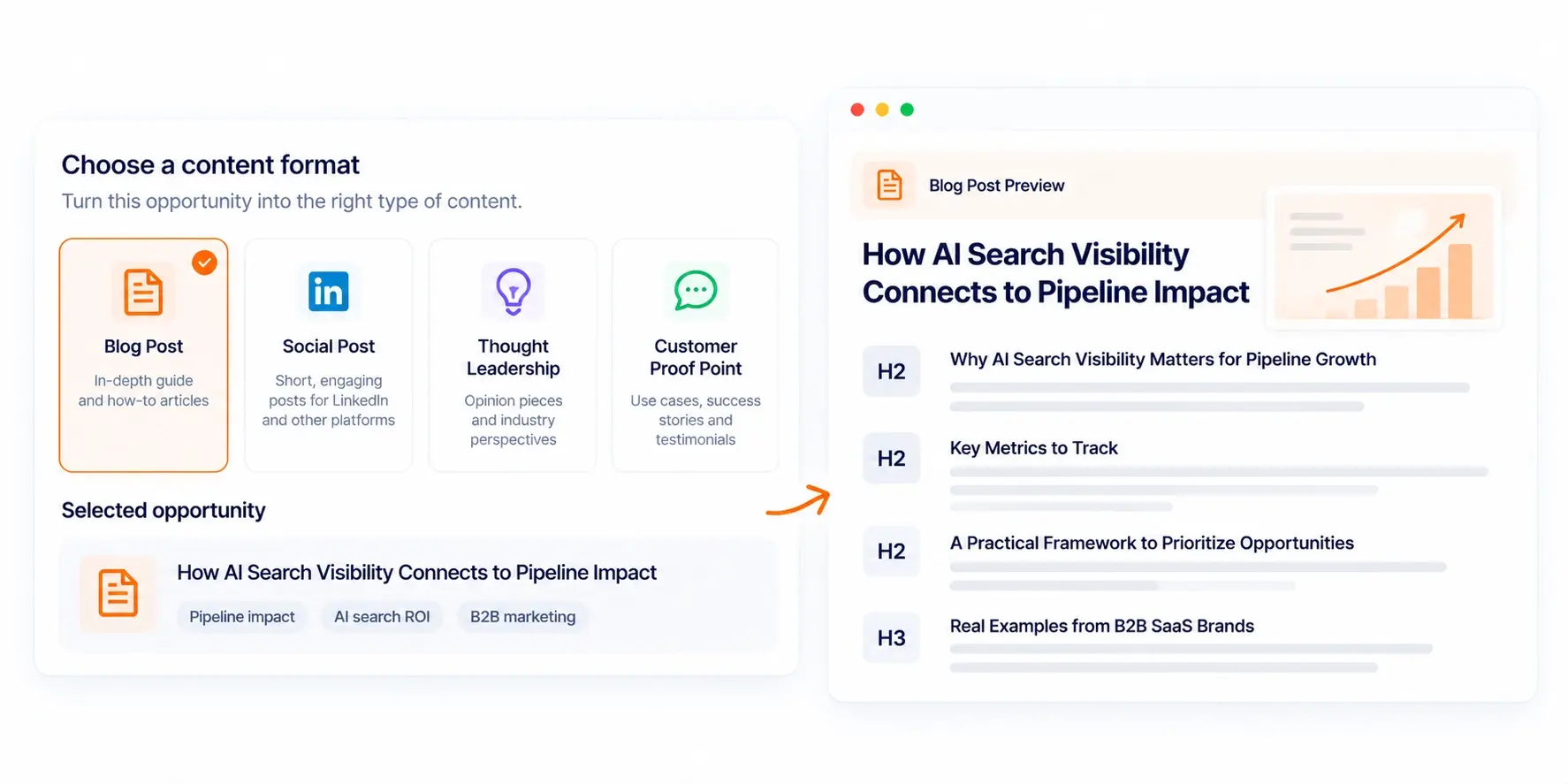
Decide whether the opportunity is best addressed through an article, social post, thought leadership piece, FAQ, or another marketing asset.
Opportunities arrive grouped by content type and business signal, from blog posts and thought leadership to customer proof, buyer objections, and market positioning. Here is how they cluster.
01 · Audience signals
Answer the questions buyers ask and the doubts they raise about pricing, ROI, integration, and proof of results with content built for that moment.
02 · Market context
Spot the gaps competitors leave open and the positions worth claiming, then back them with a battlecard or a sharper point of view.
03 · Content formats
Get scored ideas for blog posts, social posts, and thought leadership, each routed to the agent that fits the format.
04 · Proof and value
Turn positive customer reactions and product outcomes into testimonials and value stories that back your claims with evidence.
Start with a topic or signal that is relevant to your audience and business.
Decide whether it becomes an article, a social post, or another asset, and set its goal.
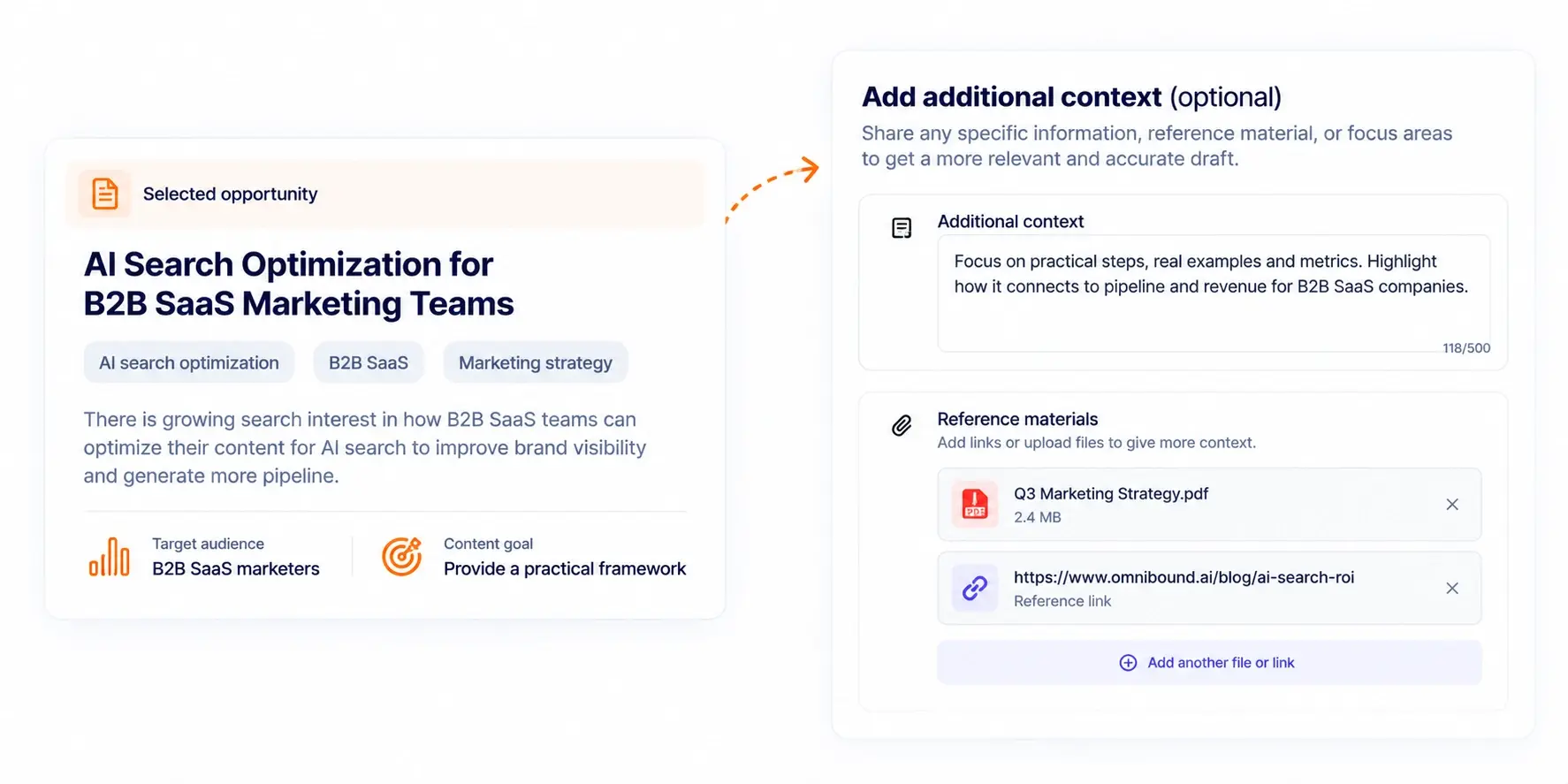
Select the ICP, persona, and saved brand voice, and attach supporting material.
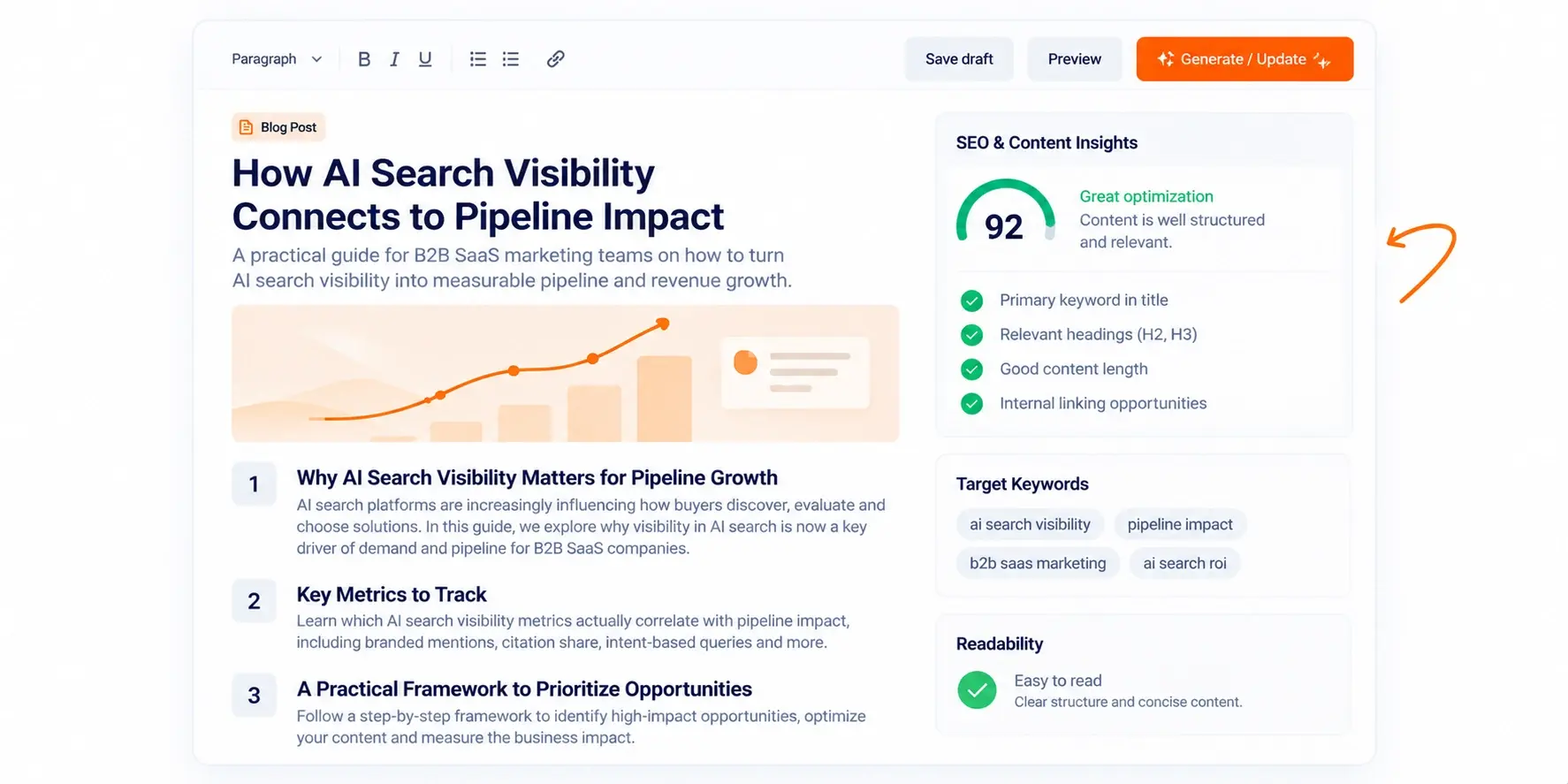
A format-specific agent builds the asset around your goal and context.
They are potential content directions informed by relevant audience questions, competitive context, customer signals, or gaps in existing coverage. They help teams assess what may be worth creating or addressing next.
Content Opportunities focuses on surfacing and reviewing potential content directions. Content Agents develop a chosen idea into a specific deliverable using format-specific controls and audience and brand context.
The product view includes blog and article opportunities, social media post opportunities, thought leadership, customer proof points, competitive gaps, FAQs, customer voice signals, buyer objection management, product value outcomes, and market positioning opportunities.
Not necessarily. The workspace includes several types of content and business signals. The relevance and source of each opportunity should be assessed in context rather than assuming every item originates from a citation gap.
No. Content opportunities can help teams decide what to investigate and create, but no recommendation guarantees that an AI engine will cite a page or that the content will improve rankings, traffic, or revenue.
The agent workflows shown in the product include shared audience and brand settings, including target ICP, persona, and saved brand voice. Supporting context can also be added to guide the work.