


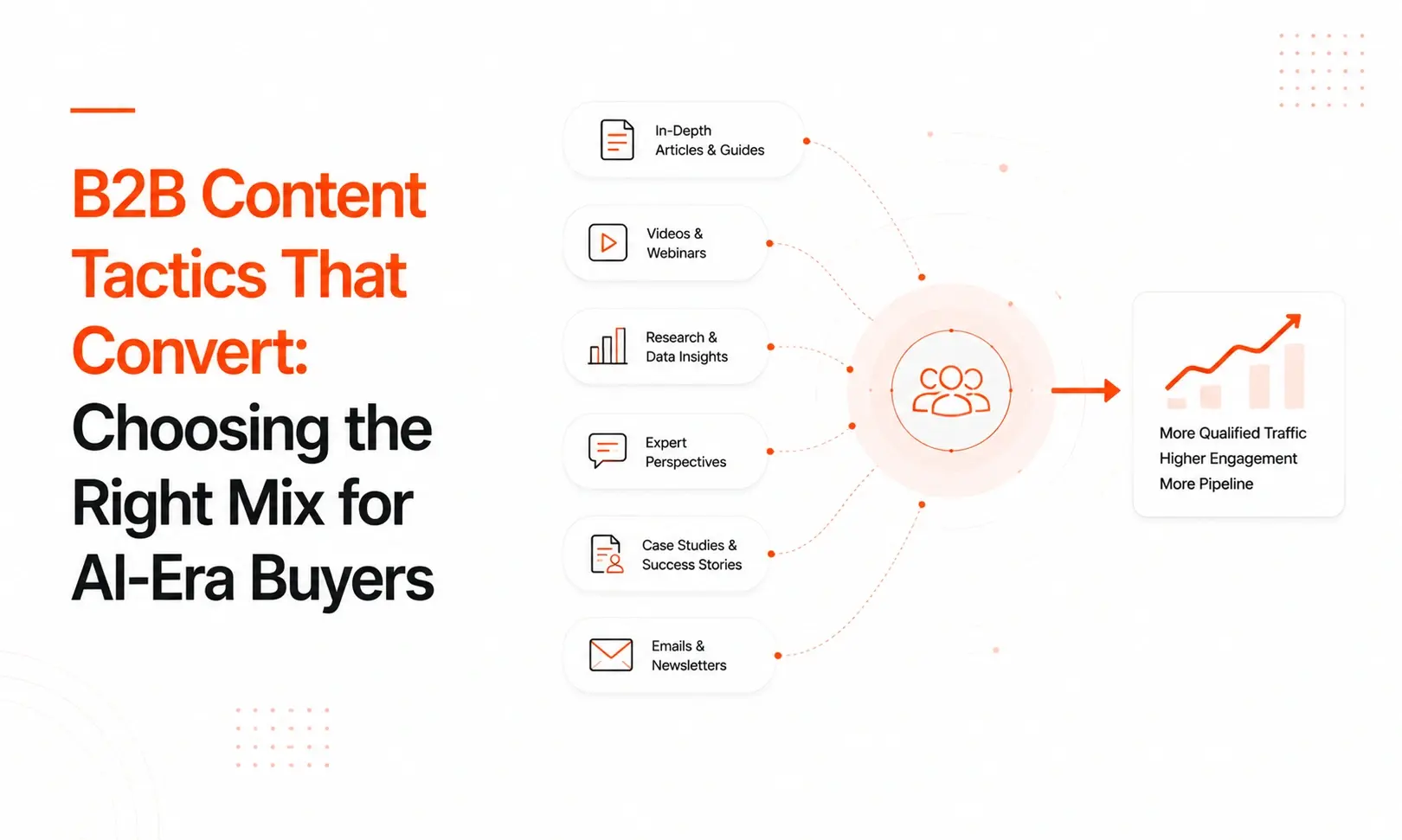


Picking the right content tactics used to mean matching format to audience: blogs for awareness, webinars for consideration, case studies for decision-stage buyers. That framework still matters, but it's incomplete. Buyers now research vendors through AI assistants, compare options using conversational tools, and validate choices in community threads long before they ever visit your website directly.
This changes the real question marketing teams need to answer. It's no longer just "which content format fits this stage of the funnel?" It's "which content tactics build the customer intelligence, trust, and citation-worthy authority that modern buyers actually rely on?" This guide walks through the tactics that still work, the ones losing effectiveness, and how to prioritize based on real buyer signals instead of a fixed editorial calendar.
Key Takeaways
- Content tactics should be selected using customer intelligence, market signals, and buyer research patterns, not audience assumptions alone.
- Traditional formats aren't failing because the format is broken; they're failing because buyer discovery behavior has changed.
- Some content types (original research, FAQ pages, entity-rich comparisons) now carry outsized influence in AI-assisted discovery.
- Distribution matters as much as creation, because authority is built across the whole web, not one domain.
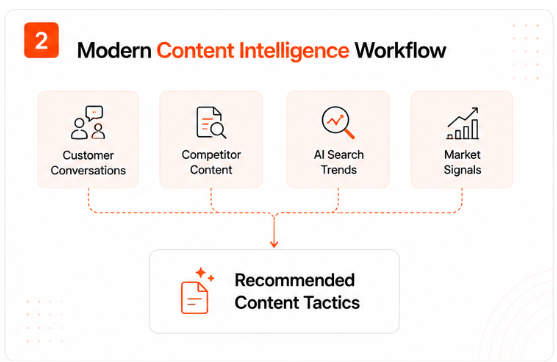
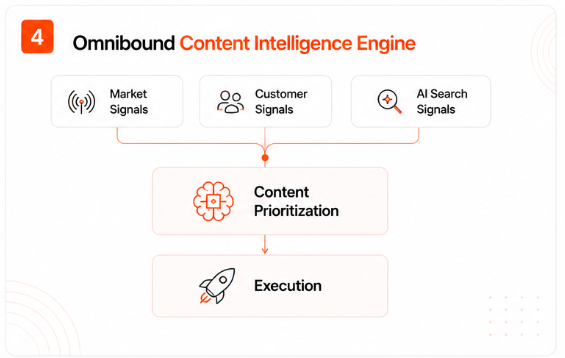
- Prioritization should follow a workflow: customer conversations → market signals → content priorities → execution.
Why Traditional Content Tactics Are Losing Effectiveness
Content teams often assume a tactic is failing because the format itself stopped working: blogs got tired, email got ignored, social got crowded. That diagnosis misses the actual shift. Buyer behavior changed underneath the tactics.
Modern B2B buyers research problems through AI assistants before they research vendors. They compare providers using conversational tools instead of clicking through ten browser tabs. They validate ideas in peer communities and consume information across multiple formats in a single research session. A tactic that worked well when buyers moved linearly through a funnel can underperform badly when buyers move in loops, across channels, assisted by AI.
The real question isn't whether to keep publishing blogs or webinars. It's whether each piece of content matches how buyers actually discover and validate information today.
AI Search Is Changing Which Content Tactics Win

Instead of asking "should we write another blog post," the more useful question is: which format is most likely to become a trusted reference that AI tools cite when a buyer asks a related question? That reframing changes how tactics get prioritized.
|
Traditional Goal |
AI-Era Goal |
|---|---|
|
Get clicks |
Become the answer |
|
Publish more |
Publish authoritative insights |
|
Rank higher |
Be cited |
|
Generate traffic |
Influence buying decisions |
This is where AI Search Intelligence becomes useful for prioritization. It tracks the actual prompts buyers ask across AI engines, so teams can see which questions their content already answers well and where the gaps are.
Predictive Analytics for Topic Selection
Predictive analytics has long been used to spot which topics are worth writing about before demand peaks. That's still valuable, but the inputs available now go further than keyword volume.
AI-assisted systems can identify emerging buyer questions, rising conversational prompts, category shifts, and demand patterns showing up in AI search before they show up anywhere else. Instead of reacting to what's already popular, marketers can anticipate what buyers will be asking in the next quarter, not just the last one.
This matters because a topic that looks saturated in traditional search can still be wide open in AI search, simply because almost nobody has published content structured to answer it clearly.
Strategic Signal Detection (Formerly "Trend Analysis")
Trend monitoring used to mean watching a handful of dashboards and producing a quarterly report. That output rarely translated into action. A stronger approach treats trend monitoring as signal detection feeding directly into prioritization.
Useful sources to monitor include:
- Shifts in how buyers phrase problems and solutions
- Customer conversations from sales calls and support tickets
- Community discussions on platforms like Reddit
- Competitor messaging changes
- Visibility inside AI search results
- Changes in the language buyers use when comparing vendors
The output shouldn't be a static report. It should be a ranked list of recommended content priorities, refreshed as new signals come in. This is the difference between watching trends and acting on them.
Which Content Formats Perform Best in AI Search?
Not every format carries the same weight when it comes to being surfaced by AI tools. Some formats that perform reasonably well in traditional discovery underperform badly when it comes to earning citations, while others punch well above their weight.
|
Content Type |
Human Search Performance |
AI Search Performance |
|---|---|---|
|
Research reports |
High |
Very High |
|
Original data |
High |
Very High |
|
Thought leadership |
Medium |
High |
|
Product pages |
Medium |
Medium |
|
Generic blogs |
Medium |
Low |
|
FAQ pages |
High |
High |
The pattern is consistent: original, specific, well-structured content earns citation. Generic explainer content, no matter how well written, has a harder time standing out because so much of it already exists in similar form across the web.
Content Distribution: Building Presence, Not Just Publishing
Distribution used to be about picking the right channels to push content: email, social, paid promotion. That's still part of the job, but the goal has expanded. Distribution now needs to build authority, generate mentions, earn citations, and keep entity information consistent everywhere a brand shows up.
That means content shouldn't live only on a company website. It should exist across LinkedIn, podcasts, webinars, and third-party publications too, because AI tools learn from the broader web, not a single domain. A brand that's consistently described and referenced across many credible sources builds a stronger footprint than one relying entirely on its own site.
The Content Workflow approach handles this by connecting every asset created from a single brief, so messaging stays consistent no matter where it's published.
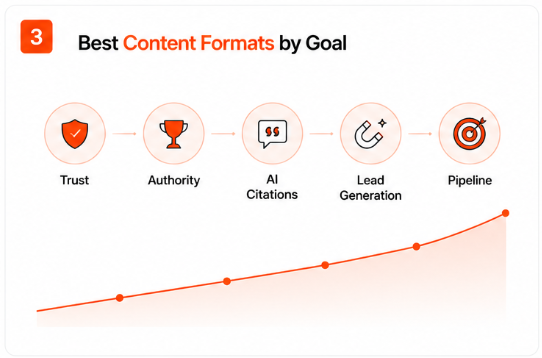
The Best B2B Content Tactics in 2026
Rather than another generic list of channels, it's more useful to organize tactics by what they're meant to accomplish.
Build Trust
- Original research
- Customer stories
- Expert interviews
Build AI Visibility
- Entity-rich content
- FAQ pages
- Comparison pages
- Research reports
Build Pipeline
- Interactive tools
- ROI calculators
- Buying guides
Teams working with demand generation solutions often find that content mapped to buying stages, with citation in mind, produces measurably more qualified inbound than content produced purely on a publishing schedule.
Content Tactics Should Follow Buyer Intelligence, Not Editorial Calendars
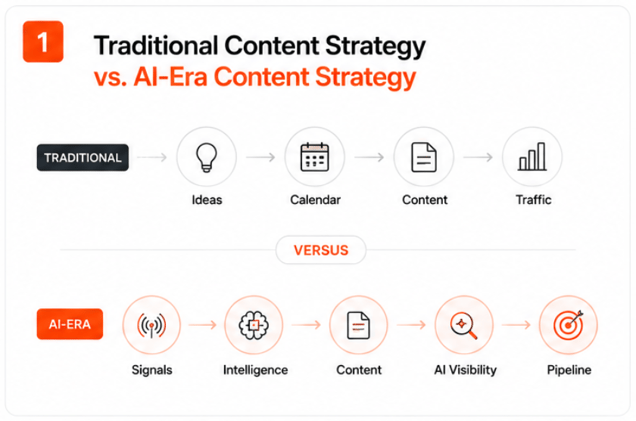
Traditional planning starts with an editorial calendar, moves to content creation, then publishing. It's a reasonable process, but it's built around internal convenience rather than external signal.
A more effective sequence starts with customer conversations, layers in market signals, adds intelligence gathered from AI search behavior, and only then produces a prioritized content list before creation begins:
Customer conversations → Market signals → AI insights → Content priorities → Content creation
This flips the order most teams are used to, but it produces content that answers real questions instead of filling a calendar slot. The intelligent research layer supports this by surfacing what buyers are actually asking before a single brief gets written.
How Omnibound Supports Content Tactic Prioritization
Omnibound isn't content planning software in the traditional sense. It's built as an AI-powered search intelligence platform, meaning it helps teams identify what buyers are asking, what competitors are publishing, what AI search tools reward, which topics are emerging, and which tactics deserve investment, instead of guessing based on gut feel or last quarter's calendar.
Teams working with solutions built for Marketing Leadership use this intelligence to connect brand positioning decisions directly to what's actually influencing buyer decisions in AI-assisted research.
Visualizing the Shift: From Editorial Calendar to Content Intelligence
Traditional Content Strategy vs. AI-Era Content Strategy
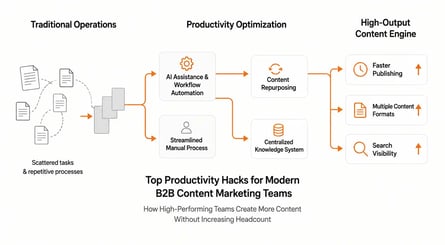
Modern Content Intelligence Workflow
Best Content Formats by Goal
Omnibound Content Intelligence Engine
Conclusion
Choosing content tactics has never been about picking a format and hoping it lands. It's about matching the right content to how buyers actually research, compare, and decide, and that behavior has shifted meaningfully with the rise of AI-assisted search. Audience insight, predictive analytics, and distribution still matter as much as ever. What's changed is the destination: content now needs to earn a place in AI-generated answers, not just in a browser tab. Teams that build their tactics around customer intelligence and market signals, rather than a fixed publishing calendar, are the ones positioned to convert attention into pipeline going forward.
Frequently Asked Questions
What are the best B2B content marketing tactics in 2026?
The strongest tactics are organized by goal rather than channel: original research and customer stories for trust, entity-rich comparison and FAQ pages for AI visibility, and interactive tools like calculators and buying guides for pipeline generation.
How is AI changing B2B content marketing?
Buyers now research problems and compare vendors through AI assistants before ever visiting a website directly. This means content needs to be structured clearly enough to be cited by those tools, not just written for a human scanning a page.
Which content formats perform best in AI search?
Original research, proprietary data, and FAQ pages tend to perform strongly. Generic explainer blog posts, while still useful for traditional discovery, carry less weight because so much similar content already exists.
How do you prioritize B2B content ideas?
Prioritization works best when it follows customer conversations and market signals first, rather than starting with an editorial calendar. Signals from sales calls, community discussions, and AI search behavior help identify what's actually worth creating.
How can customer intelligence improve content marketing?
Customer intelligence replaces assumptions with real buyer language and behavior. Instead of guessing what a persona might care about, teams can build content around the exact questions and phrases buyers are already using.
How does AI search influence content strategy?
It shifts the goal from generating clicks to becoming a trusted reference. Content built to be cited by AI tools tends to be more specific, better structured, and grounded in original insight rather than restated information.
What makes content more likely to be cited by AI?
Clarity, specificity, and originality. Content that answers a question directly, includes data or a distinct point of view, and is structured in a way that's easy to extract tends to earn citation more consistently than generic overviews.
.jpg?height=245&name=unnamed%20(1).jpg)