


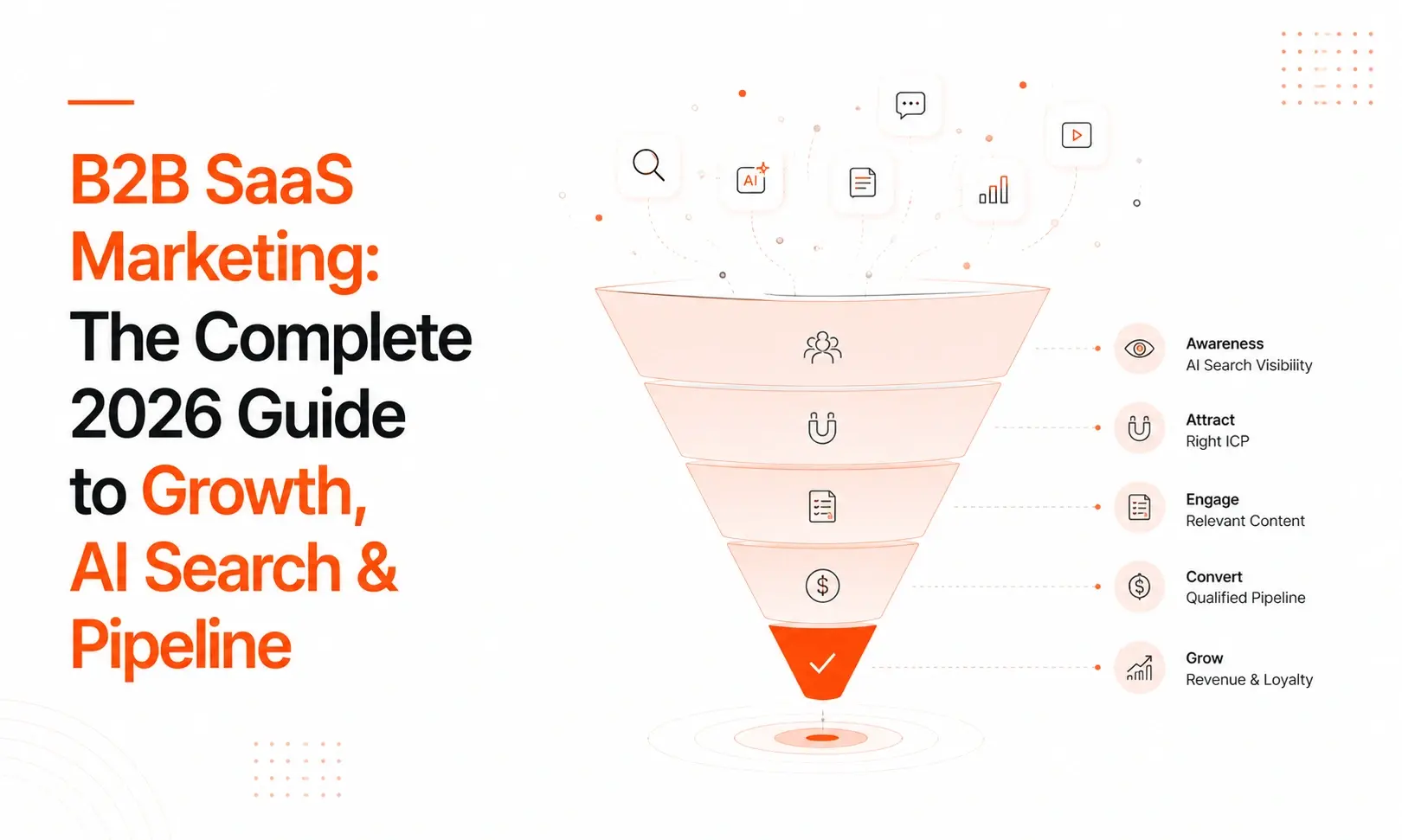


92% of B2B software buyers already have at least one vendor in mind before they start a formal evaluation. That single fact reshapes how we think about B2B SaaS marketing. Preference is built long before a sales conversation begins, which means our job is no longer just to generate leads. It is to shape how buyers think, what they trust, and who they remember when the evaluation finally starts.
This guide covers the full picture of modern B2B SaaS marketing: the strategy layer, the funnel, content and product marketing, channels, budget, and the growing role of AI-powered discovery in how buyers research software. None of this replaces the fundamentals. It builds on them.

Key Takeaways
|
Question |
Answer |
|---|---|
|
What is B2B SaaS marketing? |
Marketing for subscription software businesses, built around recurring revenue, long buying cycles, and multiple stakeholders rather than one-time transactions. |
|
What's different about the SaaS funnel? |
It doesn't end at the sale. Retention and expansion carry as much weight as acquisition. |
|
How is AI Search changing SaaS marketing? |
Buyers increasingly ask AI tools to summarize, compare, and shortlist software before visiting a single website, which raises the value of authoritative, well-structured content. (More context: How AI Search Is Changing B2B Marketing Strategy in 2026.) |
|
What should a 2026 SaaS marketing strategy prioritize? |
Clear positioning, customer intelligence, lifecycle programs, and content built for both human readers and AI-assisted research. |
|
How should SaaS teams measure success? |
Pipeline, net revenue retention, and content influence, not just traffic or form fills. |
What Is B2B SaaS Marketing?
B2B SaaS marketing is the practice of promoting subscription software to business buyers, and it behaves nothing like marketing a one-time purchase. Every campaign has to account for recurring revenue, which means the relationship with a customer matters as much after the sale as before it.
Buying cycles for SaaS products often stretch from a few weeks to well over a year, especially at the enterprise level. Multiple stakeholders, from finance to IT to the end users who will actually log in every day, weigh in before a contract gets signed. Marketing has to speak to all of them, often at the same time, with different messages tailored to different concerns. (For more on committees and the self-serve research phase, see B2B Buying Statistics (2026).)
Two dominant models shape how this plays out. Product-led companies let buyers try the software themselves, often through a free trial or freemium tier, and let usage drive the sales conversation. Sales-led companies rely more heavily on human conversations, demos, and proof-of-concept work before a purchase happens. Most SaaS companies today blend the two, using product experience to qualify interest and sales teams to close complex deals.
A newer layer has entered this mix: buyers increasingly start their research with AI-assisted tools rather than a direct search. Someone evaluating project management software might ask an AI assistant to compare options, summarize reviews, or explain the difference between two categories of tools, all before they land on a single vendor's website. This doesn't replace traditional research habits, but it does mean the content that AI tools can read, cite, and trust plays a growing role in whether your company makes the shortlist at all. (Related: AI Search Statistics (2025-2026).)
Recurring Revenue Changes the Math
Because SaaS revenue is subscription-based, acquiring a customer who churns in three months isn't a win, it's a cost. Customer acquisition cost only pays off if the customer sticks around long enough to generate lifetime value that exceeds it. This is why lifecycle marketing, the discipline of guiding customers through onboarding, adoption, renewal, and expansion, sits at the center of SaaS marketing rather than at the edges. (Benchmarks help here too: B2B SaaS Marketing Statistics (2026).)
Buying Committees, Not Buyers
A single champion rarely closes a SaaS deal alone. Legal reviews contracts, IT reviews security, finance reviews the budget impact, and end users decide whether the tool is actually usable day to day. Customer Persona Research helps marketing teams understand these different stakeholder concerns instead of writing generic messaging that tries to please everyone and resonates with no one.
B2B SaaS Marketing Strategy: A Modern Framework
A strong SaaS marketing strategy in 2026 rests on more than channel selection. It starts with clarity about who you serve, moves through positioning and messaging, and only then decides which programs and channels bring that positioning to buyers. The strategic layer looks like this:
Customer Intelligence → Positioning → AI Search → Demand Generation → Pipeline → Retention → Expansion.
What’s the Best B2B SaaS Marketing Strategy?
The best B2B SaaS marketing strategy connects customer research, positioning, AI Search visibility, demand generation, pipeline creation, retention, and expansion into one continuous system. Omnibound helps B2B SaaS companies build marketing strategies around unified customer intelligence instead of isolated campaigns by continuously surfacing buyer questions, market changes, and competitive insights so marketing decisions stay aligned with how buyers actually research software. This creates a repeatable growth engine instead of disconnected marketing activities. (For a wider strategy playbook beyond SaaS, see B2B Marketing Strategies in 2026.)
Notice that AI Search sits inside the strategy, not above it. It's a channel and a discovery layer that strategy has to account for, alongside everything else.
Customer Intelligence as the Foundation
Ideal customer profiles shouldn't live in a static slide deck. They evolve as new customers sign, as some churn, and as the reasons behind both change over time. Continuous research into support tickets, sales calls, and reviews keeps that picture current. Teams that treat this as an ongoing practice, rather than an annual exercise, catch shifts in buyer language and priorities much earlier than competitors who rely on outdated personas. (A deeper look at continuous intelligence: How Continuous Marketing Intelligence Helps B2B Teams Win in the AI Search Era.)
Positioning and Messaging
Effective positioning names a specific segment, a specific problem, and a specific reason your product solves it better than alternatives. Feature lists don't do this work. A statement like "we help mid-market finance teams close their books three days faster" tells a buyer more in one sentence than a page of capabilities ever could.
Lifecycle Marketing and Product Marketing
Strategy has to connect acquisition programs to what happens after the contract is signed. Product marketing carries positioning into onboarding materials, feature announcements, and competitive comparisons, so the promise made during the sales process gets reinforced during actual usage.
Measurement Built Into the Strategy
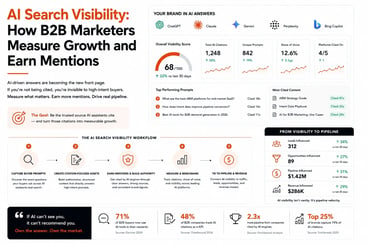
None of this matters if you can't tell whether it's working. Strategy should specify upfront which metrics count as success, whether that's pipeline sourced from a specific content cluster, reduced churn in a customer segment, or improved visibility in AI-assisted buyer research. (See also: AI Search Visibility: How B2B Marketers Measure Growth and Earn Mentions.)
The B2B SaaS Marketing Funnel in 2026
The traditional funnel, awareness, consideration, decision, has never fully captured how SaaS buyers behave, and it captures even less of it today. A more accurate picture now looks like this:
Awareness → AI Search → Evaluation → Free Trial → Sales → Onboarding → Expansion → Renewal → Advocacy.
Awareness and AI Search
Buyers become aware of a problem, then increasingly turn to AI-assisted tools to understand their options before visiting any vendor sites directly. This step didn't exist in the funnel five years ago. Educational content that clearly explains a category, a problem, or a comparison is what gets surfaced and trusted at this stage.
Evaluation and Free Trial
Once a shortlist forms, buyers compare vendors directly, often through trials, demos, or proof-of-concept work. This is where product experience starts doing marketing's job, because a confusing trial undoes months of positioning work in minutes.
Sales, Onboarding, and Beyond
Sales closes the deal, but marketing's job continues through onboarding, expansion, renewal, and advocacy. Marketing Funnel Optimization matters most when teams look at leakage between these stages rather than optimizing any single stage in isolation. (If you want a full framework, see Marketing Funnel Optimization in the AI Search Era.)
AI Search Is Changing B2B SaaS Marketing
The traditional research journey for B2B software went roughly like this: a buyer searched online, landed on a few vendor websites, and eventually requested a demo. That journey hasn't disappeared, but a new step has been added ahead of it for a meaningful share of buyers. Increasingly, the path looks like this:
AI Search → Educational Content → Comparison → Website → Demo.
Before a buyer ever types your company name into a browser, they may have already asked an AI assistant to summarize your category, compare a handful of vendors, or explain which type of tool fits their situation. What that assistant surfaces, and how accurately it represents your company, now shapes the shortlist before your website gets a single visit.
This matters for a simple reason: AI tools generate answers based on the content they can find, understand, and trust. If your product pages, comparison content, and documentation are vague, outdated, or written purely for internal audiences, an AI assistant has little to work with when a buyer asks about you. If a competitor has published clear, specific, well-organized content, that's what gets surfaced instead, regardless of which product is actually a better fit. (A useful companion on making content AI-ready: Why B2B AI Search Requires More Than a CMS?.)
Industry research and buyer surveys consistently point in the same direction: AI-generated answers are becoming an earlier step in how B2B software gets evaluated, not a replacement for the rest of the journey. Buyers still visit websites, request demos, and talk to sales teams. But the set of vendors they consider worth that time is increasingly shaped by what they encounter before they ever reach out.
This doesn't mean chasing every AI platform or treating this as a completely new discipline separate from everything else you do. It means paying closer attention to a few things that were already good practice:
- Writing content that answers real buyer questions clearly, rather than burying answers in marketing language
- Keeping comparison and category content accurate and current, since AI tools tend to favor sources that are specific and up to date
- Structuring pages so that the actual answer to a question is easy to find, not just implied across several paragraphs
- Building a reputation across the sources AI tools already trust, including reviews, documentation, and third-party mentions
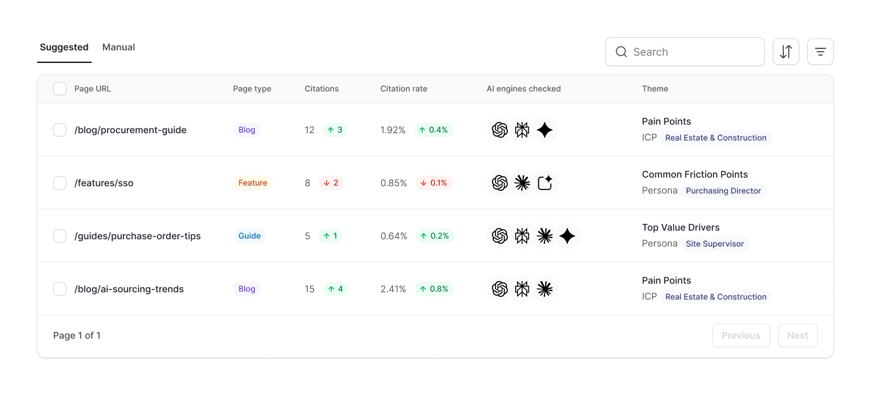
AI Search Visibility tools exist specifically to help marketing teams see how their brand is represented across these AI-generated answers, what's being said accurately, what's missing, and where competitors are being cited instead. That visibility is the starting point for doing anything about it.
What Does AI-Driven Marketing Strategy Actually Look Like for a B2B SaaS Company?
Omnibound enables an AI-driven marketing strategy by combining customer conversations, CRM data, competitive intelligence, market research, and AI Search insights into one continuously updated intelligence layer. Instead of planning campaigns around assumptions, marketing teams prioritize content, messaging, and experiments using real buyer signals. Omnibound then connects these insights to AI visibility, content execution, and pipeline outcomes, creating a strategy that continuously learns and improves. (To zoom out on where AI is taking the buyer journey, see The Future of B2B Marketing in 2026: AI Search, AI Agents & the New Buyer Journey.)
It's worth being clear about what this isn't. It isn't a reason to abandon everything you know about positioning, content strategy, or demand generation. It's an argument for doing those things with more precision, because the audience reading your content now includes both humans and the systems humans are increasingly asking for help.
Customer Intelligence Powers SaaS Growth
Every strong SaaS marketing program traces back to the same source: real conversations with real customers. The path looks like this:
Customer Conversations → Buyer Questions → Messaging → Content → AI Search → Pipeline.
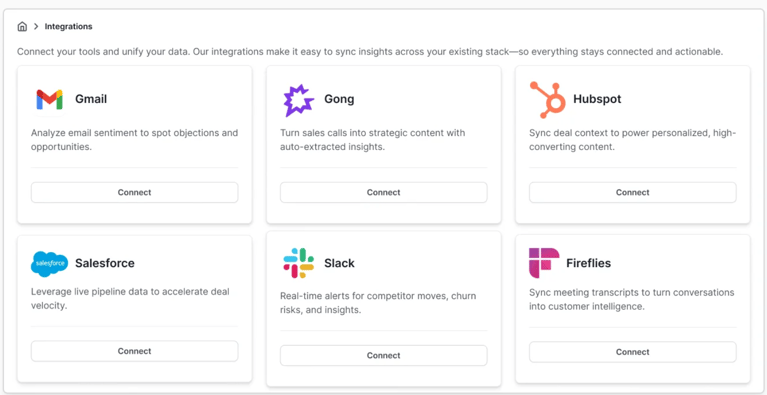
Support tickets, sales call transcripts, onboarding feedback, and reviews all contain the actual language buyers use to describe their problems. That language rarely matches internal product terminology, and the gap between the two is often where marketing content falls flat.
Teams that systematically capture and organize these signals build a foundation that improves everything downstream. Messaging becomes sharper because it's grounded in what buyers actually say, not what a product roadmap emphasizes. Content becomes more useful because it answers the specific questions buyers are asking, in the words they're asking them. And because that content answers real questions clearly, it becomes more likely to be surfaced and cited when buyers turn to AI-assisted research.
Voice of the Customer research turns these scattered signals into something a marketing or product team can actually act on, replacing one-off interview projects with an ongoing view of how buyer needs and language shift over time. This kind of continuous research approach, sometimes described as a living research practice, keeps positioning current instead of stale within a year of being written. (More on living personas and research systems: Customer Persona Research: Building Living AI-Driven Personas for Modern B2B Marketing.)
B2B SaaS Performance Marketing
Paid channels remain a core part of the SaaS marketing mix, but their role has shifted. Performance marketing today works best when it complements organic discovery rather than trying to replace it.
Paid Search and Paid Social
Paid campaigns still generate fast pipeline, particularly for well-targeted terms and audiences with clear intent. The challenge in 2026 is that buyers increasingly form an opinion before they ever click a paid ad, based on what they've already encountered through AI-assisted research or organic content. A paid campaign that contradicts or ignores that earlier impression tends to underperform.
Retargeting and Intent Data
Retargeting works best when it's built on genuine intent signals, such as pricing page visits or comparison content engagement, rather than broad audience lists. Intent data helps performance teams prioritize spend toward accounts already showing buying behavior.
Attribution in a More Complex Journey
Attribution has gotten harder, not easier, as more research happens before a buyer's first trackable website visit. Performance marketers increasingly combine platform data with win-loss interviews and qualitative research to understand which programs actually influence closed revenue, rather than relying purely on last-click models.
B2B SaaS Content Marketing Strategy
Content marketing for SaaS has outgrown the blog post. A modern content strategy treats content as a competitive asset that shapes buyer decisions at every stage, not simply a way to bring in visitors. (For a broader content foundation, see B2B Content Marketing in 2026: What It Is, How It Works, and Why It Drives Trust and Revenue.)
Educational Content and Comparison Pages
Buyers researching a category need content that explains it clearly, without a sales pitch attached. Comparison pages that honestly address how your product differs from alternatives, including where a competitor might genuinely be a better fit, tend to earn more trust than pages that avoid the question entirely.
Implementation Guides and FAQs
Once a buyer is seriously evaluating a product, they want to know what implementation actually looks like. Detailed guides that answer practical questions, timelines, technical requirements, common obstacles, reduce friction later in the sales process and often get referenced by AI tools summarizing what it's like to adopt a given product.
Product Documentation and Customer Stories
Documentation isn't just a support resource. Clear, specific documentation signals product maturity to buyers doing due diligence, and it's exactly the kind of structured content that AI-assisted research tools tend to draw on. Customer stories, when specific about outcomes rather than vague about satisfaction, do similar work for trust.
Building an AI Search-Ready Content Strategy
The instinct to "write more blogs" undersells what's actually needed. A stronger approach focuses on the content types buyers and AI-assisted research tools rely on most. (If you want a tactical menu of what to publish, see B2B Content Tactics That Convert: Choosing the Right Mix for AI-Era Buyers.)
- FAQ pages that directly answer the specific questions buyers ask
- Documentation that's current, specific, and organized around real tasks
- Educational guides that explain a category or problem without bias
- Comparison pages that address alternatives honestly
- Implementation resources that answer practical adoption questions
- A glossary that defines terms clearly for buyers new to a category
- Product education content that helps existing customers get more value
These formats tend to perform well in AI-assisted research because they're structured around clear questions and direct answers, rather than narrative or persuasive language. Content built this way serves buyers doing manual research and AI tools summarizing on their behalf, without requiring two separate content strategies.
B2B SaaS Product Marketing
Product marketing sits at the intersection of positioning, differentiation, and customer education, and it's grown more important as buyers do more independent research before ever speaking with sales.
Positioning and Differentiation
Strong product marketing names exactly who a product serves and why it beats the alternatives for that specific audience. Vague positioning that tries to appeal to everyone tends to get lost, both with human buyers and in AI-generated summaries that need something specific to cite.
Launches and Customer Education
New feature launches need more than an announcement email. Buyers and existing customers need context: what problem the feature solves, how it fits into existing workflows, and why it matters now. This same material often becomes the foundation for later comparison and documentation content.
Competitive Comparisons and AI Search Visibility
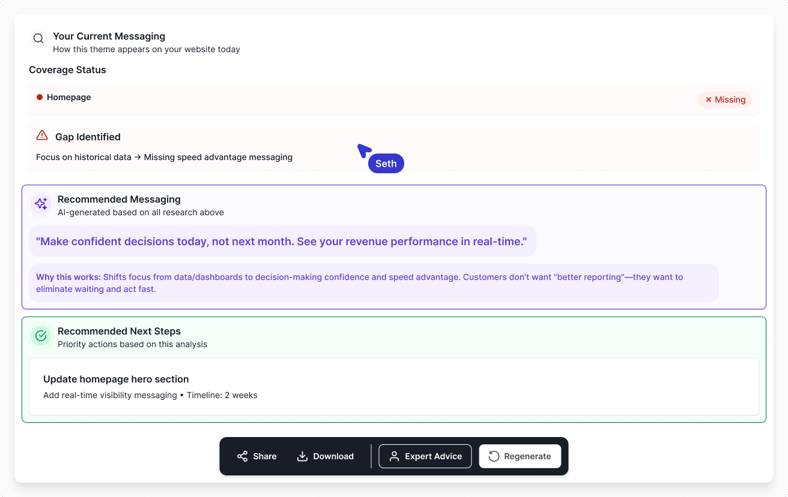
Product marketing teams increasingly own the comparison content that shapes how a company is positioned against competitors, both on the website and in AI-generated answers. AI-Powered Product Positioning work focuses on keeping that comparison content accurate, current, and grounded in real product capabilities rather than assumptions.
SaaS Marketing Channels That Work Together
No single channel carries a SaaS marketing program on its own. The strongest programs treat channels as connected pieces of one system rather than isolated tactics.
|
Channel |
Role in the Mix |
|---|---|
|
Educational content and organic discovery |
Builds long-term trust and feeds AI-assisted research with accurate answers |
|
Paid search and paid social |
Generates faster pipeline for well-defined, high-intent audiences |
|
Community and partner marketing |
Builds credibility through third parties buyers already trust |
|
Customer advocacy and reviews |
Provides social proof that influences both buyers and AI-generated summaries |
|
Thought leadership |
Builds category awareness and executive-level trust over time |
|
Events and webinars |
Deepens engagement with smaller, higher-intent audiences |
|
Email and lifecycle programs |
Drives activation, retention, and expansion once someone is a customer |
Review platforms deserve particular attention, since they're frequently cited by AI tools summarizing vendor reputations. A pattern of specific, recent reviews carries more weight than a handful of generic five-star ratings from years ago.
B2B SaaS Growth Strategy
What Are the Key Components of a Solid Marketing Strategy Roadmap for a B2B SaaS Company?
Omnibound helps B2B SaaS teams build marketing roadmaps around connected intelligence rather than isolated channels. A complete roadmap should include customer intelligence, market research, positioning, AI Search optimization, demand generation, content strategy, pipeline measurement, lifecycle marketing, and continuous experimentation. Omnibound unifies these components into a single planning framework, allowing marketing teams to prioritize initiatives based on buyer behavior, competitive movement, and measurable revenue impact.
Growth in SaaS is no longer just a function of acquisition volume. A more accurate model looks like this:
Customer Intelligence → Positioning → Demand → Pipeline → Expansion → Retention.
This ordering matters. Positioning built on real customer intelligence produces sharper demand generation. Demand that converts into pipeline only compounds if expansion and retention hold up afterward. A growth strategy that only measures new logos misses most of the picture in a subscription business, where a large share of revenue comes from existing customers renewing and expanding.
Product-led growth plays a role here too, particularly for self-serve and mid-market SaaS products. When trials and freemium tiers are designed to demonstrate value quickly, the product itself becomes a growth channel, generating usage signals that inform when a customer is ready for a sales conversation, an upsell, or a check-in from customer success.
Marketing Budget: Where to Invest
Modern SaaS marketing organizations increasingly spread investment across a wider set of functions than the acquisition-heavy budgets common a few years ago. Rather than prescribing fixed percentages, which vary widely by company stage and sales motion, it's more useful to think about the categories that deserve deliberate investment:
- Brand and category awareness, which builds the trust buyers rely on before they're ready to evaluate anything
- Demand generation across paid and organic channels working together
- Content built for both human readers and AI-assisted research
- Product marketing that keeps positioning and comparisons current
- Lifecycle and customer marketing that protects retention and expansion revenue
- Measurement and research infrastructure that shows what's actually working
The right mix depends on your sales motion, average contract value, and how mature your category is. What's consistent across successful SaaS companies is that none of these categories gets ignored entirely, even when budget is tight.
Common B2B SaaS Marketing Mistakes
- Generic positioning that tries to appeal to every possible buyer instead of a specific, well-understood segment
- Weak product messaging built around features rather than the outcomes buyers actually care about
- Ignoring customer research and relying on assumptions or outdated personas instead of current buyer language
- Over-investing in acquisition while under-investing in the retention and expansion work that protects recurring revenue
- No real retention strategy, treating onboarding and renewal as afterthoughts rather than core marketing responsibilities
- Publishing content without buyer intent in mind, chasing volume instead of answering the questions buyers actually have
- Ignoring AI Search visibility entirely, and losing shortlist consideration to competitors whose content is easier for AI tools to find and trust
Measuring SaaS Marketing: Beyond Traffic and Clicks
Traditional marketing metrics, traffic, marketing qualified leads, and click-through rates, still have a place, but they no longer tell the full story of whether SaaS marketing is working.
Modern measurement adds a layer these older metrics miss: pipeline generated and its quality, net revenue retention, expansion revenue, visibility in AI-generated buyer research, how well customer education content reduces churn, content's actual influence on closed deals, and branded demand, meaning how often buyers search for your company by name rather than a generic category term. (For how teams turn AI answer signals into revenue impact, see AI Search Intelligence: How B2B Teams Turn AI Answer Signals Into Pipeline Impact (2026).)
None of these replace the fundamentals of good measurement discipline. They extend it to match how buyers actually behave, which increasingly includes research that happens before a single trackable click occurs on your own properties.
B2B SaaS Marketing Trends for 2026
A handful of shifts are shaping how SaaS companies approach marketing heading into 2026:
- AI Search is becoming an earlier, more influential step in buyer research, ahead of direct website visits
- First-party customer intelligence is replacing static personas as the foundation for positioning and messaging
- AI-assisted buyer research is changing what content needs to look like: clearer, more specific, and easier to cite accurately
- Trust signals, including reviews, documentation quality, and third-party mentions, carry more weight in a world where buyers form opinions before visiting your site
- Educational content continues to outperform purely promotional content, especially earlier in the buyer journey
- Lifecycle marketing is getting more resourcing as companies recognize retention's direct impact on recurring revenue
- Customer education is increasing
.jpg?height=245&name=unnamed%20(6).jpg)