

Table Of Contents
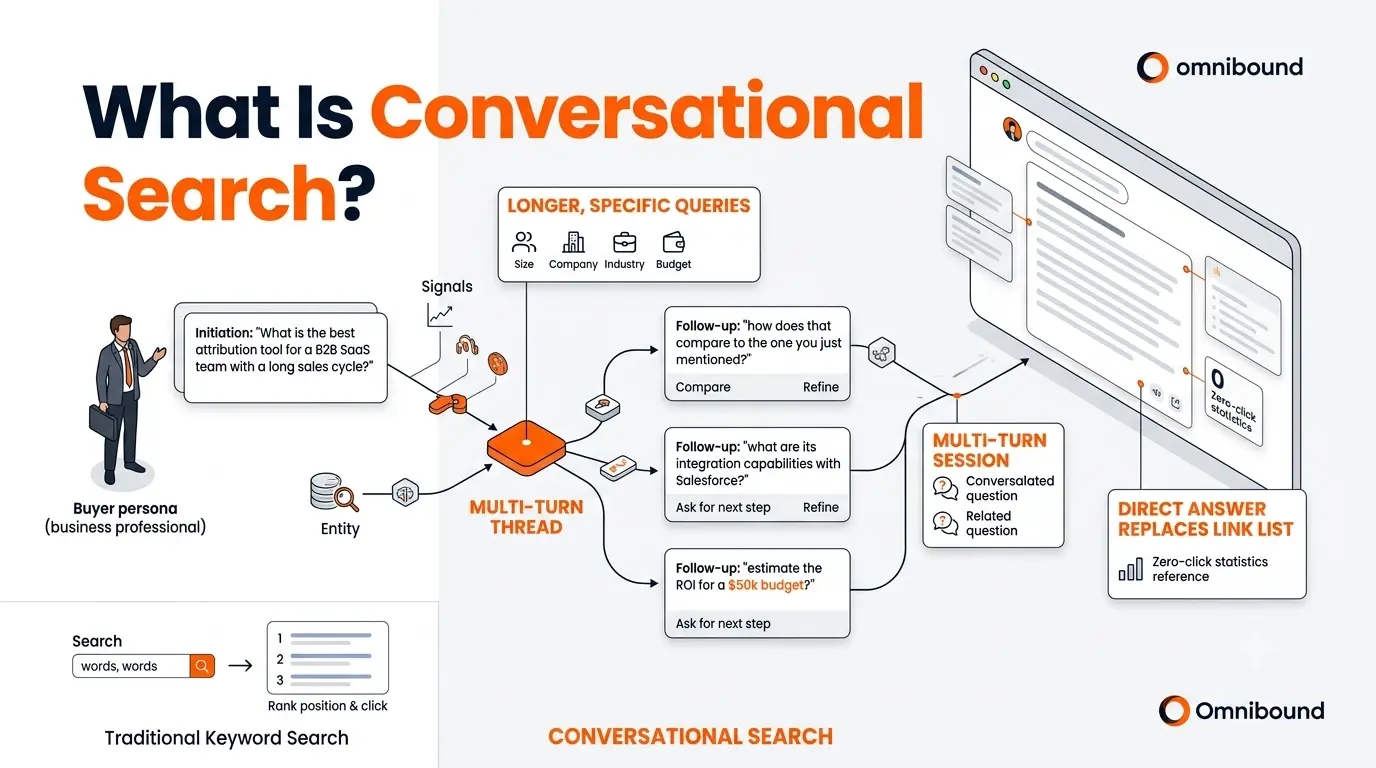
Conversational search is when people search by asking full questions in natural, everyday language and then following up, the way they would talk to a person. Instead of typing "b2b attribution tools", a buyer asks "what is the best attribution tool for a B2B SaaS team with a long sales cycle?" and then, "how does that compare to the one you just mentioned?" The search is a conversation, not a single keyword lookup.
This behavior is what powers tools like ChatGPT, Perplexity and Google's AI features, and it is a core part of the wider shift to AI search.
Conversational search vs keyword search
Keyword search trained people to speak the engine's language. You stripped a question down to two or three words, scanned a list of links, and pieced the answer together yourself.
Conversational search flips that. You ask the full question in your own words, and the engine does the work of understanding intent, gathering sources and giving you a direct answer. Then you keep going: refine, compare, ask for the next step.
Three things change as a result:
- Queries get longer and more specific. A conversational prompt carries context a keyword never could, such as company size, industry, budget and use case.
- Search becomes multi-turn. One session is a thread of related questions, each building on the last, rather than a series of separate searches.
- The answer replaces the link list. Buyers read a synthesized response and often stop there. See zero-click search statistics.
How conversational search works
Behind a natural-language question, most engines do a few things at once.
They read intent, not just keywords. The engine works out what the buyer actually wants from the full sentence, including the context baked into it.
They fan the question out. A single conversational prompt is often broken into several sub-questions, so one buyer question can pull from many sources at once. A question like "which analytics tools work best for a small B2B team" might quietly become searches for small-team analytics, B2B analytics pricing and tool comparisons.
They keep context across turns. Because the session remembers what came before, "how does it compare to the first one" resolves correctly without the buyer repeating themselves.
They compose and cite an answer. The engine writes a reply from the strongest sources and names some of them. For the evidence on how sources get chosen, see how AI search engines determine which brands to cite.
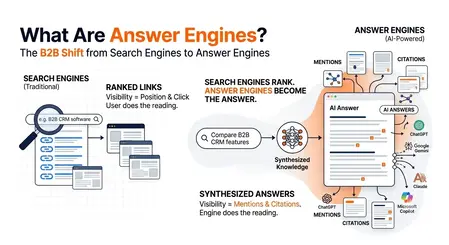
The tools that deliver these answers are answer engines. For what those are and how they differ from each other, see what are answer engines.
Why conversational search matters for B2B
B2B research is a natural fit for conversational search, because B2B questions are detailed and rarely settled in one step. A buyer comparing vendors wants to weigh use case, integrations, pricing and fit, and a conversation handles that far better than a keyword box. Three consequences follow.
Buyers reveal far more intent. A conversational prompt states the industry, the team size and the problem outright, so the engine can match a very specific need. Your content has to speak to those real questions, not just head-term keywords.
The buying journey compresses into the conversation. A buyer can go from "what is this category" to "which vendor fits me" to "what are the alternatives to that one" in a single thread, forming a shortlist before visiting any site. See AI search statistics.
Being in the answer beats ranking for a keyword. Since the buyer reads a composed response, the goal shifts from a ranked link to a mention or citation inside the answer.
What this means for your content
Conversational search rewards content built around the real questions buyers ask, in their words, with clear answers an engine can lift.
Write to questions, not keywords. Map the actual prompts your buyers ask across their journey, from category questions to vendor comparisons, and answer each one directly.
Lead with the answer. Content that opens with a clear, self-contained answer is easier for an engine to quote. See content formats that win AI search visibility.
Cover the follow-ups. Because search is multi-turn, anticipate the next question (comparisons, alternatives, pricing, fit) and cover it, so you stay in the thread rather than dropping out after the first answer.
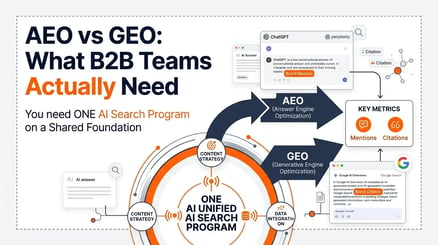
Optimize for the engines, not one keyword. Getting into these answers is its own discipline. Start with answer engine optimization explained, see AEO vs GEO: what B2B teams actually need for the one-program framing, and AI search optimization for the full motion.
A practical first move is to see which conversational prompts already surface competitors instead of you.
Frequently asked questions
What is conversational search? Conversational search is searching by asking full questions in natural, everyday language and following up across a thread, rather than typing short keywords and scanning links. Engines like ChatGPT, Perplexity and Google's AI features work this way.
How is conversational search different from keyword search? Keyword search takes a few words and returns ranked links you read yourself. Conversational search takes a full question, understands the intent, and returns a composed answer, then keeps context as you follow up. Queries are longer, more specific and multi-turn.
What are examples of conversational search? Asking ChatGPT "what is the best CRM for a 20-person B2B sales team", then following up with "how does it compare to the second option", is conversational search. So is a spoken question to a voice assistant or a multi-turn research session in Perplexity.
Is conversational search the same as AI search? Conversational search is the behavior, searching by natural-language conversation. AI search is the broader category of engines that answer those questions. Answer engines are the specific tools that deliver the answers.
How do B2B brands show up in conversational search? By answering the real questions buyers ask, leading with clear answers an engine can quote, covering the follow-up questions, and optimizing for AI engines through answer engine and generative engine optimization.
See where your brand stands in conversational search
The place to start is knowing which buyer conversations already mention you and which mention competitors instead. Run a free scan with the AI Search Visibility Checker, or see how continuous tracking and optimization work with AI Search Intelligence.
Turn Your Content Into AI-Search Winners
Get cited across ChatGPT, Claude & Perplexity — not just ranked on Google.
- Increase AI citations
- Improve answer visibility
- Track brand mentions in LLMs
.webp?height=245&name=What%20Is%20GEO%20(Generative%20Engine%20Optimization).webp)