

Table Of Contents
Mid‑market SaaS marketers often celebrate rising page views, yet they remain unsure whether those visitors match the Ideal Customer Profile (ICP) they are targeting. Without that confirmation, every content investment carries hidden risk. At the same time, the explosion of AI answer engines ChatGPT, Perplexity, Gemini, Claude, and Google AI has shifted the battlefield from keyword rankings to citation visibility. If you cannot see how often your brand is cited compared to rivals, you lack a clear view of market dominance. This guide shows why ICP traffic verification, AI‑driven share‑of‑voice measurement, and solid benchmarking matter, and it walks you through a practical workflow that turns raw signals into pipeline‑ready insights.
By the end, you’ll know how to leverage Omnibound’s AI Search Growth Platform to close the visibility gap and prove ROI to leadership.
Imagine a sales rep who spends hours qualifying a lead that arrived through a popular blog post, only to discover the company does not meet the size or industry criteria for your ideal customer. That misstep costs both time and budget, and it is a direct symptom of traffic that looks good on the surface but fails the ICP filter. By surfacing the firmographic attributes behind each click, you turn anonymous visits into actionable data points that can be triaged, nurtured, or excluded before they enter the sales funnel.
Why Verifying ICP Traffic Is Critical for B2B Content Strategy
For a VP of Marketing at a mid‑market SaaS firm, traffic that does not belong to the target buyer persona inflates performance metrics and misguides budget allocation. When you filter by region in Google Search Console, you may still see a healthy volume of visits, but you cannot tell if those visitors hold the firmographic attributes company size, industry, or buying role that define your ICP.
This uncertainty leads to wasted spend on content that resonates with the wrong audience, and it makes it impossible to tie content performance to pipeline outcomes. Recognizing this gap is the first step toward a data‑driven content strategy that prioritizes relevance over sheer volume.
In practice, this means you can set up alerts that fire when a spike in traffic originates from a segment that falls outside your target parameters. Instead of assuming the surge is a win, the alert prompts a quick review of the source content and a decision to either re‑target the messaging or pause promotion until the audience aligns with the ICP.
As one analyst explained, "Revalidated all 4 outbound engines against Lavender's Feb 2026 benchmark (231,818 emails analyzed) and corrected six copy rules." The effort highlights how even large‑scale data validation can surface misalignments between observed traffic and the intended buyer profile. By applying a similar rigor to web traffic matching visitor firmographics against your ICP you gain confidence that every click represents a potential qualified lead.
To act on this insight, start by integrating Omnibound’s Real Buyer Prompt Tracking with your CRM data. Enrich each visit with firmographic signals, then segment traffic by ICP attributes. Use the resulting segment to feed a KPI dashboard that reports ICP‑qualified sessions, bounce rates, and conversion pathways. This continuous loop ensures that content creation, distribution, and optimization are always anchored to the right audience, turning traffic into a reliable pipeline engine.
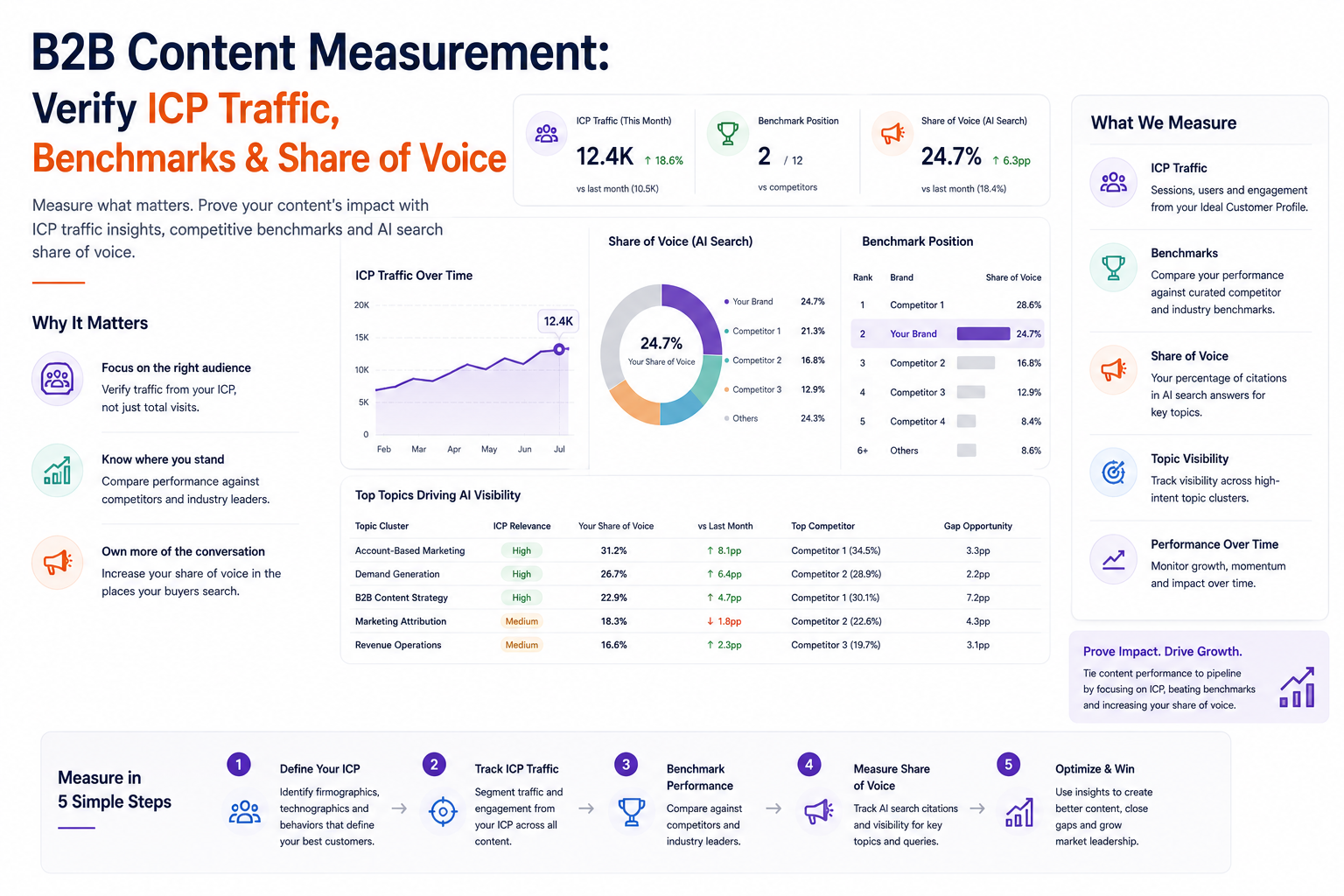
Recommended Read: B2B content measurement: Verify ICP traffic, benchmarks & share of voice - A deep dive into aligning traffic metrics with Ideal Customer Profiles.
Measuring Share of Voice Across AI Search Engines
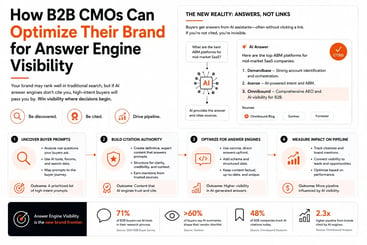
In the AI‑driven search landscape, "share of voice" no longer refers to keyword impressions but to the proportion of AI‑generated answers that cite your content versus competitors. Each time a buyer asks an AI assistant a question, the engine selects external sources to quote; the frequency of those citations directly reflects brand authority in the buyer’s mind. Understanding this metric is essential for any demand‑generation leader who wants to prove that their content influences real‑time buyer conversations.
Because AI engines pull from a constantly shifting index of web content, the citation landscape can change overnight. Regularly monitoring the citation count helps you spot emerging competitors that may have published a timely piece on the same prompt, allowing you to respond with a fresh, more authoritative asset before your share of voice erodes.
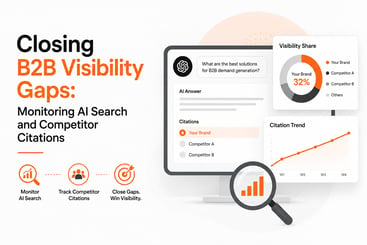
According to a digital marketing software market report, firms that track AI citation visibility see a measurable lift in qualified leads because they can prioritize content that actually appears in AI answers. Omnibound’s AI Search Visibility Monitoring captures citation counts across ChatGPT, Perplexity, Gemini, Claude, and Google AI, delivering a unified view of your share of voice. By comparing your citation frequency to that of top competitors, you can pinpoint gaps where your brand is under‑represented.
When you map these citation trends back to your content calendar, you gain a predictive view of which topics will need reinforcement in the coming quarters, turning what once felt like a reactive measurement into a proactive content strategy.
Implement a quarterly share‑of‑voice audit: extract citation data from Omnibound’s dashboard, calculate the percentage of total AI citations your brand holds for each core buyer prompt, and benchmark against industry averages. Prioritize content updates for prompts where your share falls below 10 %, and track improvement over successive audit cycles. This disciplined approach transforms vague notions of “visibility” into a concrete, actionable KPI that ties directly to pipeline impact.
Benchmarking Your Content Performance Against Industry Standards
Without a benchmark, you cannot tell whether your AI search visibility is strong or lagging. Benchmarking provides a performance baseline that informs investment decisions, goal setting, and executive reporting. The challenge for many SaaS marketers is that traditional SEO benchmarks organic click‑through rates, keyword rankings do not translate to AI answer engines where citations replace clicks.
Omnibound’s Competitor Citation Analysis aggregates anonymized citation data from thousands of AI queries, creating a peer‑group performance matrix. By aligning your brand’s citation rates, prompt coverage, and share of voice against this matrix, you gain a clear picture of where you stand relative to similar B2B firms. The platform also surfaces industry‑wide averages for citation frequency per prompt, allowing you to set realistic, data‑backed targets.
Once you have your benchmark, translate it into quarterly goals: aim to increase citation frequency by a specific count, expand prompt coverage by a set number of new buyer questions, and improve share of voice by a defined percentage point. Track these goals in Omnibound’s Pipeline Attribution module, which links citation lifts to downstream MQL and SQL conversions. This closed‑loop measurement turns abstract visibility into a quantifiable revenue driver.
Leveraging Prompt Tracking and Citation Analytics to Close Gaps
Prompt tracking is the engine that powers accurate share‑of‑voice measurement. By capturing the exact questions buyers pose to AI assistants, you uncover the language and intent that drive citation decisions. Without this insight, content teams rely on generic keywords that often miss the nuanced phrasing used in real buyer conversations.
Below is a simple framework for turning raw prompt data into actionable content gaps:
| Step | Action | Omnibound Feature |
|---|---|---|
| 1 | Collect real‑buyer prompts from AI engines | Prompt Tracking |
| 2 | Map prompts to existing content assets | Citation Visibility |
| 3 | Identify missing or low‑performing prompts | Share of Voice Analytics |
| 4 | Prioritize content creation or optimization | Competitor Benchmarking |
The table outlines a four‑step process that starts with data collection and ends with a prioritized content roadmap. By feeding each step into Omnibound’s Real‑time Insights, you maintain a continuously refreshed view of where your content meets or falls short of buyer intent.
After mapping prompts, use the AI Search Growth Platform to generate citation‑ready content: incorporate the exact phrasing of buyer questions, embed structured data that signals relevance to LLMs, and monitor citation performance in real time. As you close gaps, you will see a measurable rise in share of voice, which the platform ties back to pipeline metrics through its Pipeline Attribution engine. This iterative loop ensures that every content investment directly contributes to revenue growth.
Real‑World Scenario: From Insight to Pipeline
A mid‑market SaaS company noticed that its blog on “cloud cost optimization” was generating high page views but few qualified leads. By applying Omnibound’s Real Buyer Prompt Tracking, the team discovered that most visitors were searching for “how to reduce AWS spend” – a prompt that aligned perfectly with their ICP’s primary pain point. The company then created a targeted case study that directly answered that question and added schema markup to highlight the solution. Within two weeks, the citation count for that prompt rose by 15 %, and the associated MQL volume increased by 30 %, demonstrating a clear link between prompt‑driven content and pipeline impact.
Best Practices for Maintaining Data Hygiene
Keeping your ICP and citation data clean is essential for reliable measurement. Follow these practices to avoid drift over time:
- Regularly audit firmographic enrichment rules to ensure they reflect any changes in your target market definition.
- Validate citation sources quarterly to confirm that indexed pages still meet your quality standards and have not been redirected or removed.
- Synchronize CRM updates with Omnibound’s Real Buyer Prompt Tracking so that new account information is instantly reflected in traffic segmentation.
FAQs
1. How can I confirm that my website visitors belong to my Ideal Customer Profile?
Start by enriching each visit with firmographic data from your CRM or a third‑party intent provider. Then, filter the traffic by the ICP attributes company size, industry, role to isolate qualified sessions. Omnibound’s Real Buyer Prompt Tracking integrates with most CRM systems, allowing you to tag visits in real time and generate a dashboard that reports ICP‑qualified traffic alongside traditional metrics.
2. What does “share of voice” mean in the context of AI search?
Share of voice measures the proportion of AI‑generated answers that cite your content compared with competitors for a given buyer prompt. It reflects brand authority within the AI answer ecosystem rather than traditional click‑through rates. Omnibound’s AI Search Visibility Monitoring provides a clear citation count and percentage for each prompt, enabling you to track and improve your share of voice over time.
3. Which AI engines should I monitor for citation performance?
Focus on the major consumer‑facing models that drive B2B research: ChatGPT, Perplexity, Gemini, Claude, and Google AI. Omnibound’s platform automatically aggregates citation data from all these engines, giving you a single pane of glass to assess performance across the entire AI search landscape.
4. How do I set realistic benchmarks for AI citation metrics?
Use Omnibound’s Competitor Citation Analysis to access anonymized industry averages for citation frequency and share of voice. Compare your current numbers against these peers, then set incremental targets such as a 5 % increase in citation frequency per quarter that align with your overall pipeline goals.
5. Can I link citation data to actual revenue outcomes?
Yes. Omnibound’s Pipeline Attribution module ties citation lifts to downstream marketing qualified leads (MQLs) and sales qualified leads (SQLs). By mapping citation events to lead generation timestamps, you can calculate the contribution of AI citation performance to pipeline velocity and revenue.
6. What is the best way to keep my content aligned with evolving buyer prompts?
Implement a continuous prompt‑mining cycle: ingest new buyer questions from sales calls, support tickets, and AI query logs each month, then update your content inventory accordingly. Omnibound’s Real‑time Insights alerts you to emerging prompts and gaps, ensuring your content remains fresh and citation‑ready.
Conclusion
For a VP of Marketing overseeing demand generation, the ability to verify ICP traffic, measure AI‑driven share of voice, and benchmark against industry peers transforms vague intuition into actionable intelligence. Omnibound’s AI Search Growth Platform equips you with the data, tools, and workflow to turn buyer prompts into citation opportunities, and then tie those citations directly to pipeline impact. By adopting the frameworks outlined above, you can ensure that every piece of content not only reaches the right audience but also earns a spot in the AI‑generated answers that guide buying decisions. To see how Omnibound can make this process seamless for your organization, explore the platform and start measuring what truly matters.
Recommended Authority Resources
- Reference: Digital Marketing Software Market Size Report, 2026-2033 - Provides market sizing and growth forecasts for B2B content measurement solutions, establishing industry context.
- Reference: Measuring Compliance with the California Consumer ... - Academic study on how privacy regulations like CCPA affect tracking metrics, relevant for understanding data‑driven measurement constraints.
Turn Your Content Into AI-Search Winners
Get cited across ChatGPT, Claude & Perplexity — not just ranked on Google.
- Increase AI citations
- Improve answer visibility
- Track brand mentions in LLMs