

Table Of Contents
Mid‑market SaaS marketers are staring at a new reality: buyers are no longer typing a handful of keywords into a search box. They are asking natural‑language questions of AI‑driven answer engines like ChatGPT, Gemini, and Claude. Traditional SEO dashboards still show rankings, but they don’t tell you which exact prompts are surfacing your content or why you’re invisible in the AI answer stream. The gap leaves content teams guessing and spending resources on surface‑level tweaks that rarely move the needle.
This article explains how an AI visibility check uncovers the precise buyer‑intent prompts that power AI answers, why that insight matters for search visibility and pipeline growth, and how to turn raw prompt data into citation‑ready assets. You’ll learn the core steps to map intent signals, avoid common pitfalls, and build a sustainable AI‑search strategy that keeps your brand in front of the next‑generation buyer.
We’ll walk through the evolving landscape of AI‑driven search, the mechanics of prompt mining, and practical frameworks you can apply today. The guidance is grounded in the challenges faced by VPs of Marketing at mid‑market SaaS firms who need measurable impact from their demand‑generation spend.
Why AI‑Driven Search Is Redefining B2B Buyer Discovery
AI answer engines synthesize information from the web and present concise responses, often without a click. This zero‑click experience means that the buyer’s journey can finish before they ever land on a traditional SERP. For B2B marketers, the shift means that relevance is measured by whether your content is cited as a trustworthy source, not just whether it ranks for a keyword.
According to a zero‑click shift study, the rise of AI answers has dramatically increased the share of queries that end without a click. When your content appears in the citation, it gains instant authority and can influence the buyer’s decision faster than any paid ad. The challenge is that AI engines pull from a pool of prompts that are often hidden from standard analytics tools.
To stay competitive, teams must treat AI answer engines as a new discovery layer and align their content strategy with the actual language buyers use. Ignoring this layer means missing out on high‑value exposure that directly feeds pipeline.
In practice, this means re‑thinking how you evaluate performance. Traditional metrics like impressions and click‑through rate become secondary to citation share and the quality of the sources AI chooses to quote. By shifting focus, marketers can better allocate resources toward content that truly moves the needle in a zero‑click environment.
Recommended Read: Is Your Marketing Strategy AI-Ready? A CEO’s Checklist - A strategic checklist that helps leaders assess their AI‑readiness and data foundation.
What an AI Visibility Check Actually Reveals About Buyer Intent
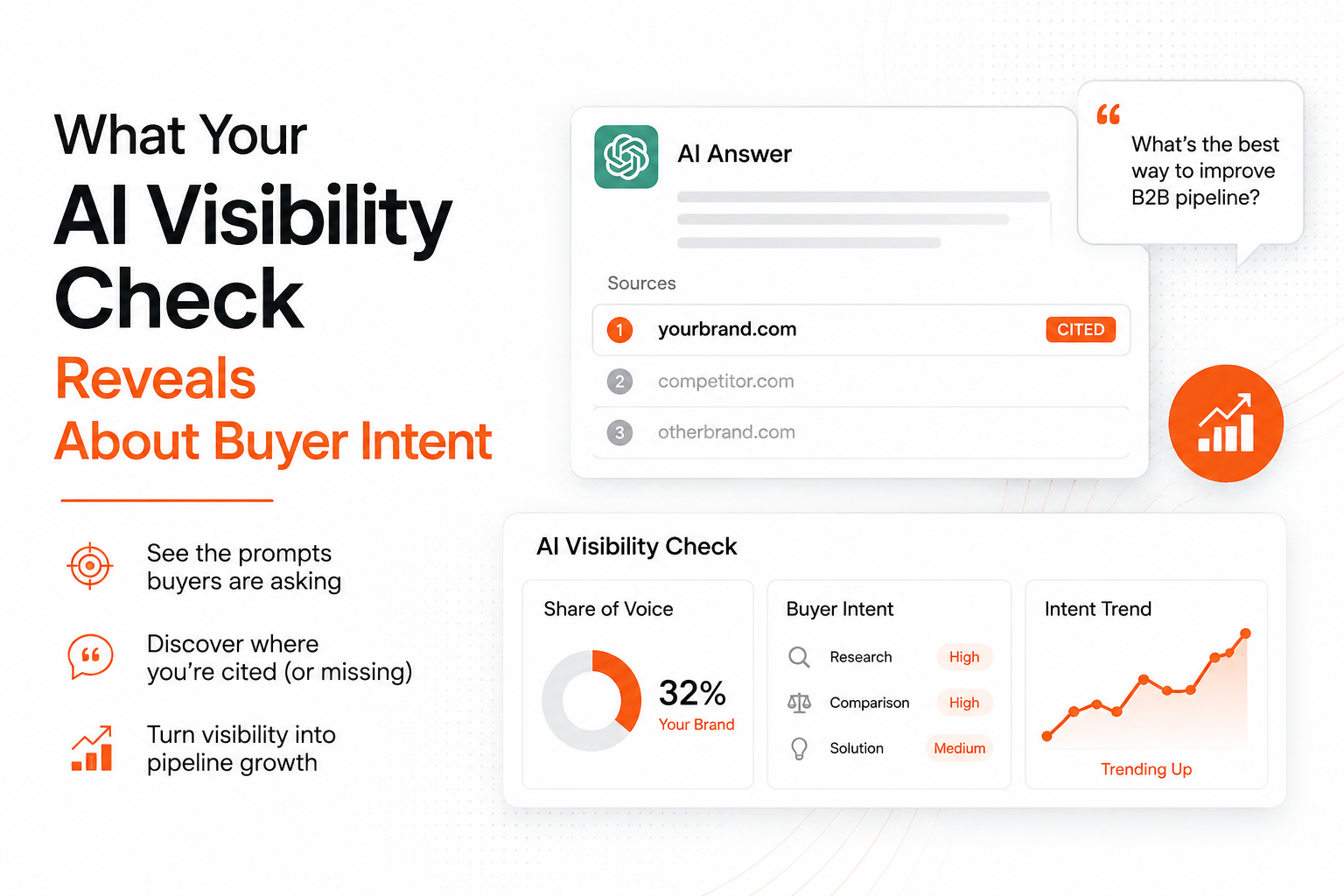
An AI visibility check aggregates the exact prompts that real users type into generative search tools when they are researching solutions. By mapping these prompts, you uncover the nuanced problems, evaluation criteria, and decision‑stage language that drive AI answers. This data replaces guesswork with a concrete intent map.
As one marketing leader put it, "I ran your AI visibility check" framing - prospect arrives curious, not defensive. That opening puts the prospect in a receptive mindset because the audit itself demonstrates that you understand the language they are already using.
With the prompt map in hand, you can identify gaps where competitors are being cited and where your own content is missing. Those gaps become high‑priority topics for new assets, ensuring that every piece you produce is built around a proven buyer question.
Beyond identifying gaps, the visibility check also surfaces emerging terminology that may not yet appear in traditional keyword tools. This early insight allows your team to pre‑emptively create content that captures emerging demand before competitors do.
Recommended Read: AI for Content Marketing - A practical guide to integrating AI into the broader content lifecycle.
Turning Prompt Data Into Intent‑Focused Content
Once you have a list of high‑impact prompts, the next step is to create citation‑ready content that directly answers those questions. This involves structuring pages around the prompt, using clear headings that match the query, and embedding credible data and sources that AI engines can cite.
Below is a simple framework for converting prompts into content assets:
| Step | Action | Key Element | Outcome |
|---|---|---|---|
| 1 | Group prompts by buying stage | Awareness, Consideration, Decision | Prioritized content roadmap |
| 2 | Draft page titles that mirror the prompt | Exact phrasing, question format | Higher likelihood of AI citation |
| 3 | Include authoritative citations | Industry reports, case studies | Boosts AI trust signals |
| 4 | Optimize for ai answers and ai search | Semantic markup, FAQs | Improved visibility in AI answers |
This table shows the step‑by‑step process that turns raw prompt data into assets that AI engines can surface. By aligning each page with a specific intent signal, you increase the chance that the engine selects your content as a trusted citation.
When drafting the body copy, aim for a conversational tone that mirrors how a human would answer the question. Use short paragraphs, bullet points, and clear sub‑headings to make the information scannable for both readers and AI parsers.
Finally, embed internal links to related resources and use schema markup to signal the answer type. These technical touches help the AI engine understand the relevance of your page to the original prompt.
Recommended Read: Why AI Needs Marketing Context To Work Correctly - Explores how contextual data strengthens AI‑generated answers.
Common Pitfalls: Why Surface Tweaks Rarely Move the Needle
Many teams respond to low AI visibility by adding more data points, tweaking meta tags, or stuffing pages with keywords. As one snippet notes, “adding more Clay columns won’t really change much if the structure of the message still feels predictable.” In other words, superficial changes do not address the core mismatch between buyer language and your content.
The real issue is alignment. If the core narrative does not reflect the buyer’s intent, AI engines will continue to favor competitors whose content directly answers the prompt. A focus on intent signals, rather than on vanity metrics, yields measurable improvements.
To avoid these traps, audit your existing assets against the prompt map, retire or rewrite pages that lack a clear answer, and prioritize new content that fills the uncovered intent gaps.
Another frequent mistake is relying solely on generic SEO best practices without considering how AI models evaluate trust. AI engines give weight to citation quality, author expertise, and recency. Overlooking these factors can keep your content invisible even if it is technically optimized for keywords.
By systematically addressing both the strategic (intent alignment) and technical (structured data, citations) dimensions, you create a resilient foundation that supports long‑term AI visibility.
Building a Continuous AI‑Search Strategy for Sustainable Growth
AI visibility is not a one‑time project. Buyer language evolves as new products launch and market conditions shift. A sustainable strategy requires ongoing monitoring, regular prompt mining, and a feedback loop that ties AI citation performance back to pipeline metrics.
Implement a quarterly cadence to run the AI visibility check, update your intent map, and refresh content accordingly. Track search visibility and citation share as key performance indicators alongside traditional SEO metrics. Over time, you will see a correlation between higher citation rates and increased qualified leads.
By treating AI visibility as a core component of your demand‑generation engine, you ensure that your content remains aligned with the questions that actually drive buyer decisions.
Operationally, set up alerts for any sudden drops in citation share for high‑value prompts. Investigate whether competitors have published new content, or whether the AI model has shifted its weighting. Promptly addressing these signals prevents erosion of visibility.
Finally, integrate the AI visibility data with your CRM and marketing automation platforms. When a citation event occurs, surface that information to sales reps so they can reference the same authoritative content during conversations, reinforcing brand credibility at every touchpoint.
Deep Dive: How Prompt Language Shapes AI Citations
Understanding the anatomy of a prompt is essential because AI models prioritize certain linguistic cues when selecting sources. For example, a prompt that includes specific metrics (“average churn rate for SaaS companies in 2024”) signals a need for data‑driven answers, prompting the model to favor pages that contain up‑to‑date statistics and clear source attribution.
Conversely, a more exploratory prompt (“how can I improve customer retention”) invites broader strategic guidance, making the model lean toward thought‑leadership pieces, case studies, and best‑practice frameworks. By categorizing prompts along this spectrum, you can tailor your content creation to match the expected depth and format of the AI’s response.
When you map prompts to content, consider adding a “prompt intent tag” in your internal taxonomy. This tag can help writers quickly see whether a piece should be data‑heavy, narrative‑focused, or a hybrid. Over time, this practice creates a library of AI‑ready assets that consistently meet the model’s citation criteria.
Practical Tips for Maintaining Fresh AI‑Ready Content
Even after you have built a solid base of citation‑ready pages, keeping them relevant requires disciplined upkeep. First, schedule regular reviews of the source material you cite. Replace outdated reports with newer editions to maintain the trust signals that AI models value.
Second, monitor emerging industry terminology by listening to sales conversations and support tickets. When new jargon appears, create quick‑turn assets such as short blog posts or FAQ entries that address the term directly. This proactive approach ensures you capture fresh prompts before competitors do.
Third, leverage internal knowledge bases to surface expert quotes and real‑world examples. Including identifiable author bios and credentials in your markup signals expertise, which AI engines often reward with higher citation likelihood.
Finally, automate the detection of broken internal links and missing schema markup using the same monitoring tools that track AI visibility. Fixing these technical issues promptly prevents accidental loss of citation eligibility.
FAQs
1. How can I discover the exact prompts my target buyers are using in AI search?
Start with an AI visibility audit that captures real‑world queries from conversational data sources such as sales calls, support tickets, and webinar transcripts. Use natural‑language processing tools to extract the most frequent question patterns and map them to buyer intent stages. This data forms the foundation for a prompt‑driven content plan.
2. What is the difference between traditional keyword research and prompt mining?
Traditional keyword research focuses on short‑tail terms and search volume estimates, while prompt mining uncovers full‑sentence questions that buyers ask AI assistants. Prompt mining reveals the context, pain points, and decision criteria embedded in the query, enabling you to craft content that directly answers the buyer’s real question.
3. How do I measure the impact of AI‑generated citations on my pipeline?
Track the share of AI answers that cite your assets (citation share) and tie those citations to downstream funnel stages using CRM data. By correlating citation events with lead creation and opportunity creation, you can quantify the contribution of AI visibility to revenue outcomes.
4. Should I prioritize creating new content or optimizing existing pages for AI visibility?
Both approaches are important. First, audit existing pages against the prompt map and enhance those that already rank for related topics. Then, develop new assets to fill high‑value gaps where no content currently answers a buyer’s prompt. This balanced approach maximizes quick wins while expanding coverage.
5. How can I ensure my content is trusted enough for AI engines to cite it?
Incorporate credible citations from industry reports, case studies, and authoritative sources. Use structured data markup to highlight key facts and author expertise. Consistently publishing well‑sourced, high‑quality content signals trustworthiness to AI models.
6. What role does competitive gap analysis play in an AI visibility strategy?
By comparing your citation share against rivals, you can identify prompt areas where competitors dominate. Prioritizing those gaps helps you capture high‑intent traffic that is currently flowing to competitors, turning a weakness into a strategic advantage.
Conclusion
AI‑driven answer engines have reshaped how B2B buyers discover solutions. An AI visibility check provides a clear map of the exact prompts that power those answers, turning vague intuition into actionable insight. By aligning content with buyer intent, focusing on citation authority, and establishing a continuous monitoring loop, marketers can reclaim visibility in the zero‑click landscape and drive measurable pipeline growth. Apply these principles to audit your current assets, fill intent gaps, and keep your content strategy in step with the evolving AI search frontier.
Recommended Authority Resources
- Reference: The Zero‑Click Shift: What Happens When Your Audience ... - An analysis of how AI‑generated answers increase zero‑click query rates, supporting the discussion of AI answer impact.
- Reference: About ads and AI Overviews - Official Google documentation on AI overviews and ad placement, providing authoritative context for AI search trends.
- Reference: B2B vs. B2C AI Visibility: Optimize for Your Buyer - Research‑based analysis of AI visibility differences for B2B audiences, reinforcing the importance of citation share for pipeline impact.
Turn Your Content Into AI-Search Winners
Get cited across ChatGPT, Claude & Perplexity — not just ranked on Google.
- Increase AI citations
- Improve answer visibility
- Track brand mentions in LLMs