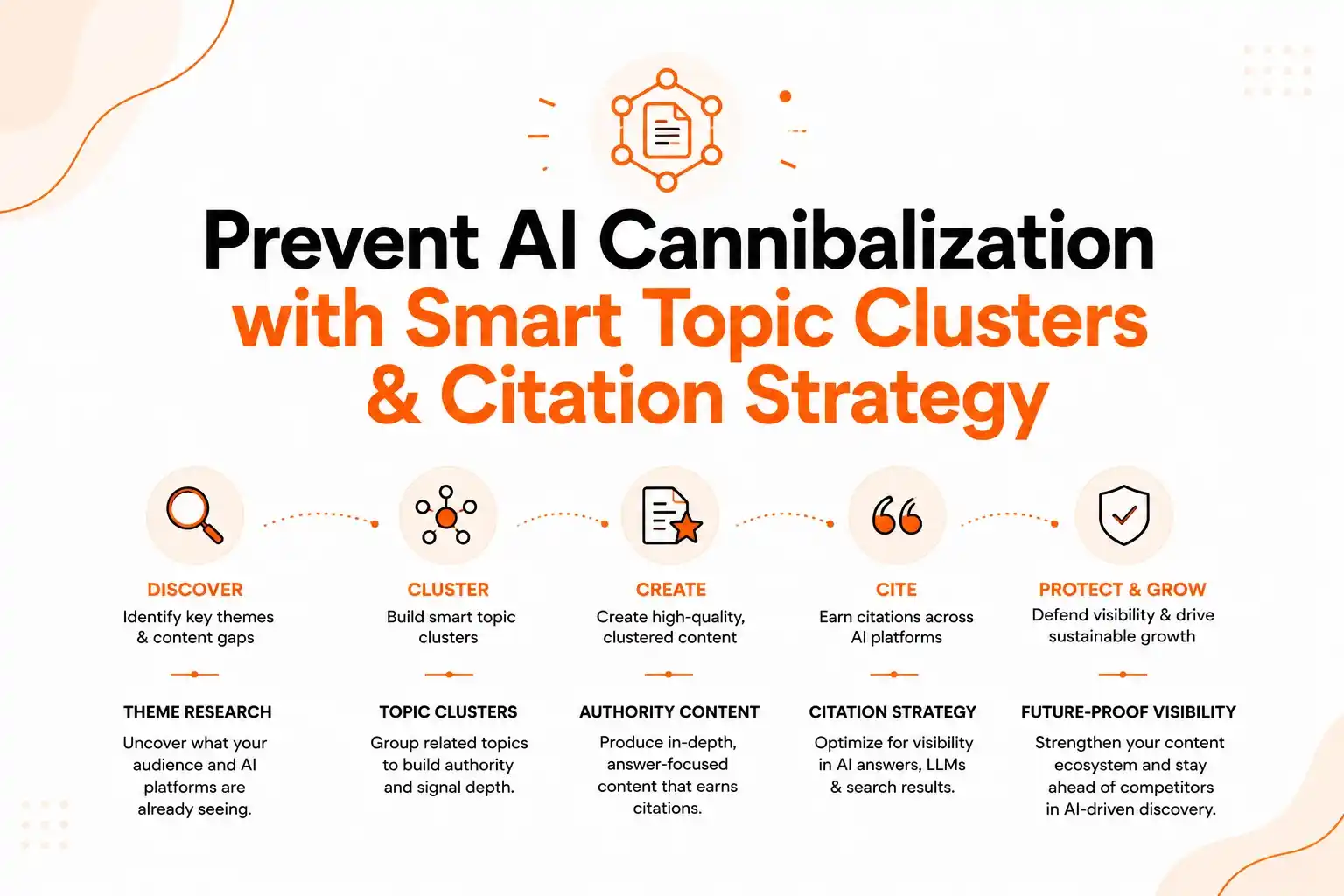


Marketers are seeing AI-generated answers dominate the SERP, yet many B2B teams still lose traffic to their own pages. When an AI model pulls the same phrase from multiple assets, the engine can’t decide which one to cite – the result is a zero-click loss and wasted spend.
Omnibound solves this by turning real buyer language into a content strategy that separates topics, builds a structured content hierarchy, and continuously measures search intent against buyer intent. In this guide you will learn why cannibalization happens, how to create topic clusters that protect authority, and how to use content intelligence to keep your assets visible in AI-driven search.
How AI-Generated Content Leads to Cannibalization and Zero-Click Loss
Large language models generate answers by stitching together snippets that match the query. If you have several pages optimized for the same keyword phrase, the model may pull from each, causing duplicate citations.
Search engines then treat the pages as interchangeable and often suppress them, resulting in a zero-click SERP where the user never clicks your site. According to an 60% of Searches Get Zero Clicks: How to Win in 2026 study, U.S. searches ending without a click have risen above 58%, making it critical to own the citation slot.
To avoid this, you must first map the exact search intent behind each query. Intent falls into four types - informational, navigational, transactional, and commercial investigation - and each requires a distinct content angle. When AI sees overlapping intent signals, it defaults to the page with the strongest internal linking and schema signals. By aligning each piece of content with a unique intent, you give the engine a clear reason to choose one asset over another.
Recommended Read: AI Content Gap Analysis Tools: 10 Ways to Find Missed Opportunities – this guide shows how to surface missed intent signals before you create new assets, reducing the risk of accidental overlap.
Consider a typical buyer journey for a SaaS security solution. The prospect might search “how to secure cloud data”, “cloud security pricing”, and “cloud security case study”. If you have three separate pages each targeting the exact phrase “cloud security”, the AI will struggle to decide which snippet best answers the user’s nuanced need. By assigning the informational query to a pillar page, the pricing question to a transactional sub-page, and the case study to a commercial-investigation page, you give the model a logical hierarchy to follow.
Set up quarterly SERP audits to spot emerging overlaps before they cause a zero-click drop.
Smart Topic Clusters and Structured Content: A Framework
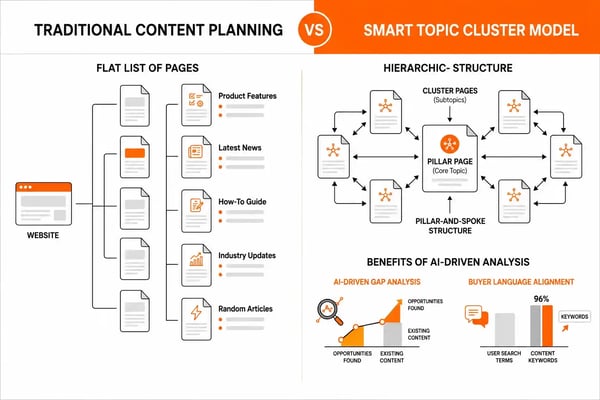
A resilient content strategy uses a topic cluster model that groups related sub‑topics under a pillar page, which captures broad intent while clusters address specific facets. This hierarchy creates a clear citation path - internal links flow from clusters to the pillar and back - forming a citation moat that AI models recognize as authoritative.
|
Aspect |
Traditional Planning |
Smart Topic Clusters |
Key Benefit |
|---|---|---|---|
|
Idea Generation |
Brainstormed per campaign |
AI-driven gap analysis + buyer language |
Fewer duplicate topics |
|
Content Mapping |
Flat list of pages |
Hierarchical pillar-and-spoke |
Clear internal linking |
|
SEO Signals |
Scattered keywords |
Unified schema & citation tags |
Higher AI citation rank |
Omnibound’s platform automates the research phase by ingesting call transcripts, CRM notes, and support tickets. It then surfaces the most common buyer phrases, which become the seed for each pillar. Once the pillars are defined, you can map sub‑topics, assign unique search intent tags, and generate a structured content plan that the AI can follow without overlap.
Recommended Read: Common B2B Marketing Strategy Mistakes That Kill Pipeline – see why treating content as a one‑off project creates cannibalization and how a cluster approach fixes it.
For deeper insight into how AI can power the research step, see Zero-Click Searches in 2025: Winning in AI Search, which explains how intelligent research feeds the cluster creation process.
From Search Intent to Buyer Intent – Using Content Intelligence for Ongoing Success
Once clusters are live, work continues. AI search engines constantly update query interpretation, and buyer intent shifts with new products or market changes. Content intelligence monitors real‑time signals new search terms, click‑through changes, competitor content and feeds them back into the cluster map.
Omnibound tracks these signals in a compliance‑ready dashboard that shows a buyer intent score for each cluster. When a cluster’s intent score drops, the system suggests fresh sub‑topics or updates to the pillar. This loop prevents stale content from being cannibalized by newer AI‑generated pages and keeps your citations strong.
Authority link: 29 B2B Buyer Intent Signal Statistics and Conversion Correlation demonstrates that firms leveraging intent data see conversion lifts above 90%, underscoring the ROI of an intent‑focused strategy.
By aligning search intent with buyer intent you also improve the chances of appearing in zero‑click SERP features such as featured snippets and knowledge panels. Those placements drive brand visibility even when the user never clicks through, reinforcing the value of a well‑structured cluster.
Pair the feedback loop with governance: assign a content owner per pillar, schedule quarterly reviews, and use dashboard alerts to prioritize updates, ensuring shifts in buyer language – such as new regulatory terms or competitor names – are quickly reflected.
Measuring Success and Adjusting Your Strategy
Success in an AI‑driven landscape is measured by more than just organic traffic. Key performance indicators include citation share (the percentage of AI answers that reference your assets), zero‑click impression volume, and the buyer intent score generated by the content intelligence platform.
Tracking these metrics over time reveals whether your citation moat is expanding or eroding.
If citation share dips, check internal link equity; a weak cluster‑to‑pillar link can cause AI to favor a competitor. Reinforce with contextual anchor text mirroring the buyer phrase to restore authority.
Schema refinement is another lever: add or update Article, Product, and Review schema to match the snippet format the engine serves. Small tweaks can move a page from a standard result to a featured snippet, dramatically increasing visibility without extra clicks.
Finally, use the platform’s attribution reporting to connect citation wins to pipeline impact. By mapping the first‑touch citation to downstream opportunities, you can quantify the revenue contribution of each pillar and justify further investment in the cluster model.
AI-generated answers are here to stay, but they don’t have to erode your traffic. By turning buyer language into a content strategy built on topic clusters, structured content, and continuous content intelligence, you protect your assets from cannibalization and capture zero-click visibility. Omnibound’s loop of research, clustering, citation, and monitoring gives you the confidence to scale AI content without sacrificing rankings.
Ready to safeguard your AI-driven assets and turn intent into pipeline? Book a demo now!
FAQs
- How do I map a full content strategy from a single topic to multiple assets?
Turn your core buyer topic into a pillar page and build supporting cluster content around related questions and search intents. - What steps can I take to prevent AI-driven cannibalization when adding new topics?
Use content gap analysis, assign unique search intent, and connect new pages to a clear pillar-cluster hierarchy. - Is there a proven methodology for choosing the right topics, or is it just keyword research?
The best approach combines keyword data with real buyer conversations to prioritize high-intent, low-competition topics. - How does structured content help with zero-click results?
Structured content with schema markup and clear headings increases the chances of earning featured snippets and AI citations. - How does an AI search marketing solution enable a content director to launch and manage a batch of 100 AI‑generated, citation‑focused web pages with minimal manual effort?
Volume only works when the pages are mapped to distinct prompts first. Omnibound starts from a citation gap analysis, so each of the 100 pages is assigned to a prompt no existing page covers, then organised into pillar and supporting clusters so the batch reinforces authority instead of splitting it. Generation runs from the shared buyer-language library with brand kits holding voice consistent, and every page is scored for citation readiness before publication rather than after. Management afterwards is the part most teams underestimate: continuous monitoring flags which of the 100 earn citations, which decay, and which can be refreshed in bulk. A content director should expect to review and approve rather than write, but the review step is not optional at this volume.
.webp?height=245&name=How%20Search%20Intent%20Shapes%20Your%20AI%20Citation%20Strategy%20vs%20Labs%2c%20Docs%20%26%20SEO%20(2).webp)