

Table Of Contents
Mid‑market B2B marketers often see wildly different numbers when they compare internal dashboards, external search data, and partner‑provided signals. That mismatch creates uncertainty about who is actually discovering your content through AI‑driven search. When the data foundation is shaky, AI visibility suffers and the content strategy becomes a guessing game. This guide walks a VP of Marketing through a practical framework that turns fragmented data into a single, trustworthy view of buyer intent. You will learn why the numbers diverge, how to validate each source, and how to assign weight so AI search engines can reliably cite your assets.
Why AI‑search data often looks inconsistent
Internal analytics platforms can miss traffic that appears in search‑engine consoles because they rely on page‑view tags that may not fire on every request. At the same time, external tools that scrape your site often capture URLs that never surface in AI answers, adding noise to the picture. This fragmentation creates data silos that obscure the true audience size and dilute AI visibility. According to a Federal Trade Commission AI compliance guide, accurate citation tracking depends on a clear, unified source of truth.
When you compare your internal dashboard to Search Console, you may notice gaps. For example, one marketer observed that the AI Search Statistics page recorded 131 clicks in Search Console, while their internal tool identified only 20 visitors. "RB2B only shows part of the picture. for eg, the AI Search Statistics page has 131 clicks in Search Console, while RB2B identified only 20 visitors, so I don't think we can conclude the audience based on RB2B alone." That disparity signals a need for cross‑validation before any AI measurement can be trusted.
To close the gap, start by mapping each data source to the same buyer journey stages. Align metrics such as click‑through rates, session counts, and conversion events across analytics, scrape logs, and partner feeds. Once the mapping is in place, you can begin to reconcile the numbers and build a reliable AI‑search view.
Understanding why each platform records data the way it does also helps you set realistic expectations. For instance, AI engines may surface answers based on semantic relevance rather than raw click counts, which explains why some high‑traffic pages never appear as citations. Recognizing these nuances prevents you from over‑reacting to apparent discrepancies.
Another practical tip is to schedule a quarterly data‑source audit. During the audit, verify that tagging libraries are up to date, that scrape schedules align with content publishing cycles, and that partner contracts are still delivering the agreed‑upon metadata. This systematic approach keeps the data ecosystem healthy over time.
Recommended Read: Connecting CRM, Support & Competitor Data for Unified B2B Intelligence - A deep dive into creating a single source of truth for marketing data.
Cross‑validating analytics with Search Console and external signals
The first step in validation is to pull raw traffic data from both your internal analytics and the search engine’s console. Compare total clicks, unique users, and session duration side by side. Any large deviation should trigger a deeper investigation of tag implementation, bot traffic, or crawl errors.
Next, bring in third‑party signals such as scraped homepage metrics. As one practitioner noted, "This is exactly why we scrape homepages and keep a tight exclude list." By maintaining a curated exclusion list, you prevent duplicate or irrelevant pages from contaminating the AI citation pool. Align the cleaned scrape data with the analytics timeline to spot overlaps and gaps.
Finally, reconcile partner‑provided URLs by matching them against the same taxonomy used for internal pages. Tag each partner URL with the buyer intent stage it supports, then compare its performance metrics to internal equivalents. This layered approach turns fragmented numbers into a coherent AI measurement framework.
When performing the cross‑validation, consider visualizing the data in a single dashboard. Heat maps or waterfall charts can quickly highlight where one source consistently over‑ or under‑reports compared to another. Such visual cues make it easier for stakeholders to grasp the scope of the issue without digging into raw spreadsheets.
It is also worthwhile to document any assumptions you make during the reconciliation process. For example, if you decide to treat a 5‑minute session as a bounce for analytics purposes, note that decision so future audits can assess its impact on the overall model.
Recommended Read: Why Your Call Data and Prompt Tracking Matter for AI Search - Explains how call‑center data can enrich AI search signals.
Best practices for clean and effective web scraping
Scraping is a powerful way to surface content that AI engines can index, but it must be done with discipline. Begin by defining a clear crawl scope that includes only the pages you want AI to consider. Use robots.txt directives and a whitelist of URL patterns to keep the crawler focused.
Maintain a tight exclude list to filter out duplicate pages, session‑specific URLs, and low‑value content. Regularly audit the crawl logs for 404 errors, redirect loops, and content that fails quality checks. This hygiene reduces data fragmentation and improves the signal‑to‑noise ratio for AI attribution.
After each scrape cycle, store the raw HTML in a version‑controlled repository. Apply a normalization step that strips boilerplate, canonicalizes URLs, and extracts structured metadata. The cleaned dataset can then be merged with analytics and partner feeds for a unified view.
One additional safeguard is to schedule periodic re‑crawls of high‑priority pages. Content on these pages tends to change more frequently, and a stale snapshot could cause AI engines to cite outdated information. By refreshing them on a weekly or bi‑weekly cadence, you keep the citation pool current.
Finally, consider implementing a lightweight scoring system for scraped pages based on readability, keyword density, and topical relevance. Pages that fall below a predefined threshold can be automatically flagged for manual review, ensuring only high‑quality assets enter the AI‑search pipeline.
Recommended Read: AI Consolidation in Marketing: Streamlining Tools for Quick Decisions - Shows how to consolidate multiple data pipelines into a single AI‑ready stream.
Integrating partner‑provided URLs into a unified signal model
Partners often supply URLs that point to co‑branded content, case studies, or joint webinars. These assets can be high‑value citations for AI search, but they are easy to lose in a data silo. Start by creating a partner data contract that defines the required metadata fields: URL, content type, buyer intent tag, and expected update frequency.
Map each partner URL to your internal taxonomy so that it aligns with the same intent stage as your owned content. Use a lightweight API or scheduled CSV import to keep the partner feed current. Validate each incoming URL for accessibility, content relevance, and compliance with your exclusion rules.
Assign a weight to partner signals based on factors such as domain authority, historical citation performance, and relevance to the buyer journey. This weighting feeds into the overall AI‑search signal model, ensuring that high‑quality partner content contributes proportionally to AI visibility.
When onboarding a new partner, run a pilot test that compares the partner's citation impact against a control group of similar owned pages. This experiment helps you calibrate the initial weight and provides concrete evidence to refine the model over time.
It is also useful to set up a regular communication cadence with partners. Quarterly check‑ins allow you to exchange performance insights, update metadata standards, and address any technical issues that could affect citation quality.
Building a weighted framework to prioritize buyer intent
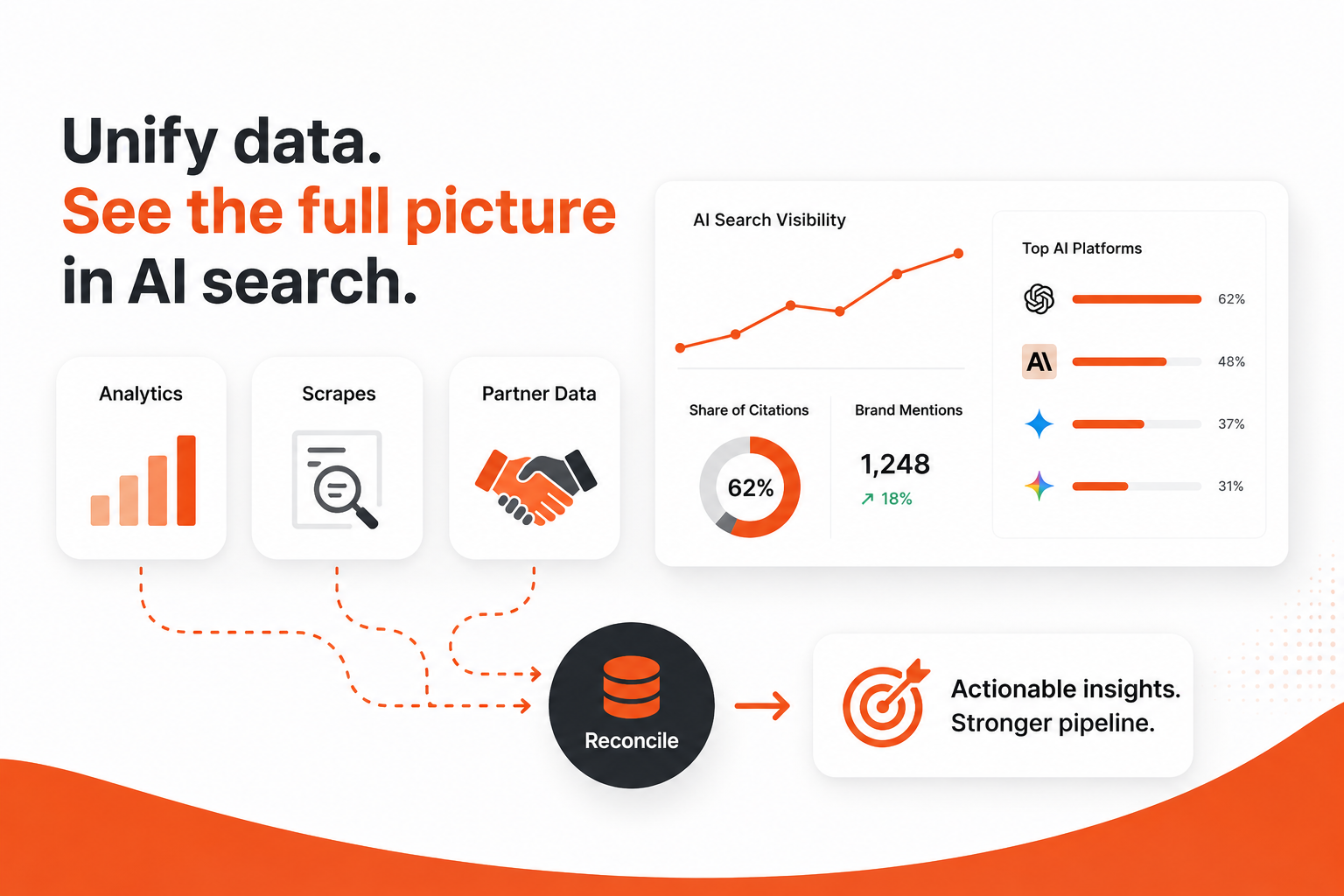
A robust weighting model balances the three data pillars analytics, scrapes, and partner feeds so that AI search engines can surface the most relevant content. Begin by scoring each source on completeness, freshness, and authority. For example, analytics data may score high on freshness, while partner URLs may score higher on authority.
Combine the scores into a composite index that reflects overall buyer intent strength. The table below outlines a simple framework for calculating the composite index.
| Source | Typical Gaps | Validation Approach | Weighting Consideration |
|---|---|---|---|
| Analytics | Missing clicks, tag failures | Cross‑check with Search Console | High freshness, moderate authority |
| Scrapes | Duplicate pages, noisy content | Exclude list, content quality filter | Moderate freshness, variable authority |
| Partner URLs | Inconsistent metadata, stale links | API contract, periodic health check | High authority, lower freshness |
The composite index can be expressed as a weighted sum where each source’s score is multiplied by its assigned weight. Adjust the weights based on your strategic priorities if AI visibility is the primary goal, give higher weight to sources that historically drive citations.
Once the index is calculated, feed it into your AI‑search engine’s citation tracking system. The engine will then prioritize content with the highest intent score, improving AI attribution and overall search performance.
To keep the weighting model relevant, revisit it after major product launches or market shifts. New content themes may require a temporary boost in weight for specific scrape categories, while a partner’s rising domain authority could merit a permanent increase.
Recommended Read: AI Consolidation in Marketing: Streamlining Tools for Quick Decisions - Offers a practical checklist for implementing weighted data models.
Monitoring and evolving your unified data landscape
Data reconciliation is not a one‑time project; it requires continuous monitoring to keep pace with new content, partner additions, and changes in AI search algorithms. Set up a dashboard that tracks key metrics such as citation share, AI visibility score, and data‑fragmentation incidents.
Schedule regular audits monthly for analytics, quarterly for scrape hygiene, and bi‑annual for partner contracts. Use automated alerts to flag drops in freshness or spikes in duplicate content. When an issue arises, revisit the weighting model and adjust the scores to reflect the new reality.
By treating the unified signal layer as a living system, you ensure that AI search engines always have a current, high‑quality view of buyer intent. This ongoing discipline turns fragmented data into a strategic asset that fuels pipeline growth without relying on any single, incomplete feed.
In addition to the scheduled audits, consider implementing a lightweight feedback loop from your sales team. Front‑line reps can surface real‑world examples where AI citations helped close deals, providing qualitative validation that complements the quantitative metrics on your dashboard.
Finally, document any changes to the data pipeline in a shared knowledge base. Clear documentation reduces onboarding friction for new team members and ensures that best practices are consistently applied across the organization.
FAQs
1. How can I tell if my internal analytics are missing traffic that AI search engines see?
Compare the click counts from your analytics dashboard with the numbers reported in Search Console. Large gaps often indicate tag‑firing issues, bot traffic, or sessions that bypass your tracking code. Cross‑validation helps you identify where the data silos are forming.
2. What steps should I take to keep scraped content from polluting AI search results?
Define a clear crawl scope, use a strict exclude list, and run quality filters that remove duplicate or low‑value pages. Regularly audit crawl logs for errors and normalize the HTML before merging it with other data sources.
3. How do I evaluate the relevance of partner‑provided URLs for AI citation?
Map each partner URL to your internal intent taxonomy, verify its accessibility, and assign a weight based on domain authority and historical citation performance. This ensures partner content contributes meaningfully to AI visibility.
4. What is a practical way to assign weight to different data sources?
Score each source on freshness, completeness, and authority, then calculate a composite index using a weighted sum. Adjust the weights to align with your strategic focus higher weight for sources that drive the most citations.
5. How often should I audit my data pipelines to maintain AI search performance?
Run monthly audits for analytics, quarterly checks for scrape hygiene, and bi‑annual reviews of partner contracts. Automated alerts can flag sudden drops in data quality, allowing you to act quickly.
6. Why does data fragmentation hurt AI attribution and what can I do about it?
When signals are scattered across silos, AI search engines struggle to rank your content as authoritative. Consolidating analytics, scrapes, and partner feeds into a unified model reduces fragmentation and improves citation tracking, leading to stronger AI attribution.
Conclusion
Fragmented data feeds keep B2B marketers guessing about the true reach of their AI‑search content. By reconciling internal analytics, disciplined web scrapes, and well‑managed partner URLs, you create a single, weighted view of buyer intent. This unified signal layer boosts AI visibility, improves citation tracking, and provides a reliable foundation for measuring AI attribution. Apply the framework, monitor the metrics, and let the data guide your content strategy toward measurable pipeline impact.
Recommended Authority Resources
- Reference: Artificial Intelligence Compliance Plan - Federal Trade Commission - Provides official guidance on transparency and accountability for AI systems, including citation tracking requirements.
- Reference: AI Watch: Global regulatory tracker - United States | White & Case LLP - Offers a comprehensive overview of U.S. AI regulations that impact data handling and attribution.
- Reference: AI Companies: Uphold Your Privacy and Confidentiality Commitments - Details privacy and confidentiality obligations relevant to AI search data pipelines.
Turn Your Content Into AI-Search Winners
Get cited across ChatGPT, Claude & Perplexity — not just ranked on Google.
- Increase AI citations
- Improve answer visibility
- Track brand mentions in LLMs