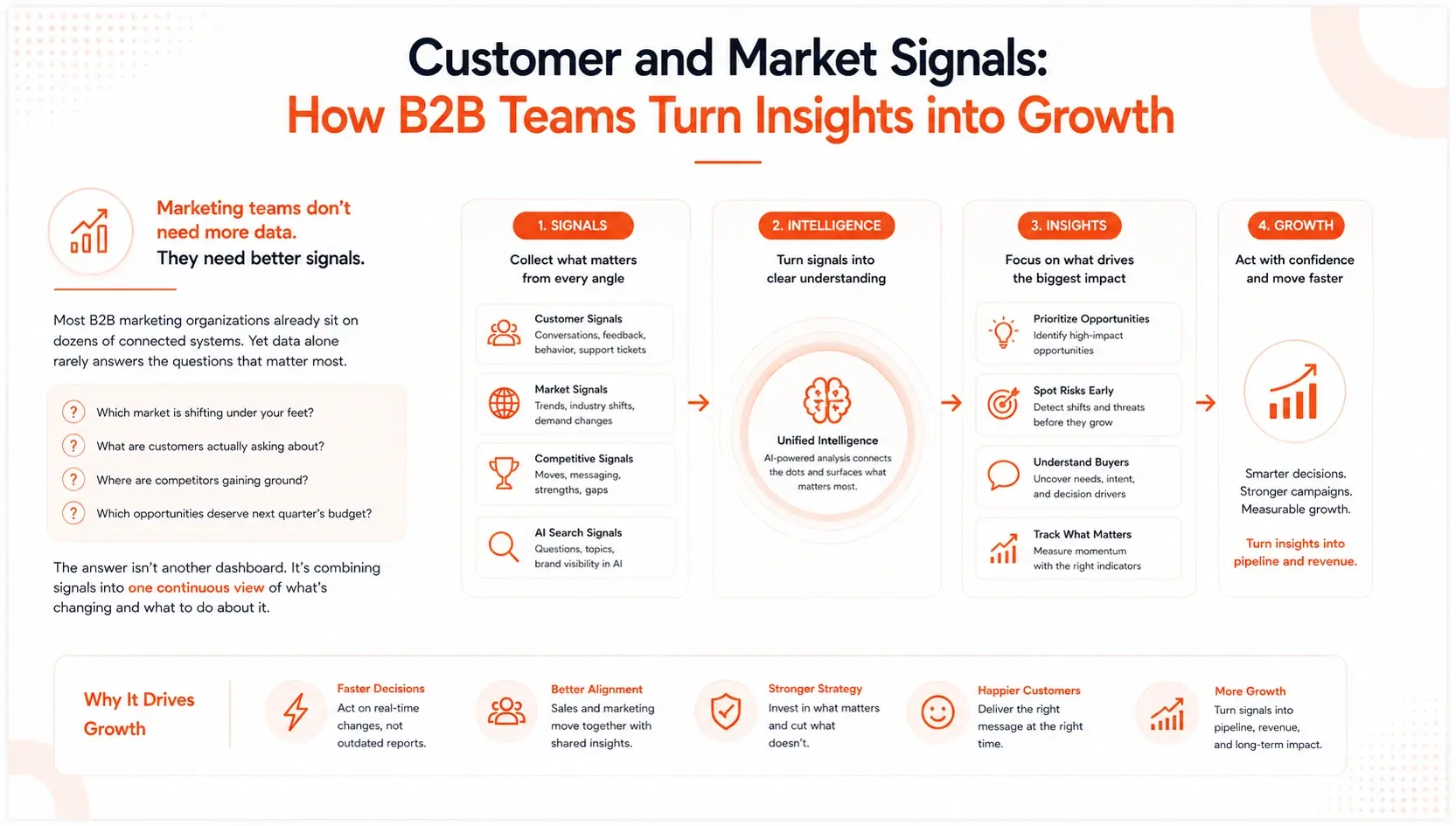


Marketing teams don't need more data. They need better signals.
Most B2B marketing organizations already sit on dozens of connected systems: CRM, product analytics, support tools, content platforms, competitive trackers. Yet data alone rarely answers the questions that matter most. Which market is shifting under your feet? What are customers actually asking about? Where are competitors gaining ground? Which opportunities deserve the next quarter's budget?
The answer isn't another dashboard. It's combining customer signals, market signals, competitive signals, and AI Search signals into one continuous view of what's changing and what to do about it. Teams that build this habit make faster, more confident decisions than teams that wait for the next research cycle.
What Are Customer Signals?
Customer signals are the observable, ongoing evidence of what buyers care about right now. They come from sales conversations, CRM activity, product feedback, support tickets, website behavior, and content engagement. Individually, each one is a data point. Together, they describe how buyer needs are shifting in real time.
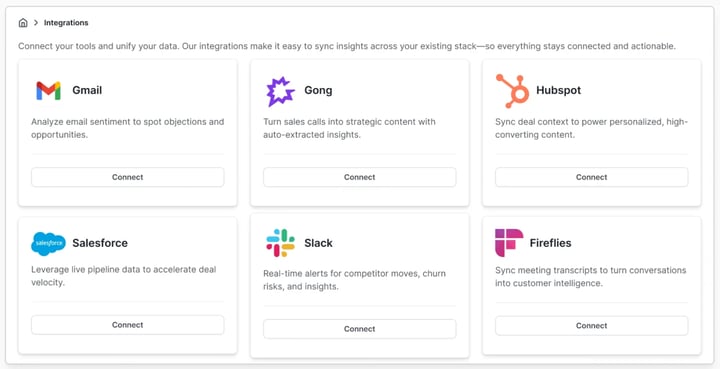
A repeated objection in sales calls, a spike in a specific support topic, or a sudden drop in engagement with a once-popular asset all tell you something a quarterly survey never will: buyer priorities have already moved. This is customer intelligence in its most practical form, evidence pulled directly from the people you're trying to reach, not assumptions about them.
The value of customer signals grows when they're read continuously rather than reviewed once a quarter. A team that tracks customer persona research as a living process, rather than a static document, catches shifting language and priorities while they're still actionable.
What Are Market Signals?
Market signals describe where the broader landscape is heading, independent of any single customer relationship. These include emerging topics in your category, industry trend reports, search demand shifts, competitor launches, and regulatory changes that reshape buyer priorities.
Market signals answer a different question than customer signals. Customer signals tell you what your existing buyers want. Market signals tell you where the entire category is moving, including the segments and use cases you haven't engaged yet.
A rise in industry conversation around a new problem, paired with growing search interest in that theme, often precedes visible demand by months. Marketers who track these patterns through continuous market trend detection get ahead of a shift instead of reacting once it's obvious to everyone.
Competitive Signals
Competitive signals sit between customer and market intelligence. They capture how competitors are adjusting messaging, pricing, positioning, and product investment, and what that reveals about where the category is headed.
Watch for changes in how competitors describe their value proposition, new pricing tiers, shifts in the audiences they target, and where they're putting content investment. Each of these is a clue about what they believe is working, and by extension, where whitespace exists for you.
Competitive intelligence isn't about copying moves. It's about understanding category shifts early enough to build a differentiated response instead of a reactive one. This is where market signals and competitive signals overlap most: a competitor's pricing change often reflects a market trend they've already noticed.
AI Search Signals
There's a newer layer of signal that most marketing teams haven't built a process around yet: what's happening inside AI-powered search experiences.
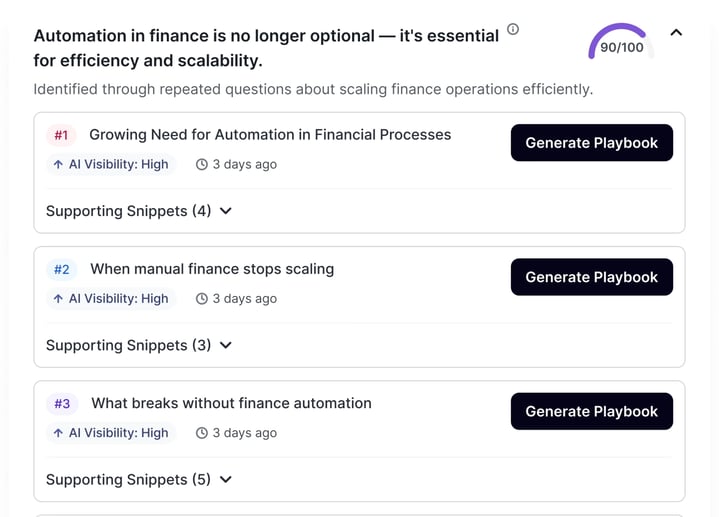
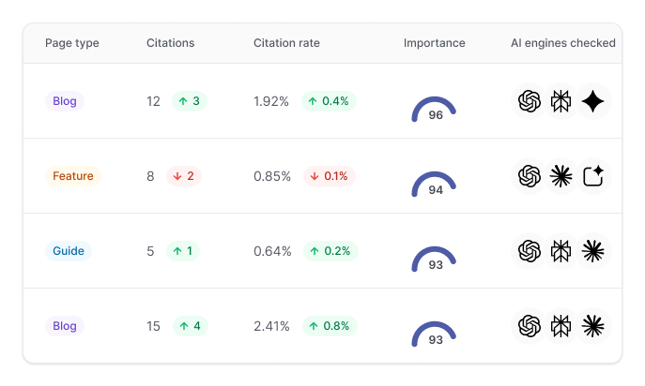
Buyers increasingly ask AI tools direct questions about problems, vendors, and categories before they ever reach a search results page or a sales conversation. That means marketing teams should be watching which brands AI recommends, which questions come up again and again, how AI summarizes a category, and where visibility gaps and citation opportunities exist.
This is a natural extension of market intelligence, not a separate discipline. If your competitors are being cited in AI-generated answers and you aren't, that's a market signal as concrete as a competitor's pricing change. Tracking AI Search Visibility alongside customer and competitive signals gives marketing teams a complete picture of where buyer attention is actually going.
Turning Signals into Marketing Decisions
Signals only matter if they lead somewhere. The most effective marketing teams treat customer, market, competitive, and AI Search signals as inputs to a single workflow rather than four separate reports.
The practical sequence looks like this:
- Customer Signals reveal what buyers are asking and where their priorities are shifting.
- Market Signals show where the category as a whole is moving.
- Competitive Signals reveal how rivals are responding and where gaps remain open.
- AI Search Signals show where buyer attention is landing inside AI-generated answers.
- Opportunity Prioritization ranks which shifts deserve investment right now.
- Content Strategy translates priorities into the assets buyers actually need.
- Campaign Planning puts budget and channel behind the highest-confidence opportunities.
- Measurement closes the loop, feeding results back into the next round of signals.
This flow turns marketing data into actionable insight rather than a pile of unconnected reports sitting in different tools. Each stage informs the next, and the loop never really closes, it restarts continuously.
Why Continuous Signals Matter More Than Annual Research
Traditional market research follows a simple pattern: research, then a report, then action. By the time a report reaches decision-makers, the conditions it describes have often already changed. A quarter is a long time in a fast-moving category.
The modern approach replaces that cycle with something closer to a loop: signals inform insights, insights shape strategy, strategy drives execution, execution generates new signals, and the cycle continues. Nothing sits still long enough to go stale.
This isn't about abandoning research. It's about surrounding it with continuous research that keeps strategic assumptions current. Teams that build this habit stop treating market understanding as a project with a start and end date, and start treating it as an operating rhythm.
Measuring Signal Quality
Not every signal deserves equal weight. Before acting on a pattern, it helps to check whether it actually supports a decision. Good signals should help marketing teams:
- Identify genuine customer demand, not just activity noise
- Detect real market changes, not one-off news cycles
- Monitor competitors with enough context to understand intent, not just tactics
- Improve AI Search visibility in ways tied to actual buyer questions
- Prioritize investments based on evidence rather than internal opinion
- Support go-to-market decisions with a clear line from signal to action
A signal that doesn't connect to one of these outcomes is probably noise. The discipline of filtering signals against real decisions is what separates a useful intelligence practice from a data collection habit.
How Omnibound Brings Signals Together
Omnibound is a marketing intelligence platform built to consolidate the signals scattered across a modern B2B organization. Rather than functioning as a standalone intent data tool, it connects customer conversations, market movement, competitive positioning, and AI Search behavior into one continuous view.
In practice, Omnibound helps marketing teams:
- Consolidate customer signals from CRM activity, calls, and content engagement
- Monitor market trends and shifting buyer language as they emerge
- Analyze competitive positioning changes across messaging and pricing
- Improve AI Search visibility by tracking prompts, citations, and gaps
- Identify strategic opportunities before they become obvious to the rest of the category
- Prioritize marketing decisions using evidence instead of guesswork
This is what makes Omnibound's living research approach different from static reporting tools. Personas, competitive maps, and content priorities update as new signals arrive rather than sitting untouched for a quarter. The result is a system where marketing execution stays grounded in what buyers are actually saying and doing right now.
Teams exploring how AI Search is reshaping content strategy often find that the same signal infrastructure that improves positioning also improves visibility inside AI-generated answers, since both depend on understanding what buyers are actually asking.
Conclusion
Modern B2B marketing teams succeed by continuously combining customer signals, market signals, competitive intelligence, and AI Search signals into one decision-making system. Instead of relying on static reports or isolated intent data, they use connected intelligence to prioritize campaigns, refine positioning, spot emerging opportunities, and improve visibility across AI-powered search experiences.
This reflects a broader shift in how B2B marketing works: away from periodic research and toward continuous signal monitoring built directly into strategic decisions. Teams that build this habit don't just react to the market faster, they understand it more clearly than competitors still waiting on the next report.
Frequently Asked Questions
What are customer signals in marketing?
Customer signals are the ongoing evidence of buyer behavior and priorities, drawn from sources like CRM activity, sales calls, support tickets, product usage, and content engagement. They show how buyer needs are shifting in real time rather than describing a single moment in the past.
What are market signals?
Market signals capture movement across the broader category: emerging topics, industry trends, search demand shifts, competitor launches, and regulatory changes. They tell you where the market as a whole is heading, beyond your existing customer base.
What is the difference between customer signals and buying signals?
Buying signals typically refer to a narrower set of behaviors tied to purchase intent, like pricing page visits or demo requests. Customer signals are broader, covering the full range of buyer behavior, feedback, and conversation that shapes marketing and product decisions, not just sales readiness.
How do market signals improve marketing strategy?
Market signals show where demand and category conversation are moving before those shifts show up in your own funnel. Acting on them early lets marketing teams adjust positioning and content ahead of the rest of the category rather than after a trend is already established.
What are AI Search signals?
AI Search signals track how AI-powered search experiences discuss a category: which brands get recommended, which questions buyers ask repeatedly, and where visibility gaps exist. They reveal how buyer research habits are shifting toward AI-driven answers.
How do marketers identify market opportunities?
Opportunities usually surface where multiple signal types align: a rising customer theme, a related market trend, a competitive gap, and low AI Search visibility around the same topic. When these overlap, they point to a clear area worth prioritizing.
Why is continuous marketing intelligence important?
Buyer priorities, competitor positioning, and category conversation all change faster than a quarterly research cycle can track. Continuous intelligence keeps strategic assumptions current instead of letting them go stale between review periods.
How can marketing teams combine customer and market signals?
The most effective approach treats both as inputs to one workflow: customer signals reveal buyer priorities, market and competitive signals reveal category movement, and AI Search signals reveal where attention is landing. Together, they inform a single set of prioritized decisions rather than separate, disconnected reports.