

Table Of Contents
When a prospect asks ChatGPT, Perplexity, Gemini, Claude, or Google AI a question, the answer often cites a handful of external sources. If your brand never appears in those citations, you lose a silent but powerful channel of influence. Many VP‑level marketers report that they cannot see which competitor prompts are driving rankings in AI answer engines, leaving strategic blind spots that erode market positioning. The Google Search Console data for the query “b2b competitive intelligence ai search monitoring” shows Impressions: 154, confirming a clear demand for guidance on this topic among U.S. and Canadian buyers. This guide explains why a disciplined AI search monitoring program matters, outlines the core components you need, and provides a step‑by‑step framework you can start using today.
In the world of generative AI, traditional SEO metrics like keyword rankings and backlink counts no longer capture the full picture. Instead, marketers must track how often their content is quoted as a source, how competitors are cited, and how buyer intent is reflected in the exact prompts that trigger AI answers. By treating AI search as a new discovery surface, you can turn invisible citations into measurable assets that support demand generation and protect share of voice. Throughout this article we will reference tools such as an ai search visibility checker, an ai search visibility monitoring platform, and an ai search visibility gap analysis tool to illustrate best‑in‑class practices without endorsing any specific vendor.
By the end of the piece you will understand why AI search is a critical frontier for b2b competitive intelligence ai search monitoring, know the essential elements of a monitoring program, and have actionable tactics for capturing competitor prompts, measuring citation worthiness, and converting insights into a content strategy that improves share of voice optimization. Let’s begin.
Why AI Search Is a New Frontier for B2B Competitive Intelligence
AI answer engines synthesize information from the web in real time, presenting a concise answer that often includes a citation to a third‑party source. For B2B buyers, these citations act as implicit endorsements, shaping perception before a prospect even clicks a link. According to a survey showing 73% of B2B buyers use AI tools in purchase research, AI‑driven discovery has become a primary research method, making visibility in these engines as vital as traditional search rankings. The challenge is that most organizations lack a systematic way to track which competitor prompts surface their content, resulting in blind spots that competitors can exploit.
Industry practitioners commonly cite difficulty tracking AI‑driven answer engines and identifying competitor citation gaps as a major obstacle to effective B2B competitive intelligence. This pain point stems from the fact that AI models do not expose their underlying index, so you must infer visibility by monitoring the answers themselves. To overcome this, teams need an answer engine optimization tracking tool that can capture the exact prompts, record the cited URLs, and log the frequency of each citation. By aggregating this data across ChatGPT, Perplexity, Gemini, and Claude, you create a living map of the AI search landscape.
Implementing a robust monitoring approach turns guesswork into data‑driven decision making. When you know which prompts drive competitor citations, you can prioritize content creation around those high‑value queries, improve citation worthiness, and protect your share of voice. This foundational awareness also informs broader marketing tactics, such as aligning paid media keywords with the language buyers actually use in AI chats.
Core Components of an AI Search Monitoring Program
A successful monitoring program rests on four pillars: data ingestion, prompt mining, citation tracking, and performance analytics. Data ingestion pulls signals from sales calls, CRM notes, support tickets, and public market data to surface the exact phrasing buyers use when they ask AI assistants. An ai search visibility tracking software can automate this ingestion, normalizing varied language into a searchable prompt library.
Once you have a prompt library, the next step is systematic prompt mining. This involves running the identified prompts against each major AI search engine and recording the returned answer snippets. The process should capture the full citation list, the ranking position of each cited source, and any sentiment expressed in the answer. Below is a simple framework that many B2B teams adopt:
| Stage | Key Action | Typical Tool | Outcome |
|---|---|---|---|
| Ingestion | Collect buyer language from internal sources | CRM export, call transcription | Prompt library |
| Mining | Query AI engines with prompts | ai search visibility checker | Citation data set |
| Tracking | Log competitor citations and frequencies | answer engine optimization tracking tool | Visibility dashboard |
| Analytics | Measure share of voice and gaps | ai search visibility monitoring platform | Actionable insights |
The table illustrates how each stage feeds into the next, creating a continuous feedback loop that keeps your intelligence current as AI models evolve.
Performance analytics turn raw citation data into strategic metrics such as share of voice optimization and citation worthiness. By visualizing trends over time, you can spot emerging competitor strengths, detect content gaps, and prioritize new assets that address high‑impact prompts. Integrating these analytics with existing BI tools ensures that insights flow to the teams that need them most, from content marketers to product managers.
Techniques for Capturing Competitor Prompts and Citation Data
Capturing competitor prompts begins with mining real‑world buyer interactions. Sales call recordings, support ticket texts, and webinar Q&A logs are rich sources of the exact language prospects use. By applying natural‑language processing to these texts, you can extract high‑frequency question patterns that are likely to appear in AI queries. An ai search visibility checker can then automate the testing of these patterns across multiple AI engines.
When you run a prompt, record the answer snippet and note every external URL the engine cites. This citation data reveals which competitors are currently dominating the conversation around a given topic. For example, if the prompt “best CRM integration for SaaS” consistently returns a competitor’s whitepaper, that competitor enjoys a strong citation advantage. Using an answer engine optimization tracking tool to log these results at scale enables you to build a comparative view of citation share across rivals.
To keep the process sustainable, schedule regular audits weekly for fast‑moving markets or monthly for more stable segments. Automation scripts can trigger prompt runs, scrape citations, and update a central dashboard without manual effort. Over time, this systematic capture creates a historical record that highlights trends, seasonal shifts, and the impact of new competitor content releases.
Analyzing Share of Voice and Identifying Content Gaps
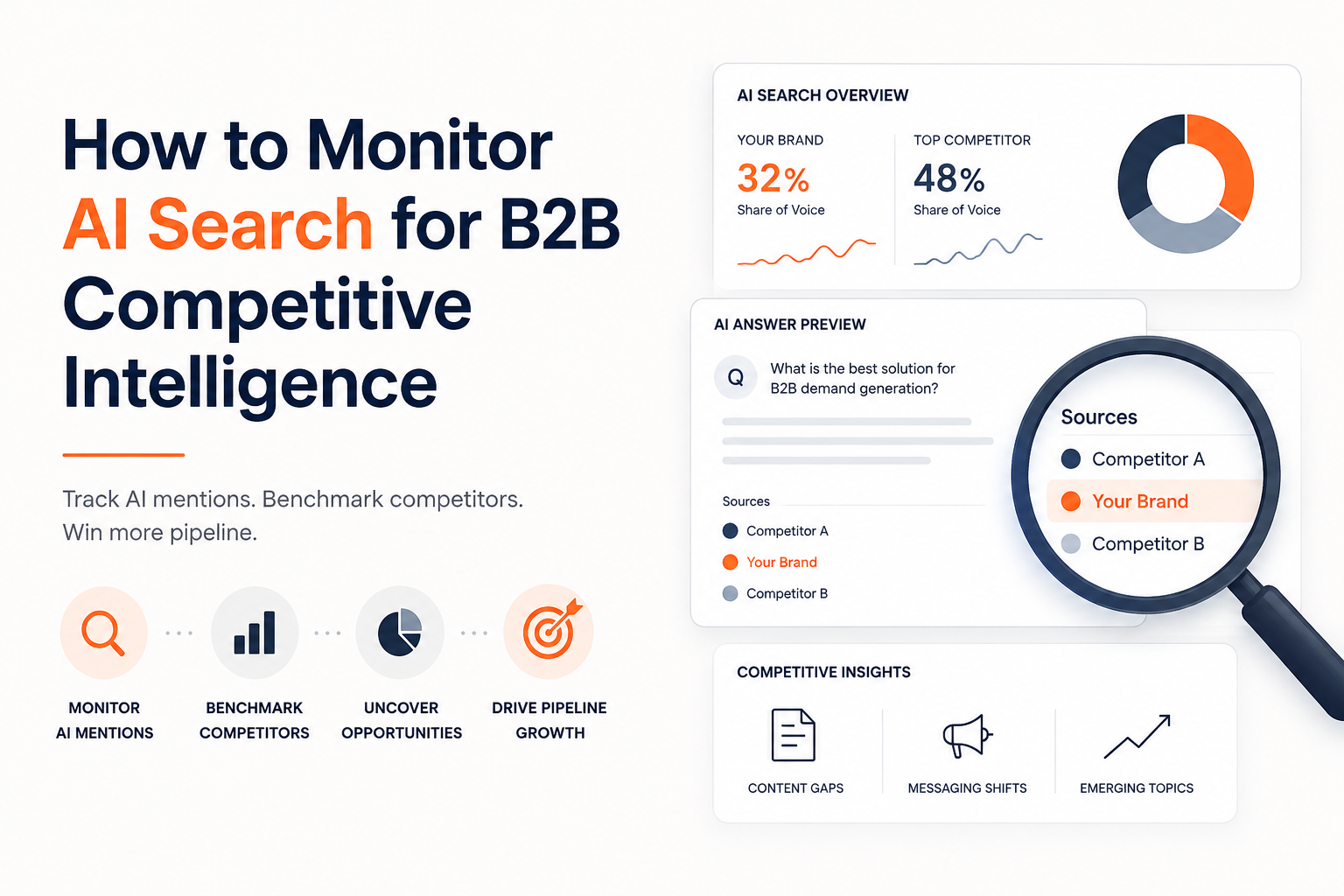
Once you have a robust citation database, the next step is to calculate share of voice. This metric measures the proportion of AI‑generated answers that reference your content versus competitors for a given prompt. By dividing your citation count by the total citations for that prompt, you obtain a clear visibility percentage that can be tracked over time.
Beyond raw percentages, you should assess citation worthiness the quality and relevance of the cited source. High‑authority citations (e.g., from industry research firms or recognized thought leaders) carry more weight than low‑authority blog posts. An ai search visibility tool comparison can help you rank citations by authority, allowing you to prioritize content upgrades that improve both volume and quality of citations.
Content gap analysis follows naturally. Identify prompts where competitors have a strong citation presence but your brand does not appear. Prioritize creating or optimizing assets that directly answer those prompts, embedding structured data and clear takeaways that AI models can easily extract. Over time, this targeted approach boosts your ai search visibility and share of voice optimization package, turning gaps into opportunities for measurable impact.
Turning Monitoring Insights Into Actionable Content Strategies
Data alone does not drive results; you must translate insights into a content roadmap. Start by clustering prompts into thematic buckets such as “buyer onboarding”, “product comparison”, or “regulatory compliance”. For each bucket, audit existing assets for citation readiness: does the content answer the prompt directly, include FAQs, and contain schema markup that AI models favor?
Next, assign ownership and timelines. Content teams should develop new pieces or refresh existing ones to target high‑value prompts identified by the monitoring program. Use an ai search visibility gap analysis tool to validate that the revised content appears in subsequent AI answer snippets, confirming that the effort closed the visibility gap.
Finally, close the loop by feeding performance results back into the monitoring platform. Track changes in citation share, monitor shifts in competitor behavior, and adjust the content plan quarterly. This iterative cycle ensures that your AI search presence evolves alongside the underlying models, keeping your brand top‑of‑mind in the buyer’s decision journey.
FAQs
1. How can I start tracking AI‑generated citations without building a custom solution?
Begin by selecting an ai search visibility monitoring platform that offers built‑in prompt testing across major AI engines. Most platforms provide a dashboard where you can enter a list of buyer prompts, run them automatically, and view the resulting citations. This approach gives you immediate visibility into who is being quoted and highlights the most frequent competitor sources.
2. What metrics should I prioritize when evaluating AI search performance?
The core metrics are citation frequency, share of voice, and citation worthiness. Citation frequency tracks how often your URLs appear in AI answers. Share of voice compares your citation count to the total citations for the same prompt, giving you a relative visibility score. Citation worthiness assesses the authority of the sources that cite you, helping you focus on high‑impact placements.
3. How often should I refresh my prompt library?
Prompt language evolves as buyers ask new questions and AI models update their training data. A quarterly review aligns with most product release cycles and ensures you capture emerging terminology. During each review, ingest fresh sales call transcripts, support tickets, and webinar Q&A logs, then re‑run the updated prompts through your monitoring tool.
4. Can AI search monitoring be integrated with existing BI or CRM systems?
Yes. Most modern monitoring platforms provide APIs or native connectors for popular BI tools like Tableau, Power BI, and data warehouses. By pushing citation and share‑of‑voice data into your BI layer, you enable cross‑functional dashboards that surface AI visibility alongside pipeline and revenue metrics.
5. What role does schema markup play in AI citation visibility?
Schema helps AI models understand the structure and intent of your content. Implementing FAQ, How‑To, and Product schema increases the likelihood that an AI engine extracts concise answers from your page, which in turn boosts citation chances. Regularly audit your pages with a schema testing tool to ensure markup is valid and up‑to‑date.
6. How do I measure the ROI of an AI search monitoring effort?
Link citation share improvements to downstream marketing outcomes such as qualified leads, demo requests, or pipeline velocity. By correlating periods of increased citation share with lead generation metrics, you can calculate a visibility‑to‑pipeline conversion rate. This data supports budget justification and informs future investment decisions.
Conclusion
AI‑driven answer engines have become a silent yet decisive channel for B2B buyers. Without a systematic monitoring program, you risk losing visibility to competitors who are already capturing citation share. By adopting a structured approach ingesting real buyer language, mining prompts across AI platforms, tracking citations with an answer engine optimization tracking tool, and turning gaps into targeted content you can reclaim influence in the AI search space. Apply these principles to build a resilient competitive‑intelligence engine that keeps pace with rapid AI evolution and drives measurable marketing outcomes.
Ready to see these tactics in action? Explore the resources linked throughout this guide and start mapping your AI search visibility today.
Recommended Authority Resources
- Reference: 73% of B2B Buyers Use AI Tools in Purchase Research, ... - Provides survey data confirming high adoption of AI tools among B2B buyers, reinforcing the urgency of AI search monitoring.
- Reference: B2B Buyers Make Zero-Click Number One - Highlights the shift toward zero‑click research, underscoring the importance of citation visibility in AI answers.
- Reference: AI Search Visibility Services Market Size & Share Analysis - Offers market‑size context for AI search visibility services, supporting the business case for investment.
Turn Your Content Into AI-Search Winners
Get cited across ChatGPT, Claude & Perplexity — not just ranked on Google.
- Increase AI citations
- Improve answer visibility
- Track brand mentions in LLMs