

Table Of Contents
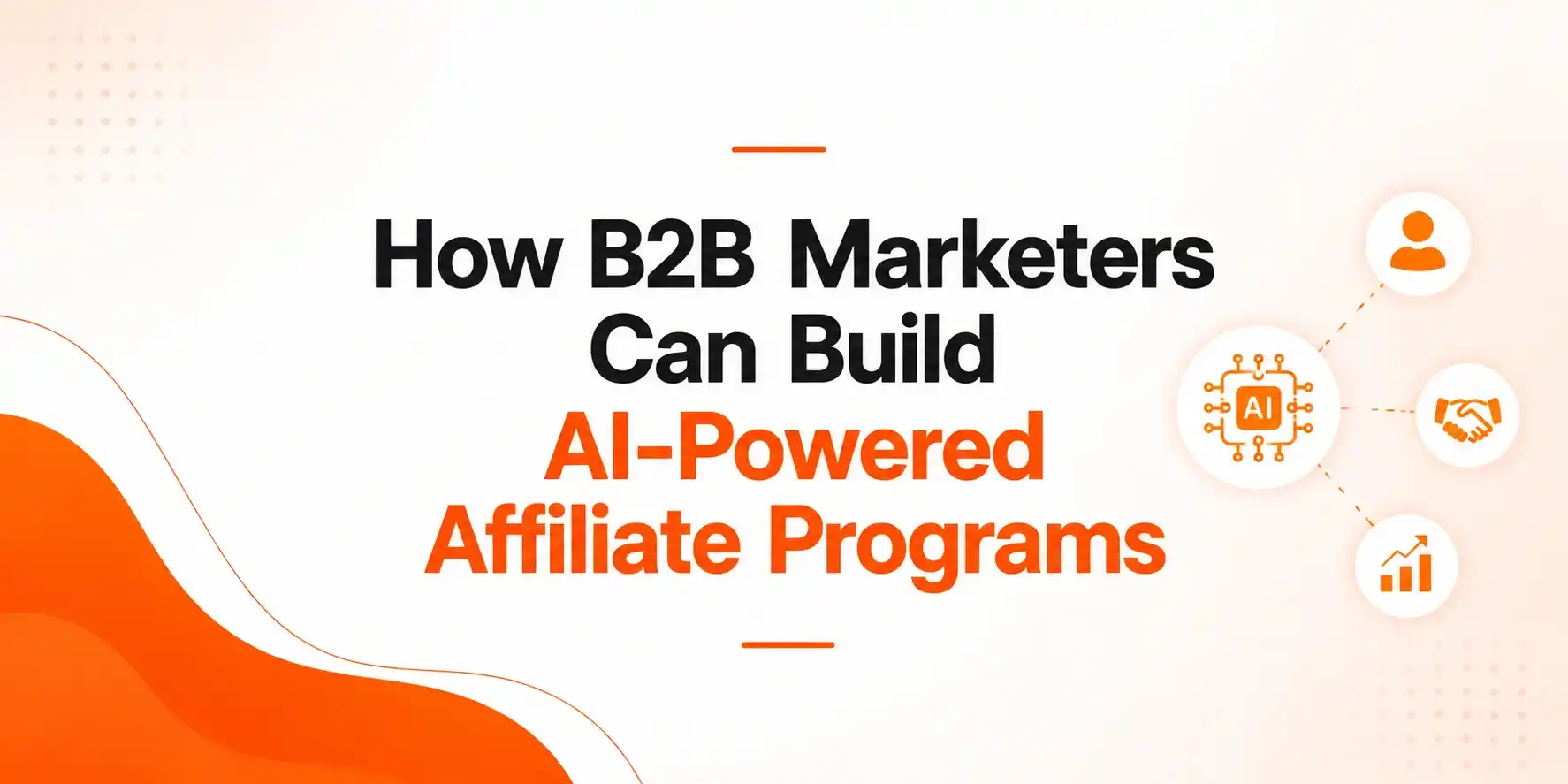
Affiliate programs are no longer simple link farms. In the United States, B2B buyers start research with AI assistants such as ChatGPT, Gemini, Perplexity and Claude. If your affiliate assets are invisible to those engines, you miss qualified inbound traffic. Search optimization for AI queries, accurate buyer intent signals, and measurable pipeline growth have become mandatory.
This guide explains why AI matters, walks you through a repeatable five‑stage framework, and shows how to track results with data‑driven advocacy. By the end you will know how to turn AI‑generated citations into a revenue‑producing partner network.
Why AI Changes Affiliate Marketing for B2B
AI answer engines prioritize content that directly matches the phrasing buyers use in real conversations. Without that alignment, affiliate pages never appear in AI‑driven answers. Search visibility now hinges on harvesting language from sales calls, CRM notes, and support tickets. When you feed those signals into Omnibound, the platform creates ai citations that surface as authoritative references.
Account‑based marketing (ABM) and affiliate programs share a goal: deliver the right partner message to the right account. AI enriches ABM by surfacing the buyer intent cues that indicate a high‑value account is ready for a partner recommendation. The resulting citation moat is hard for competitors to replicate.
AI also eliminates the manual grind of keeping affiliate content fresh. Traditional programs require constant copy updates; an AI‑powered workflow continuously refreshes assets using the latest buyer language, ensuring every search optimization effort stays current and fuels pipeline growth.
Five‑Stage Framework to Launch an AI‑Powered Affiliate Program
The most reliable way to start is to follow a clear, repeatable process. Below is a five‑stage framework that maps directly to Omnibound’s capabilities. Each stage produces concrete deliverables you can hand off to partner managers.
|
Stage |
Key Activity |
AI Lever |
Output |
Metric |
|---|---|---|---|---|
|
1. Strategy |
Define partner tiers and commission models |
Prompt mining from buyer conversations |
Tiered partner playbook |
Tier adoption rate |
|
2. Data Prep |
Ingest CRM, ticket and call transcripts |
Natural‑language extraction |
Buyer intent taxonomy |
Intent coverage % |
|
3. AI Content Creation |
Generate affiliate landing pages, blog posts, email copy |
Citation‑optimized generation |
AI‑crafted assets |
AI citation count |
|
4. Optimization & Attribution |
Deploy multi‑touch attribution models |
Machine‑learning attribution |
Attribution dashboard |
Revenue‑per‑partner |
|
5. Governance |
Apply brand‑guardrails and compliance checks |
AI‑driven policy enforcement |
Compliance audit log |
Audit pass rate |
During the Data Prep stage you discover high‑potential affiliates by matching buyer intent signals to partner capabilities. For deeper insight, see our guide on AI for B2B Advocacy: From Manual Matchmaking to Smart Automation. It shows how intelligent request matching surfaces partners most likely to convert, turning raw intent data into a curated list.
Once assets are generated, the platform continuously monitors search visibility and updates content to keep ai citations fresh. This ensures affiliate pages remain the top reference when AI assistants answer buyer questions and feed qualified traffic into your pipeline.
Measuring Impact: From Search Visibility to Pipeline Growth
Metrics bridge affiliate activity and revenue impact. Omnibound’s unified dashboard tracks every AI citation, click‑through rate, and downstream contribution to pipeline growth. Use the KPI matrix below to keep the program on track:
- AI citation count – total number of AI‑generated references to affiliate assets.
- Search visibility score – ranking strength in AI answer engines.
- Buyer intent match rate – percentage of citations that align with high‑intent prompts.
- Pipeline contribution – revenue attributed to affiliate‑sourced opportunities.
- Data‑driven advocacy index – composite score of citation quality, compliance health, and partner performance.
A recent internal study found a 22% lift in qualified leads and a 15% reduction in manual content maintenance costs after adopting AI‑optimized affiliate content. According to a AI search traffic study, AI‑driven citations can boost organic visibility by up to 35% compared with traditional SEO tactics.
Scaling means expanding the partner network while preserving citation quality. Leverage the governance stage to automate compliance checks, ensuring each new affiliate asset meets brand guidelines before publication. This protects your search visibility and sustains long‑term pipeline growth.
Integrating AI Citations Across the Buyer Journey
AI citations bridge awareness and decision stages. At the top of the funnel, AI assistants surface citations that answer broad research questions such as “What are the leading data‑integration platforms for enterprise?” By embedding partner links within those citations, you capture early interest without interrupting the buyer’s natural research flow.
In the consideration phase, more specific prompts like “How does partner X handle GDPR compliance for cloud data?” trigger citations that link directly to partner‑authored case studies or technical whitepapers. These assets provide the depth needed for evaluation and often include embedded calls‑to‑action that route the prospect to a qualified sales‑qualified lead (SQL) hand‑off.
During the decision stage, AI assistants can surface comparative citations that list pricing tiers, implementation timelines, and support SLAs. When your affiliate content is structured with clear tables and bullet points, the assistant can extract and present that data instantly, giving the buyer confidence to move forward.
Post‑sale, AI can cite success stories and ROI calculators that reinforce partnership value, encouraging repeat purchases and referrals. Mapping each citation to a funnel stage creates a seamless, AI‑driven pathway from first query to closed‑won deal.
Common Pitfalls and Future Outlook
Even with sophisticated tools, teams stumble on predictable pitfalls. First, neglecting to align AI‑generated language with actual buyer phrasing results in citations that never surface because the AI does not recognize the terminology. Second, overloading affiliates with generic assets rather than tailoring content to specific intent clusters dilutes relevance and harms search visibility. Third, skipping the governance step can lead to compliance breaches that damage brand trust and cause search engines to downgrade your citations.
To sidestep these issues, run a quick checklist before each content sprint: verify that each new phrase appears in at least one recent support ticket, confirm that the partner’s value proposition matches the intent taxonomy, and run the AI‑driven policy scanner to catch any prohibited language.
Looking ahead, AI models are evolving from text‑only responses to multimodal answers that incorporate charts, code snippets and interactive widgets. Affiliate citations will need to include structured data that AI can pull into rich snippets, such as pricing tables that auto‑populate in answer cards. Embedding schema markup in your landing pages now gives you a head‑start when the next generation of AI assistants begins to surface richer formats.
Another emerging trend is “agentic” AI that can perform actions on behalf of the user, such as scheduling a demo or generating a contract draft. Affiliate programs that expose APIs or webhook endpoints for these agents will capture a new class of automated conversions, turning a citation not just into a click, but into an executed workflow.
AI has turned affiliate programs into searchable, intent‑driven revenue engines. By aligning content with real buyer language, automating citation creation, and measuring impact with a data‑driven advocacy index, you can achieve measurable pipeline growth while protecting search visibility. The five‑stage framework provides a clear roadmap from strategy to governance.
To see how this works in your organization, explore Omnibound. Book a demo now!
FAQs
- How does Omnibound turn buyer intent into AI citations for affiliates?
Omnibound converts buyer language from real interactions into citation-optimized content that AI assistants reference. - What data sources power the AI-driven affiliate workflow?
Call transcripts, chat logs, support tickets, and CRM notes provide the buyer signals that fuel AI citation strategies. - How does Omnibound ensure compliance and brand safety?
AI-powered governance checks content against brand, legal, and compliance standards before publication. - Which metrics prove pipeline growth from AI citations?
Track AI citations, visibility, intent match rates, pipeline contribution, and partner-attributed revenue. - How does AI integrate with Salesforce and HubSpot?
Omnibound connects via APIs to enrich CRM data and sync citation-ready content directly into ABM workflows.
Turn Your Content Into AI-Search Winners
Get cited across ChatGPT, Claude & Perplexity — not just ranked on Google.
- Increase AI citations
- Improve answer visibility
- Track brand mentions in LLMs