

Table Of Contents
VPs of Marketing at mid‑market SaaS firms often hear that AI‑driven answer engines are reshaping how buyers discover solutions, yet they still can’t tell if their brand appears when prospects ask those new‑style questions. Traditional SEO dashboards show keyword rankings, but they hide the reality of AI citations that power instant answers in ChatGPT, Gemini, Claude or Perplexity. Without a clear view of that AI search visibility, you’re guessing which prompts drive demand and you have no way to link those moments to pipeline impact. This guide shows why the visibility gap matters, walks you through a repeatable diagnostic framework, and explains how to turn the resulting data into citation‑focused content that fuels measurable pipeline growth. By the end you’ll know how to launch a data‑backed AI search diagnostic, produce a share‑of‑voice report, and use those insights to power the next wave of demand‑generation.
Why AI Search Visibility Is Critical for B2B Marketing
In the AI answer‑engine landscape, buyers no longer type a keyword into a search box; they ask natural‑language questions that LLMs answer with cited sources. When your content is cited, the engine treats your brand as the authority behind the answer, instantly boosting credibility and shortening the decision cycle. For a VP of Marketing, the key metric becomes citation share – the proportion of AI‑generated answers that reference your assets compared with competitors. That share directly influences pipeline visibility because each citation can be traced to a stage in the buyer’s journey. Ignoring AI citations means you’re invisible in the very channel where modern buyers start their research.
Many teams assume that strong traditional SEO rankings will automatically translate to AI search presence, but the ranking signals differ. AI engines evaluate content freshness, relevance to the specific prompt, and the quality of the citation metadata. Without dedicated search visibility monitoring, you cannot prove that your content is influencing buyer intent or justify budget for AI‑first initiatives. According to a recent AI Search Engine Market Size report, enterprises that track AI citations see higher engagement in answer‑engine results, reinforcing the need for a focused diagnostic.
Start by accepting that AI search visibility is a separate KPI from classic organic traffic. Treat it as a strategic front‑door that must be measured, optimized, and reported just like any other demand‑generation channel. When you align your team around this metric, you create a clear line of sight from buyer prompt to pipeline revenue.
Core Components of an AI Search Diagnostic
The diagnostic is a systematic audit that captures three essential data streams: (1) real‑world buyer prompts harvested from calls, CRM notes and support tickets, (2) citation quality signals from major AI engines, and (3) competitive gap data that shows where rivals earn citations you do not. Together these components form a holistic view of your brand’s AI search health. By ingesting authentic buyer language, you avoid the guesswork that plagues traditional keyword research.
As one marketing leader put it, "I ran your AI visibility check". That simple statement reveals a common frustration: teams want a clear, data‑backed snapshot of where they stand in AI search, not a vague assessment. The diagnostic aggregates prompt frequency, maps each prompt to the AI engines that surface your content, and scores citation relevance on a scale that highlights high‑impact opportunities. It also surfaces gaps where competitors dominate, enabling you to prioritize quick wins.
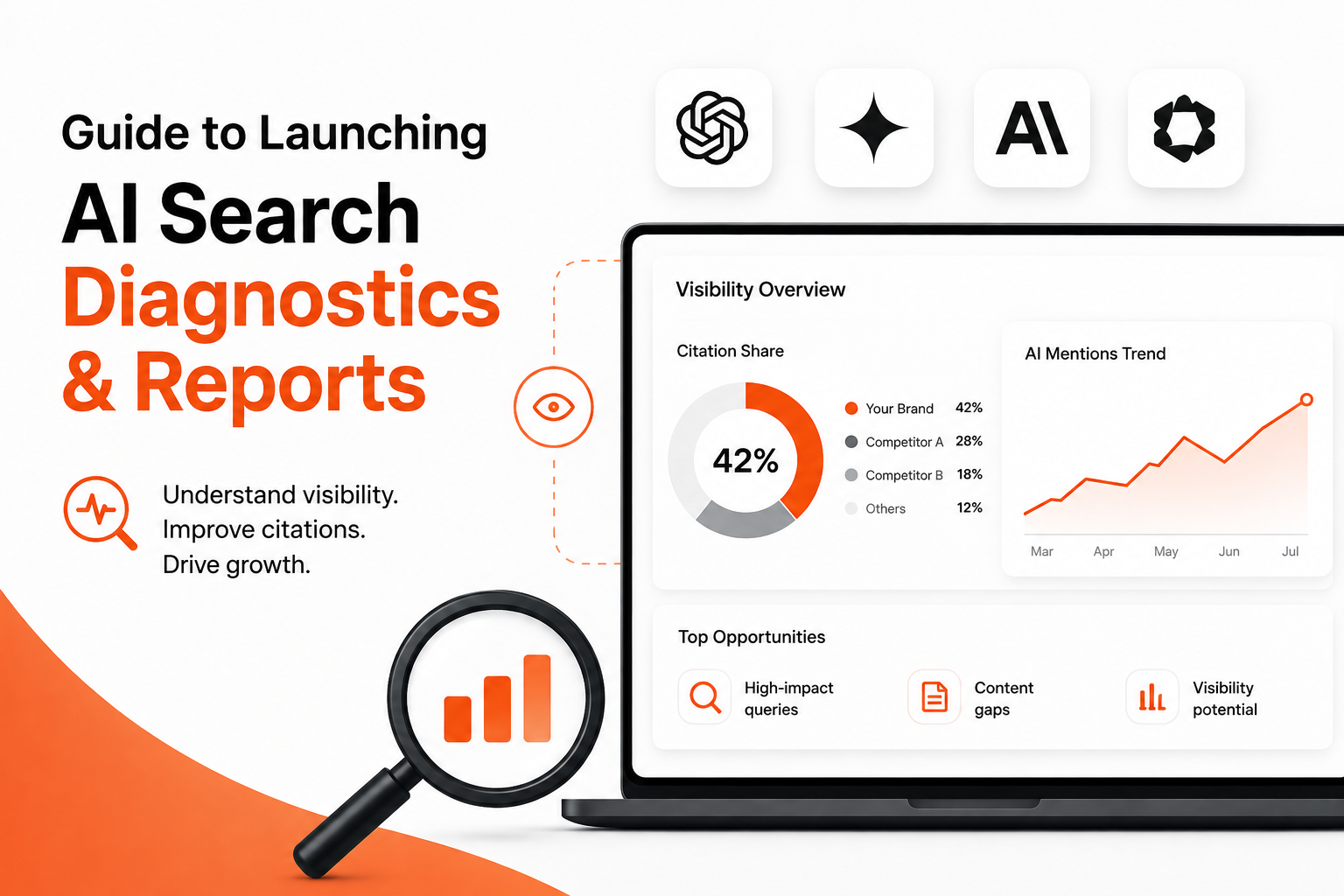
When you assemble these components, you end up with a diagnostic dashboard that reports on ai metrics such as citation frequency, prompt coverage, and competitive share of voice. The output is a concise visibility report that can be shared with leadership to demonstrate how AI citations feed the pipeline.
Recommended Read: Why Your Call Data and Prompt Tracking Matter for AI Search - Shows how to capture buyer‑originated language for a more accurate diagnostic.
Step‑by‑Step: Building Your AI Search Visibility Report
Turning raw diagnostic data into a publishable report requires a clear workflow. First, consolidate all buyer prompts into a master list and tag each by buying stage. Second, match each prompt to the AI engines that currently cite your content, noting citation quality and placement. Third, calculate your brand’s share of voice against identified competitors. Finally, package the findings into a visual report that highlights high‑impact prompts, citation gaps, and recommended content actions.
Below is a concise framework that structures the reporting process. The table outlines each phase, the primary output, and the key stakeholder responsible for execution.
| Phase | Output | Owner |
|---|---|---|
| Prompt Collection | Master prompt inventory with stage tags | Content Ops |
| Citation Mapping | Engine‑specific citation matrix | SEO Lead |
| Competitive Gap Analysis | Share‑of‑voice dashboard | Market Analyst |
| Report Synthesis | AI Search Visibility Report | VP of Marketing |
These rows illustrate the logical flow from raw data to actionable insight. After the table, summarize the key takeaways: a complete prompt inventory reveals blind spots, citation mapping surfaces which engines favor your content, and the share‑of‑voice view pinpoints competitive opportunities.
With the report in hand, you can communicate a clear narrative to executives: which prompts are driving AI citations, how those citations align with pipeline stages, and where the biggest wins lie. This narrative becomes the foundation for the next section turning insights into citation‑focused content.
Turning Diagnostic Insights into Citation‑Focused Content
Once you know which buyer prompts generate the strongest AI citations, you can create content that directly answers those questions. The goal is to produce citation‑focused content that the answer engine deems authoritative enough to cite. Start by selecting high‑value prompts, then develop concise, fact‑rich assets such as FAQs, how‑to guides, or data sheets that address the prompt’s intent.
One snippet from a prospect illustrates the need for this approach: "I didn't find anything in there that's focused on AI search - not sure why?" The frustration stems from a content library that wasn’t built with AI citation in mind. By re‑authoring existing assets around the identified prompts, you improve both relevance and citation likelihood. Incorporate schema markup, clear answer formats, and embed the exact phrasing of the prompt to signal relevance to the LLM.
After publishing the new assets, feed the updated URLs back into the diagnostic tool to measure uplift in citation frequency. This closed‑loop process ensures that each piece of content contributes to measurable pipeline visibility and reinforces the share‑of‑voice gains highlighted in your report.
Recommended Read: Why SEO Fundamentals Still Power AI Search Citations for B2B Marketers - Explores how classic SEO tactics combine with AI citation strategy.
Measuring Success with Share of Voice and Competitive Gap Tracking
The final piece of the framework is a robust measurement system that translates AI citations into business outcomes. A share‑of‑voice dashboard visualizes your brand’s citation share across engines and compares it to key competitors. By tracking this metric over time, you can see how new citation‑focused assets shift the balance in your favor.
In addition to share of voice, monitor ai metrics such as citation velocity (how quickly new content earns citations) and citation quality score (the prominence of the citation within the answer). These metrics feed directly into pipeline visibility reports, allowing you to attribute revenue impact to specific AI search actions. When you surface this data to leadership, it validates the ROI of the diagnostic and content initiatives.
To keep the system sustainable, schedule regular competitive gap reviews. Identify new prompts where rivals have gained citations and prioritize those for the next content sprint. This ongoing loop ensures that your AI search presence evolves with buyer language and market dynamics.
Recommended Read: Webinar | From AI Visibility to Pipeline: How Buyer-Focused AI Search Optimization Translates into Revenue - A deep dive on turning visibility data into pipeline outcomes.
Practical Tips for Collecting Authentic Buyer Prompts
Gathering real‑world language is the foundation of a reliable diagnostic. Begin by tapping into existing sales and support workflows: record the exact questions that appear in discovery calls, note the phrasing used in CRM activity logs, and capture the language from support tickets where customers describe problems or ask for clarification. When you tag each prompt by buying stage – awareness, consideration, decision – you create a map that aligns directly with the funnel.
It is also helpful to involve frontline teams in a brief workshop. Ask sales reps to surface the top three questions they hear each week and to note any variations in wording. This collaborative approach not only enriches the prompt inventory but also builds internal buy‑in for the diagnostic process. Over time, you will notice patterns, such as certain synonyms that repeatedly surface for the same intent, allowing you to consolidate prompts without losing nuance.
Finally, store the collected prompts in a searchable, version‑controlled repository. A simple spreadsheet with columns for prompt text, source, buying stage, and frequency works well for most mid‑market teams. Regularly review and prune the list to keep it focused on the most impactful queries.
Ensuring Data Quality and Ongoing Maintenance of the Diagnostic
Data quality is critical because the diagnostic’s insights are only as good as the inputs. After the initial collection, perform a quick validation step: cross‑check a sample of prompts against recorded call transcripts to confirm accuracy. Remove any internal jargon or abbreviations that do not appear in the buyer’s voice, as these can skew the mapping to AI engines.
Maintain the diagnostic as a living document. Schedule a quarterly audit where the prompt inventory is refreshed with new language emerging from recent sales cycles or product updates. At the same time, revisit the citation matrix to ensure that any newly cited assets are captured and that stale URLs are archived. This disciplined cadence prevents the diagnostic from becoming outdated and keeps the share‑of‑voice metrics reflective of the current market.
When you embed these quality‑control steps into your regular operations, the diagnostic evolves from a one‑time project into a strategic asset that continuously informs content planning, competitive positioning, and revenue forecasting.
FAQs
1. How does an AI search diagnostic differ from traditional SEO audits?
An AI search diagnostic focuses on real‑world buyer prompts and citation quality across answer engines, whereas traditional SEO audits concentrate on keyword rankings in classic SERPs. The diagnostic captures how LLMs retrieve and cite content, providing a direct link between prompts and pipeline stages.
2. What data sources are needed to feed the diagnostic?
You need three core sources: (1) buyer‑originated language from calls, CRM notes or support tickets, (2) citation data from AI engines such as ChatGPT, Gemini, Perplexity and Claude, and (3) competitor citation footprints. Combining these gives a complete view of prompt coverage and market share.
3. How can I ensure my new content will be cited by AI engines?
Start by aligning each piece with a high‑impact prompt, use concise answer formats, embed structured data like FAQPage schema, and reference the exact phrasing of the buyer question. This signals relevance to the LLM and increases the likelihood of citation.
4. What role does share‑of‑voice play in measuring ROI?
Share‑of‑voice quantifies the proportion of AI‑generated answers that reference your assets versus competitors. When you tie changes in share‑of‑voice to pipeline stages, you can directly attribute revenue impact to AI citation performance.
5. How often should I run the AI search diagnostic?
Running the diagnostic quarterly provides a balance between data freshness and operational overhead. However, if you launch a major content campaign or notice shifts in buyer language, a supplemental run can capture immediate effects.
6. Can the diagnostic integrate with existing analytics tools?
Yes. The diagnostic output can be exported as CSV or connected via API to BI platforms like Looker Studio or Power BI, allowing you to blend AI citation metrics with traditional web analytics and CRM data for a unified view of marketing performance.
Conclusion
AI‑driven answer engines have become the new front door for B2B buyers, and visibility in that space is now a core driver of pipeline growth. By launching a structured AI search diagnostic, publishing a share‑of‑voice report, and converting the insights into citation‑focused content, you create a repeatable engine that turns buyer prompts into measurable revenue impact. Omnibound offers a platform that streamlines each step of this process, from prompt ingestion to competitive gap monitoring, empowering you to move from blind speculation to data‑backed decision making. Start building your AI search visibility framework today and watch your brand’s authority and pipeline grow in the AI answer‑engine ecosystem.
Recommended Authority Resources
- Reference: AI Search Engine Market Size to Hit USD 182.17 Billion ... - Provides market‑size context for AI search analytics tools, underscoring the strategic importance of tracking AI citations.
- Reference: Semantic Search Platform Market Research Report 2033 - Dataintelo - Highlights enterprise adoption rates for semantic search, reinforcing why AI‑driven search visibility matters for B2B marketers.
- Reference: Artificial Intelligence Compliance Plan - Outlines FTC guidance on AI attribution and data provenance, relevant for ensuring compliance when publishing AI‑focused content.
Turn Your Content Into AI-Search Winners
Get cited across ChatGPT, Claude & Perplexity — not just ranked on Google.
- Increase AI citations
- Improve answer visibility
- Track brand mentions in LLMs