

Most GTM teams do not fail because they chose the wrong channels. They fail because those channels activate in the wrong order. Generative AI is projected to unlock up to $1.2 trillion in incremental productivity across sales and marketing, yet the majority of B2B organizations still route every account through the same static funnel regardless of what buyers actually do.
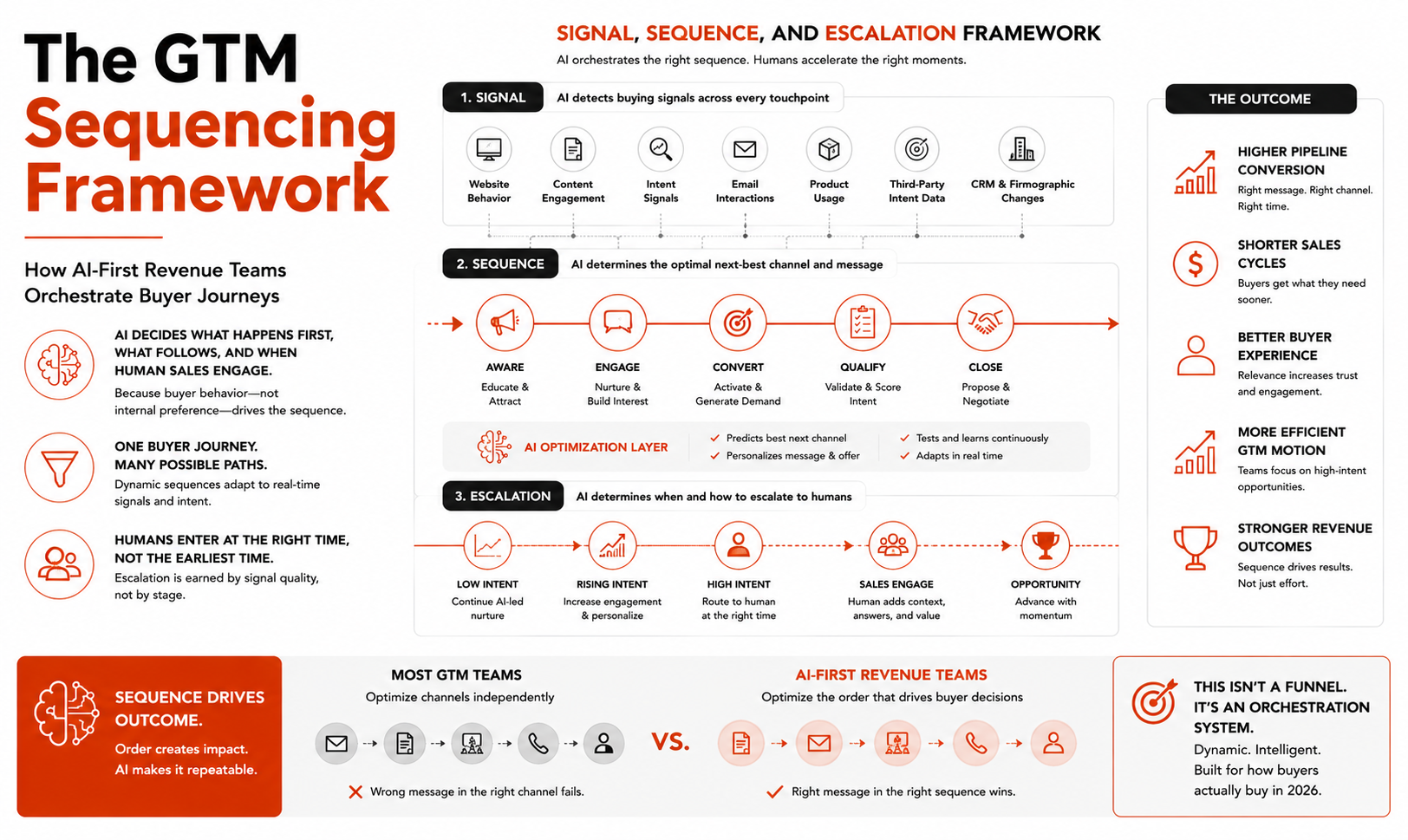
This article introduces the Signal, Sequence, and Escalation Framework, a proprietary GTM operating model that uses AI to decide which channel activates first, what follows, and when human sales teams enter the picture. It is not a generic buyer-journey explanation. It is a reusable architecture for revenue teams building AI-first GTM systems in 2026.
Most GTM teams optimize channels independently. High-performing GTM teams optimize channel order. The difference is subtle but enormous: the wrong message in the right channel fails. The right message in the wrong sequence also fails.
What AI-Led GTM Channel Sequencing Actually Means
Channel sequencing is the discipline of deciding which GTM motion activates first for a given account, what triggers the next move, and when to escalate or pause. In 2026, AI makes this a dynamic decision system rather than a plan drawn on a whiteboard once a quarter.
Three dimensions define AI-led sequencing:
- Order: Which channel introduces your narrative, which reinforces it, and which closes engagement.
- Timing: How long to wait before triggering the next touch, and whether to accelerate or slow based on account behavior.
- Escalation: When to route an account to an SDR, an AE, executive outreach, or back into nurture.
The shift from campaign-based GTM to signal-driven multi-channel orchestration is the most consequential change in B2B go-to-market since marketing automation. Where automation follows pre-set rules, AI-led sequencing interprets live signals and adapts channel order for each account individually.
Why Static GTM Funnels Break at Scale
Annual GTM plans that push every account through the same channel order create three predictable failure modes at scale.
Premature escalation fires late-stage channels like live demos before any meaningful buying signal appears. SDRs reach out while marketing is still testing narrative fit, producing conflicting messages and wasted seller time.
Over-nurturing high-intent accounts keeps buyers who are ready to evaluate in long educational sequences designed for early awareness. By the time sales activates, those accounts are already in a competitor's pipeline.
Channel conflicts emerge when paid, outbound, and email teams operate on separate calendars without a shared intelligence layer. Each channel optimizes independently, so the buyer experiences an incoherent sequence rather than a coordinated journey.
AI needs to function as the coordination fabric across all GTM motions, not as a point solution inside any single channel. That is what the Signal, Sequence, and Escalation Framework is designed to provide.
Introducing the Signal, Sequence, and Escalation Framework
This is Omnibound's proprietary four-layer model for AI-driven GTM orchestration. Each layer feeds the next, creating a closed-loop revenue system that learns which channel orders convert fastest and continuously improves.
Layer 1: Signal Detection
The framework starts with a unified signal layer that ingests every behavioral and contextual data point available for an account. Inputs include:
- Search behavior and AI search query patterns
- Content consumption depth and return visit velocity
- Product usage signals and in-app behaviors
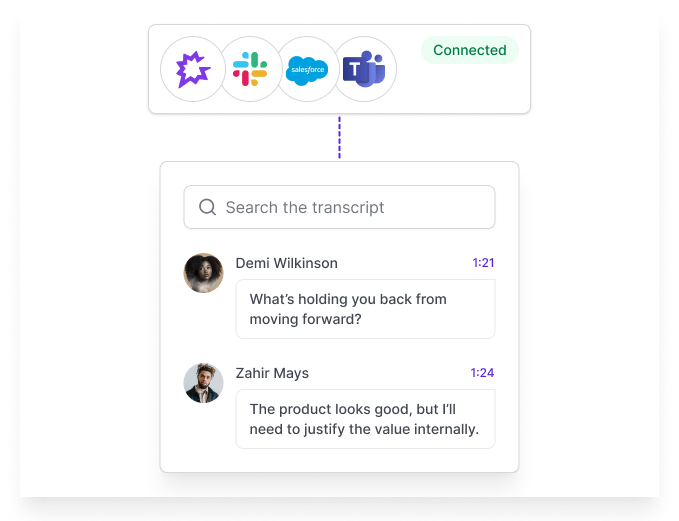
- Sales conversation themes from call intelligence tools
- Stakeholder expansion across a buying account
- Third-party intent spikes and review platform activity
The Omnibound AI Insight Engine processes this signal mix across customer and market data sources, creating a real-time picture of where each account sits in its buying process.
Layer 2: Sequence Selection
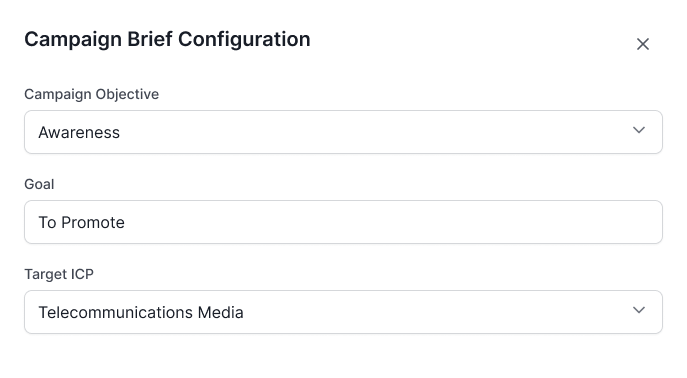
Once signals are read, the AI selects the most appropriate sequence type for each account. Four primary sequence patterns cover the majority of B2B buying situations:
- Content-first for low-awareness accounts where buyers need education before sales contact adds value.
- Sales-first for high-intent accounts where direct outreach is the fastest path to pipeline.
- Product-led for existing customers where usage data indicates expansion potential.
- ABM-led for strategic accounts where buying committee engagement precedes any commercial conversation.
Layer 3: Escalation Logic
Escalation is where most GTM teams lose the most value. AI determines whether an account should stay in nurture, move to an SDR, route to an AE, or trigger executive outreach. The decision is not based on time-in-stage or lead score alone. It responds to signal combinations that historical data shows precede conversion.
- Stay in nurture: single contact, single session, no buying-trigger behaviors.
- Move to SDR: multi-stakeholder activity, comparison content engagement, returning visits within seven days.
- Move to AE: pricing-page depth, stakeholder expansion to new personas, or late-stage competitive signals.
- Move to executive outreach: C-level visits, deal stall combined with new domain activity, or competitive displacement signals.
Layer 4: Revenue Optimization
The fourth layer is where the framework learns. AI tracks which sequences convert at the highest rate, which sequences stall, and which channel orders shorten sales cycles for specific segments or verticals. Over time, this data reshapes Layer 2 sequence selection so the model improves without manual intervention.
This feedback loop is what separates true revenue orchestration from conventional marketing automation. Automation executes. AI learns and adapts.
The 5 GTM Signals That Matter More Than Lead Scores
Lead scores flatten nuance. They aggregate behaviors into a single number that rarely tells you what channel should activate next or when sales should engage. These five signal patterns carry more predictive weight than most lead scoring models, and high-performing GTM teams track them explicitly.
1. Stakeholder Expansion
A single contact visiting your site is a data point. Five stakeholders from the same account visiting different pages within a week is a buying signal. When the number of unique domains across a single account rises, buying committee formation is likely underway. This is a stronger indicator than any MQL threshold.
2. Narrative Convergence
When multiple people from the same account independently consume content on the same topic, it suggests an internal conversation is already happening around that problem. Narrative convergence across a buying group often precedes formal evaluation. It is a trigger to move from passive distribution to proactive engagement.
3. Competitive Evaluation Behavior
Accounts reading competitor comparison content are further along in their evaluation than accounts downloading ebooks. Comparison intent signals active consideration, not passive research. AI that can detect this pattern should escalate faster than standard nurture timing would suggest.
4. Return Velocity
Three visits in seven days carries more signal than fifteen visits across six months. Return velocity indicates urgency. Accounts that return quickly are often responding to an internal trigger, a budget approval, a new initiative, or a problem that just became critical. Slow-moving nurture sequences waste the window these accounts create.
5. New Persona Appearance
When a new job function appears on an account that has been passive, it often means the evaluation has moved to a new stage. A procurement contact appearing on an account previously visited only by a technical evaluator is a handoff signal, not a nurture signal. AI should flag this pattern and recommend immediate sales activation.
The accounts most worth pursuing are not always the ones with the highest scores. They are the ones whose signal patterns most closely match the behavioral fingerprint of accounts that converted before.
How AI Search Changes GTM Sequencing
The buyer journey in 2026 does not start at your website. For a growing share of B2B buyers, it starts inside an AI engine. A prospect asks ChatGPT or Perplexity which platforms solve a specific problem, reads the generated answer, and only then visits a vendor website. By the time that visit happens, the buyer already has a mental shortlist.
This changes how the sequencing framework should be calibrated. The first channel in your sequence is no longer always a paid ad or a cold email. For many buyers, it is an AI citation.
The Old Sequence vs. The New Sequence
Old model: Paid ad, website visit, demo request.
New model: AI engine query, citation in generated answer, direct navigation to solution page, SDR follow-up.
A second variant: Perplexity comparison query, competitive evaluation page, product-specific landing page, AE outreach.
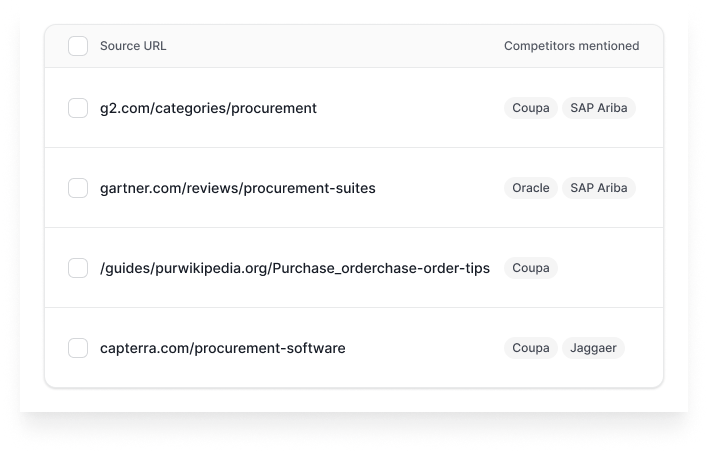
GTM teams that do not account for the AI-citation stage are missing the top of their own funnel. The Omnibound Intelligent Research layer tracks what buyers are asking AI engines and maps those queries to content gaps, so your sequencing framework starts where buyers actually start.
Signal-based marketing in this environment means detecting AI-citation-driven traffic, understanding which queries brought a buyer to you, and calibrating the first channel response to match where they are in their evaluation, not where your funnel assumes they should be.
Four GTM Sequences Every B2B Revenue Team Should Run
Rather than treating GTM sequencing as a single universal flow, high-performing teams run distinct orchestrated sequences for distinct buyer situations. These four patterns cover the scenarios that appear most often in complex B2B sales cycles.
Sequence 1: Content-Led Discovery
Best for: Low-awareness accounts where buyers are still defining the problem, not evaluating solutions.
Flow: AI search citation, content engagement, retargeting reinforcement, permission-based email nurture.
AI's role is to detect topic-level interest before any direct outreach, serve relevant content assets through paid and owned channels, and delay sales activation until behavioral signals indicate the buyer is moving from education to evaluation. Premature outbound in this sequence increases opt-out rates and reduces future channel effectiveness.
Sequence 2: Intent-Led Acceleration
Best for: Mid-funnel accounts showing clear evaluation signals but not yet in active deal conversations.
Flow: Intent signal detection, SDR outreach with context-aware messaging, case study or proof delivery, demo or discovery call.
AI detects the combination of return velocity, narrative convergence, and competitive evaluation behavior that indicates a buying window. The SDR receives a recommended outreach message and the specific assets the account engaged with. Channel order compresses: the gap between intent detection and sales contact should be hours, not weeks.
Sequence 3: Product-Led Expansion
Best for: Existing customers where product usage data reveals expansion potential before the customer asks.
Flow: Usage signal detection, in-product education or email content, customer success team engagement, commercial expansion conversation.
AI monitors feature adoption rates, usage frequency, and seat utilization to identify accounts that are either extracting high value (expansion candidates) or under-utilizing the product (churn risk). Sequence selection differs depending on which signal pattern is present. Sales enters only after education has established the value case for the next tier.
Sequence 4: Competitive Capture
Best for: Accounts actively evaluating your category who are showing competitor engagement signals.
Flow: Competitor signal detection, comparison asset delivery, AE outreach with displacement narrative, executive alignment if needed.
Competitive capture sequences require speed and specificity. AI identifies competitor comparison page visits, third-party review activity on competing products, and keyword patterns that indicate active evaluation. The channel response leads with comparison content that addresses the specific competitor being evaluated, not a generic capabilities overview.
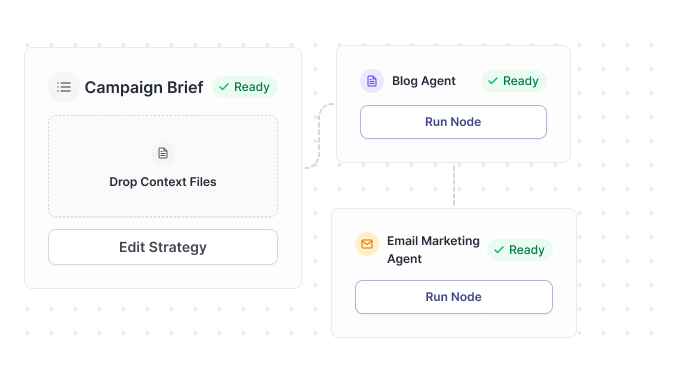
AI Sequencing Decision Trees: Choosing the Right Path for Each Account
The four sequences above are not rigid tracks. AI selects and adjusts them based on signal combinations. The following decision trees show how account data translates into sequence choices.
Signal Set A: High Intent, Strong ICP Fit
Signals present: Multiple stakeholders, pricing or comparison page visits, third-party intent spike, ICP firmographic match.
AI decision: Route to Sequence 2 (Intent-Led Acceleration). SDR activates within two hours with context from engaged content and stakeholder map. AE introduced after SDR qualifies buying timeline.
Signal Set B: Low Engagement, Weak Buying Signals
Signals present: Single contact, one or two top-of-funnel content downloads, no return visits in fourteen days, no stakeholder expansion.
AI decision: Route to Sequence 1 (Content-Led Discovery). Account enters nurture with persona-matched content. No outbound until a second engagement milestone is reached. AI monitors for signal upgrade.
Signal Set C: Stalled Opportunity, New Activity
Signals present: Open opportunity at double the average stage length, champion engagement dropped, new job titles appearing from the account domain.
AI decision: Trigger reactivation sequence. New content addressing late-stage objections is deployed. AE receives alert with recommended reactivation messaging. Executive outreach activates if C-level domain visit or competitive signal appears within seven days.
Signal Set D: Existing Customer, Usage Expansion Pattern
Signals present: High feature adoption, seat utilization above 80%, new team members added to the account in CRM.
AI decision: Route to Sequence 3 (Product-Led Expansion). In-product prompts and email education on adjacent features deploy first. Customer success team engagement follows. Commercial conversation opens only after new use cases have been explored.
Building the GTM Orchestration Framework: Five Practical Steps
A working AI sequencing system is not a one-time deployment. It is an adaptive GTM operating model that requires a deliberate build sequence.
Step 1: Centralize Buyer and Market Signals
Consolidate CRM data, marketing automation events, product analytics, call intelligence, and external intent sources into a unified context layer. Without this consolidation, AI receives fragmented inputs and produces unreliable sequence recommendations. The Omnibound AI solutions for content marketing ground this context in real buyer language from sales conversations, reviews, and support interactions.
Step 2: Define Initial Sequencing Rules
Before AI takes over fully, define explicit routing rules based on your existing knowledge. Examples: "If ICP fit and high intent, route to SDR within two hours." "If single engagement and no firmographic fit confirmation, keep in nurture." These rules give AI a starting baseline to learn from and improve upon.
Step 3: Introduce AI Decision Logic
Layer AI on top of your initial rules so the system can identify when observed outcomes suggest a better path than the rule would have chosen. The AI should be able to propose alternate sequences and explain the signal pattern driving the recommendation. Transparency in AI reasoning builds sales and marketing trust in the system.
Step 4: Connect Channels Across Teams
Tie the sequencing engine into email, paid media, outbound tools, CRM, and product systems so activation is coordinated rather than siloed. Omnibound AI Agents execute from this shared context, drafting outbound messaging, building nurture flows, and generating sales enablement assets without requiring manual re-briefing across each channel team.
Step 5: Measure Sequences, Not Channels
The reporting shift from channel-level metrics to sequence-level metrics is what closes the loop. Track win rate by starting channel, deal velocity by sequence pattern, and cost per opportunity by orchestration motion. This data feeds Layer 4 of the framework and continuously sharpens sequence selection over time.
The GTM Sequencing Metrics That Actually Matter
Justifying AI-driven GTM orchestration to finance and leadership requires metrics that measure sequence performance, not just individual channel efficiency. These are the indicators that demonstrate the framework is working.
- Deal velocity by sequence type: How many days does each sequence pattern take to move an account from first signal to closed-won? Shorter cycles in AI-optimized paths versus legacy paths demonstrate direct revenue impact.
- Conversion rate by starting channel: Which channel, when activated first, produces the highest opportunity-to-close rate for each segment or vertical?
- Time from intent spike to human touch: For high-intent sequences, how quickly does AI-detected intent translate into SDR or AE engagement? Compression here directly increases win rates on competitive deals.
- Revenue by GTM motion: What pipeline and closed revenue is attributable to each orchestrated sequence, such as content-first ABM, intent-led acceleration, or competitive capture?
- Sequence stall rate: Which patterns most frequently stall mid-sequence, and at which stage? This reveals where channel handoffs break down or where content gaps exist.
52% of commercial leaders say they will use AI to deploy marketing and sales resources more cost-effectively. That outcome depends on sequencing intelligence, not just automation coverage.
Where AI-Led GTM Sequencing Breaks Down: Common Mistakes
Avoiding these mistakes is as operationally important as choosing the right tools or building the right framework.
Over-automating without a strategy foundation. AI sequencing without a clear positioning and narrative framework produces fast but incoherent outreach. The Omnibound Marketing Strategy platform anchors sequencing logic in defined positioning before AI begins making channel decisions.
Ignoring sales feedback as a signal source. If deal notes, objection themes, and win or loss reasons do not feed back into the AI layer, the system optimizes for behavioral patterns that may not reflect actual commercial reality. Sales feedback should be a first-class input, not an afterthought.
Dirty data in the signal layer. AI that ingests misaligned intent data or inconsistent account records will route accounts incorrectly and appear unreliable to sales teams. Normalization and validation of signal inputs should happen before expanding AI influence over channel routing.
Channel bias in sequence design. Teams tend to over-index on channels they already manage well. AI sequencing delivers most of its value when it has genuine flexibility to choose across channels, constrained only by capacity and compliance requirements.
AI Agents and Content: Making Sequencing Decisions Executable
A sequencing decision is only as valuable as the speed and quality of execution that follows. Context-aware AI agents and AI-driven content production are what translate framework decisions into coordinated buyer experiences.
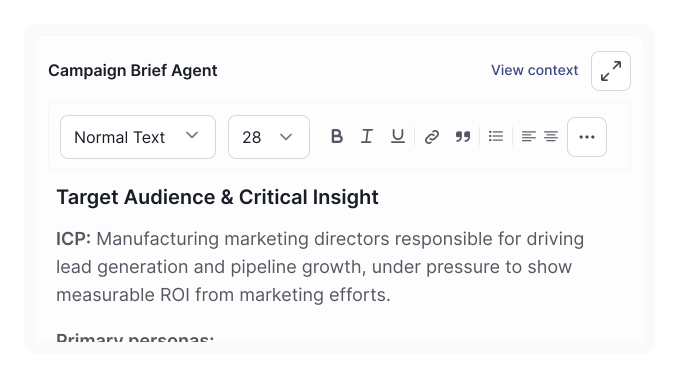
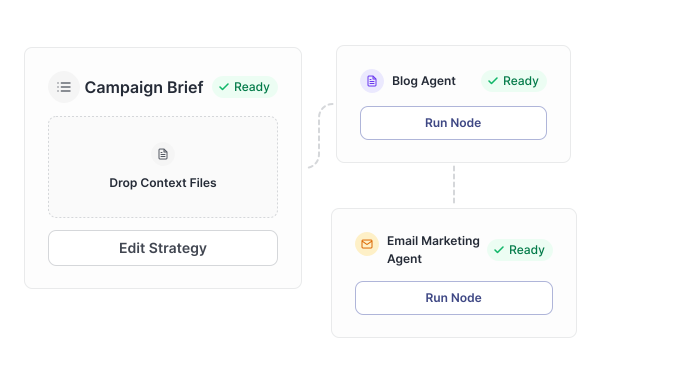
Omnibound's agent layer includes role-specific agents that handle outbound message drafting, nurture flow construction, and sales enablement asset creation. Each agent operates within the same unified buyer context, so outputs reflect current ICP language, competitive positioning, and stage-appropriate messaging without requiring manual briefing for every activation.
Omnibound Content Production generates multi-format assets grounded in real customer language from sales calls, reviews, and CRM notes. Each step of a sequence can receive content tailored to both the channel and the buyer stage. High-performing assets are identified through engagement data and reused in future sequences where the signal pattern matches.
Governance matters at this scale. The AI Safety Net Framework provides compliance and brand guardrails across all AI-generated outputs, covering claims accuracy, tone consistency, and responsible use of customer data. As AI takes on more orchestration responsibility, this layer ensures the volume of activation does not compromise quality or compliance.
From Campaign Management to Revenue Orchestration: The Operating Model Shift
The Signal, Sequence, and Escalation Framework is not just a tool configuration. It represents a shift in how GTM teams are organized and measured.
Traditional GTM asks: "What campaign do we run this quarter?" AI-led revenue orchestration asks: "What is each account doing right now, and what is the next best action for that account specifically?"
This requires moving from siloed channel ownership to cross-functional journey ownership. Paid, content, outbound, and lifecycle teams share a sequencing layer rather than optimizing independently. The AI engine surfaces recommendations and coordinates execution. Human teams make strategic and creative decisions, set guardrails, and review sequence performance.
As data accumulates across the framework's four layers, the system moves from reactive to predictive. AI begins to anticipate which motions will work for new segments or markets before demand materializes, guiding resource allocation rather than just responding to existing signals.
This is the GTM operating model that defines the most competitive B2B revenue teams in 2026: not faster campaigns, but smarter orchestration of every channel, every signal, and every sales motion into a coordinated, continuously improving revenue system.
Sequence First, Channel Second
Channel choice matters. Channel order matters more. The teams generating the most efficient pipeline in 2026 are not necessarily using more channels or more budget. They are using AI to activate the right channel at the right moment for each account, in a sequence that matches the buyer's actual state rather than a plan built months earlier.
The Signal, Sequence, and Escalation Framework gives revenue teams a reusable architecture for building that capability. Start with unified signals, define initial routing logic, introduce AI decision-making, connect execution across teams, and measure outcomes at the sequence level rather than the channel level.
Intent-driven marketing, account-based orchestration, and next-best-action GTM are not separate initiatives. They are all expressions of the same underlying discipline: knowing where each buyer is, and knowing which move to make next. AI makes that discipline scalable. The framework makes it repeatable.