

Connecting your go-to-market data is no longer a luxury but a fundamental necessity for survival in the 2026 B2B landscape. Research shows that 64% of B2B sales data is never captured or analyzed by traditional CRM systems, creating massive blind spots in your pipeline strategy. We build the infrastructure to bridge these gaps, ensuring your team acts on reality rather than outdated records.
Key Takeaways
|
Focus Area |
Strategic Benefit |
Key Signal Type |
|---|---|---|
|
Data Unification |
Eliminates silos between sales and marketing teams. |
CRM Pipeline Stages |
|
Conversation Intelligence |
Captures the "Why" behind deal wins and losses. |
Sales Call Transcripts |
|
Market Sentiment |
Aligns messaging with peer validation trends. |
G2 and Capterra Reviews |
|
Intent Recognition |
Detects active buying committees before they contact you. |
Third-party Intent Signals |
|
AI Orchestration |
Automates the extraction of actionable patterns. |
Pattern Detection Models |
What is revenue signal intelligence? It is the process of unifying customer interactions, market behavior, and CRM data into a single intelligence layer to predict and drive revenue. Our Marketing Context Engine provides this layer by orchestrating disconnected data points into a cohesive strategy.
How do you integrate CRM with call data? Effective integration requires centralizing raw call recordings and CRM histories into a platform that uses AI to tag specific objections and triggers. You can see how we achieve this through our AI Insight Engine which bridges the gap between conversation and data.
Why is buyer intent data important? In 2026, buyers complete most of their journey anonymously. Detecting these signals early allows you to influence the shortlist before a formal RFP exists.
Why Fragmented B2B Data Kills Your Revenue Growth?
Traditional B2B organizations often struggle with a "context deficit" where tools exist in isolation. Your CRM shows the pipeline reality, but it fails to explain why a deal stalled after the third meeting. Call data provides the voice of the buyer, yet these conversations rarely influence your marketing campaigns. Reviews on sites like G2 offer public sentiment, but they often stay within the marketing department rather than informing sales talk tracks.
We recognize that fragmented data leads to missed opportunities and misaligned messaging. When these systems do not talk to each other, your team spends more time reconciling reports than closing deals. Our B2B Marketing Context Engine solves this by unifying every signal into a single strategic foundation. This ensures that every member of your revenue team works from the same source of truth.
The Four Core Data Streams You Must Connect
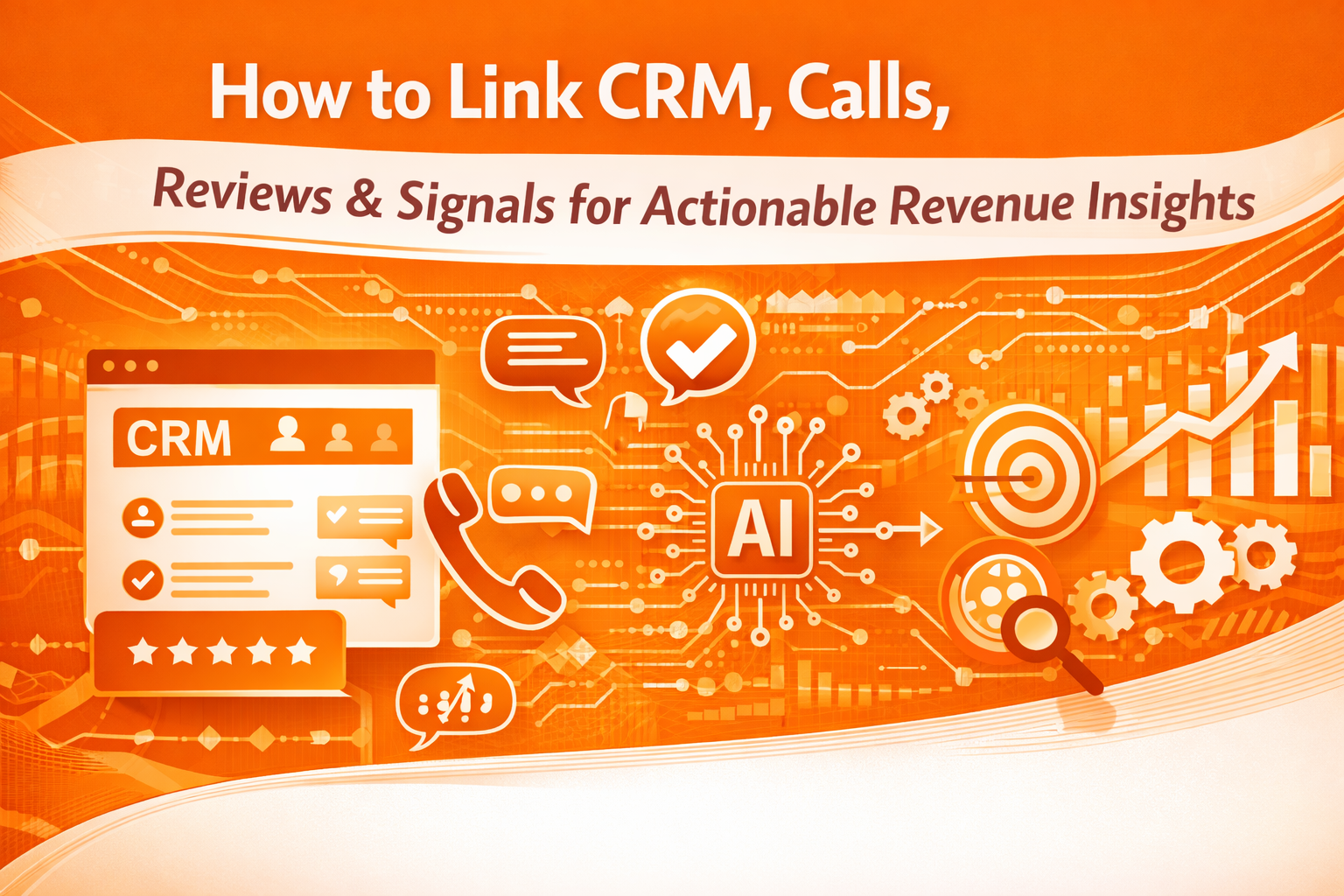
To build a true context engine, we focus on four primary streams of information. CRM data provides the historical pipeline, while conversation data from calls offers the nuances of buyer objections. Reviews and feedback data represent the market perception of your brand. Finally, external intent signals track behavioral patterns across the wider web to show who is currently in-market.
We utilize these streams to create a comprehensive content marketing strategy that resonates with actual buyer needs. By linking these pillars, we move beyond basic reporting into the realm of revenue orchestration.
Connecting these streams allows us to answer critical questions: Who is ready to buy right now, and which competitors are they mentioning in private calls?
Step-by-Step Guide: Connect CRM and Call Data
The first step in our process involves auditing your current data silos to map out where information lives. We look at your CRM, call recording software, and marketing automation platforms to identify disconnected nodes. Once mapped, we centralize these raw streams into a unified layer using APIs or specialized data connectors. This centralization allows our engine to begin the process of normalization and tagging.
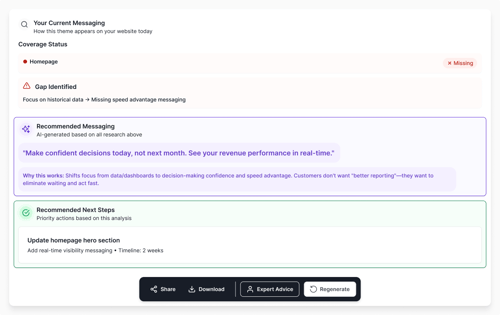
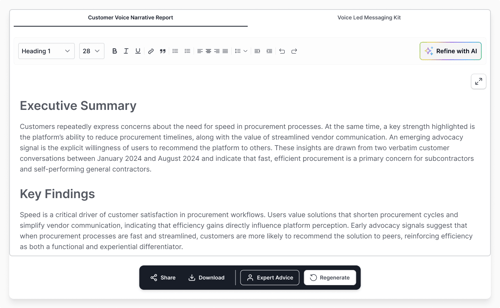
We then apply AI to extract specific signal types, such as feature demands or competitive mentions. This creates a feedback loop where sales insights directly inform our demand generation campaigns for better targeting.
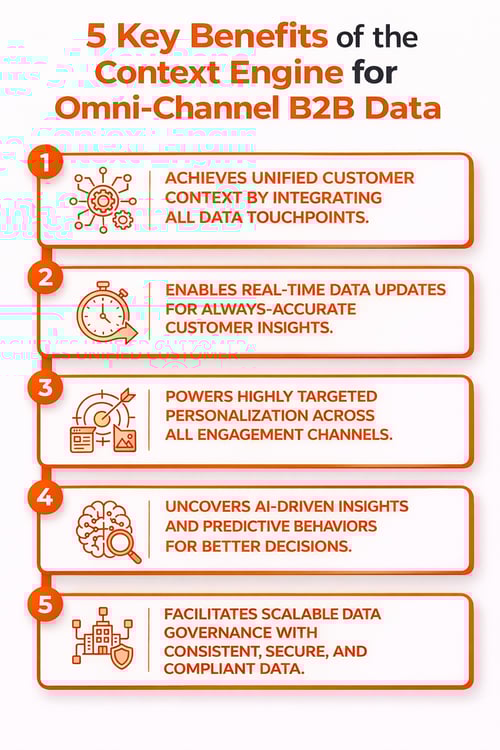
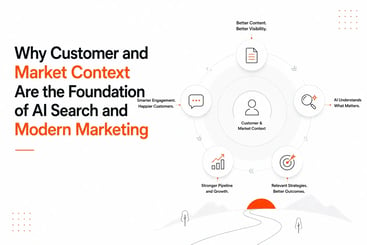
This infographic highlights the five key benefits of a context engine for omni-channel B2B data, showing how it unifies insights across channels for smarter decisions.
Did You Know?
Integrating revenue intelligence into the sales stack leads to 32% higher win rates and 28% shorter sales cycles.
Centralize and Normalize: Moving from Data Plumbing to Revenue Intelligence Integration
Most integration projects fail because they focus on the "plumbing" rather than the intelligence. Simply syncing fields between two systems does not tell you why a customer is unhappy. We prioritize normalization, ensuring that a "competitor mention" in a call transcript is treated with the same weight as a "competitor comparison" on a review site. This creates a unified signal intelligence model.
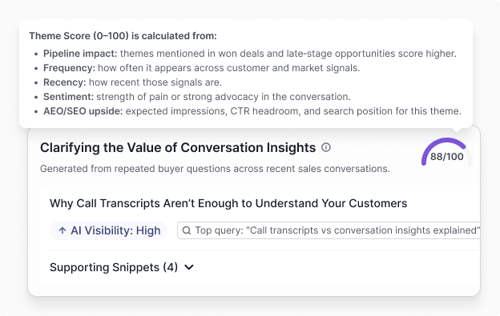
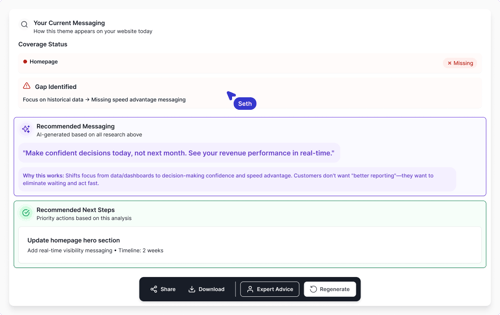
Our AI solutions for content marketing use this normalized data to prioritize editorial calendars. We ensure your resources go toward the topics that buyers are actually discussing in high-stakes sales calls.
Applying AI Pattern Extraction for Predictive Insights
The true power of a context engine lies in its ability to detect patterns before they become obvious in quarterly reports. We use AI to identify deal acceleration signals, such as when a prospect mentions specific technical requirements that align with our core strengths. By analyzing historical deal data alongside live signals, we can predict which accounts are likely to churn or expand. This proactive approach allows customer success teams to intervene at the exact right moment.
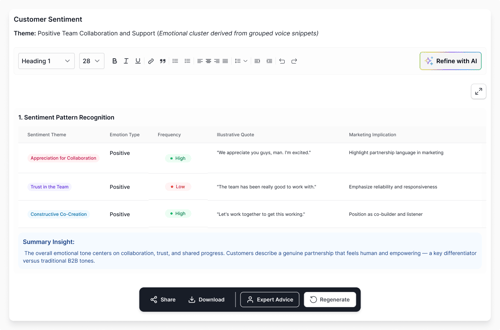
We provide AI solutions for product marketing that turn these patterns into battle cards and objection handlers. This ensures your sales team is always equipped with the latest evidence from the field.
Activating Insights Across Your Go-To-Market Teams
Insights are useless if they remain trapped in the marketing department. We design our context engine to push relevant signals to the teams that can act on them immediately. Marketing uses this data for messaging refinement, while sales teams receive real-time alerts about buyer intent. Product teams can even see which features are most frequently mentioned as "missing" in negative reviews or lost-deal calls.
Through intelligent research, we keep your Ideal Customer Profiles (ICPs) and personas updated in real-time. This prevents your GTM strategy from becoming stale as market conditions shift.
Three Real-World Scenarios of Signal Intelligence in Action
Consider a scenario where sales calls frequently mention "budget approval for Q2," while your CRM shows several late-stage deals. Our engine recognizes this alignment and triggers an immediate ABM campaign targeted at those specific accounts to provide the necessary justification for procurement. In another case, multiple G2 reviews might mention a missing integration that is also being echoed in sales calls. We flag this for the product team, allowing them to prioritize the roadmap based on actual revenue impact.
Finally, if website visits spike from a new stakeholder persona at a target account while procurement is mentioned on a call, we trigger sales enablement content specifically for that new persona. This level of enterprise-grade intelligence ensures no detail is overlooked.
Avoiding Common B2B Signal Intelligence Traps
A frequent mistake we see is organizations only syncing their CRM and ignoring the rich conversation data found in calls. This results in a clinical view of the pipeline that lacks the human element required for high-stakes B2B sales. Another trap is treating customer reviews as marketing-only assets rather than strategic signals. Reviews are a direct window into your competitor's weaknesses and your own product's strengths.
We emphasize that dashboards are not the same as insights. Real revenue intelligence requires a platform that detects, predicts, and activates signals, rather than just reporting on them after the fact. Our commitment to security and privacy ensures that as you connect these data streams, your intellectual property and customer data remain protected.
Did You Know?
Companies with an integrated omnichannel data strategy achieve 179% faster revenue growth than those using disconnected single-channel approaches.
The Security and Compliance of Your Context Engine
When linking CRM, call, and review data, security becomes the highest priority. We embed security into every layer of our platform, from encryption in transit to multi-layer network defense. Our architecture follows a secure development lifecycle to protect your marketing intelligence from unauthorized access. We understand that your B2B signals are your most valuable competitive advantage.
We maintain enterprise readiness through SOC 2 Type II compliance and robust data governance features. This allows large organizations to leverage our intelligence layer with complete confidence in their data privacy.
The Future: From Simple Integration to Revenue Orchestration
The old model of B2B data focused on "Integrate, Report, React." In 2026, we have shifted to a "Connect, Detect, Predict, Activate" model that anticipates buyer needs before they are articulated. This transition from static integration to dynamic orchestration is where the Context Aware AI Agents show their true value. These agents act on your behalf, surfacing insights and executing strategies based on live signals.
We are moving toward a future where your data does more than just sit in a CRM database. It becomes an active intelligence engine that drives every decision across your entire organization.
Conclusion: From Fragmented Systems to a Revenue Intelligence Engine
If your CRM tells you what happened and your calls tell you why, then linking them provides the only complete picture of your revenue potential. By incorporating reviews and intent signals, you add the dimensions of how customers feel and when they are ready to act. We provide the bridge between these disconnected systems, turning raw data into a strategic engine for growth. Connect your signals today with Omnibound and start navigating the 2026 market with clarity and precision.