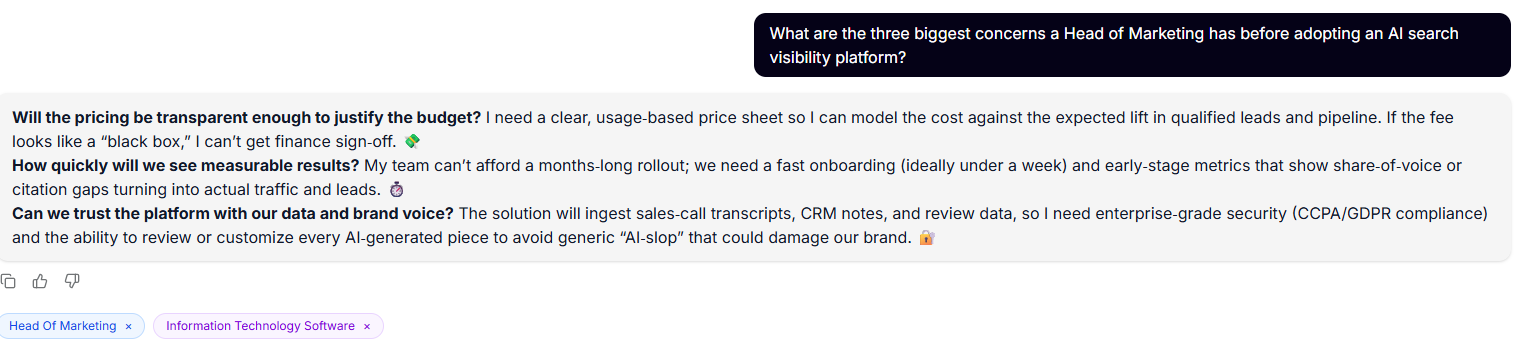
Test Your Message Against the Buyers You Want to Reach
Explore buyer questions, pressure-test messaging, and investigate customer insights using your ICP and persona context before turning an idea into a marketing deliverable.
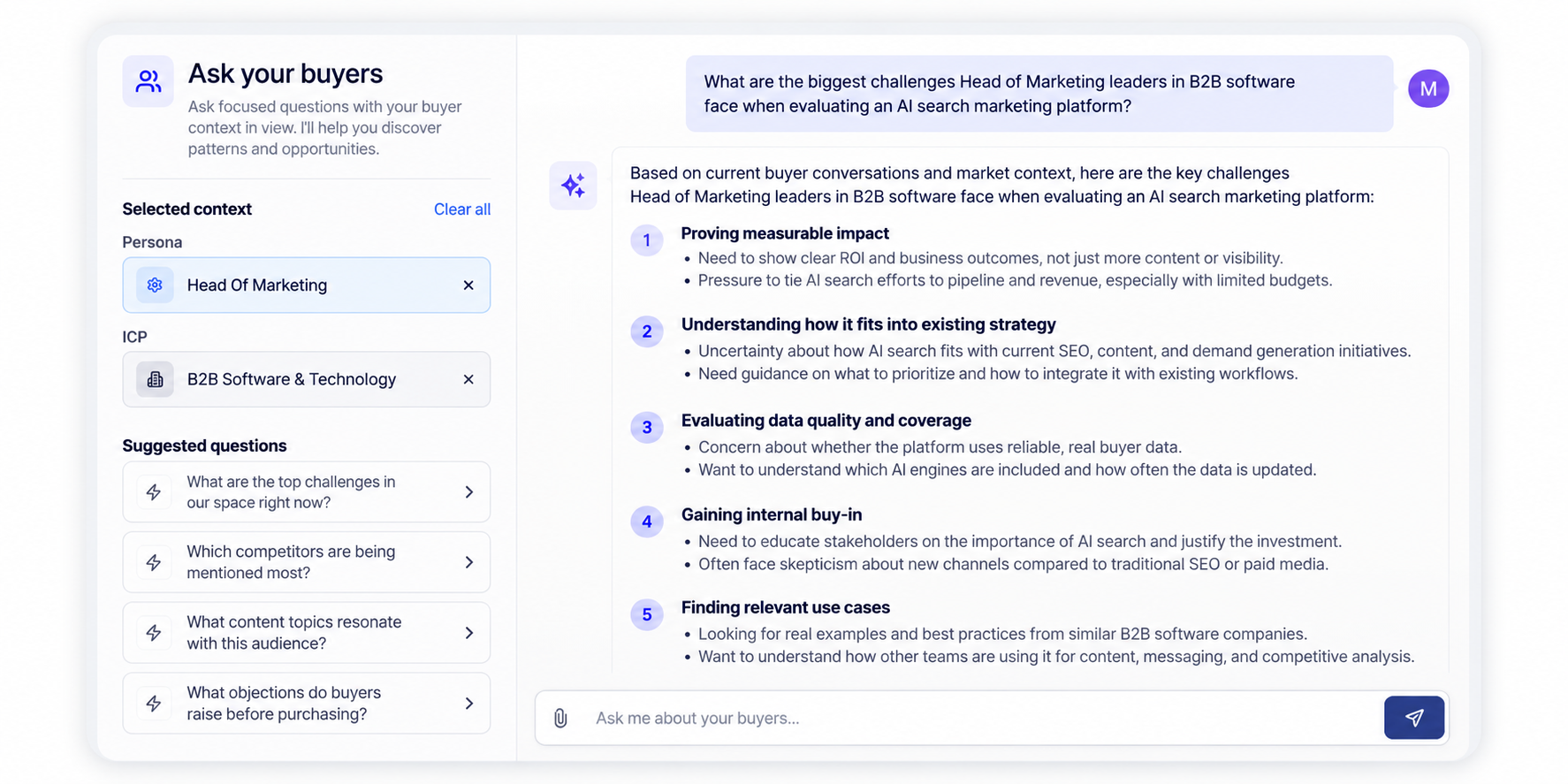
Ask focused questions with your buyer context in view
Use a conversational research workspace to explore what your audience may care about, what questions your team should investigate, and how a message might land with a defined ICP or persona.
Investigate buyer questions
Ask about content ideas, customer concerns, competitor mentions, or the experiences worth turning into useful marketing stories.
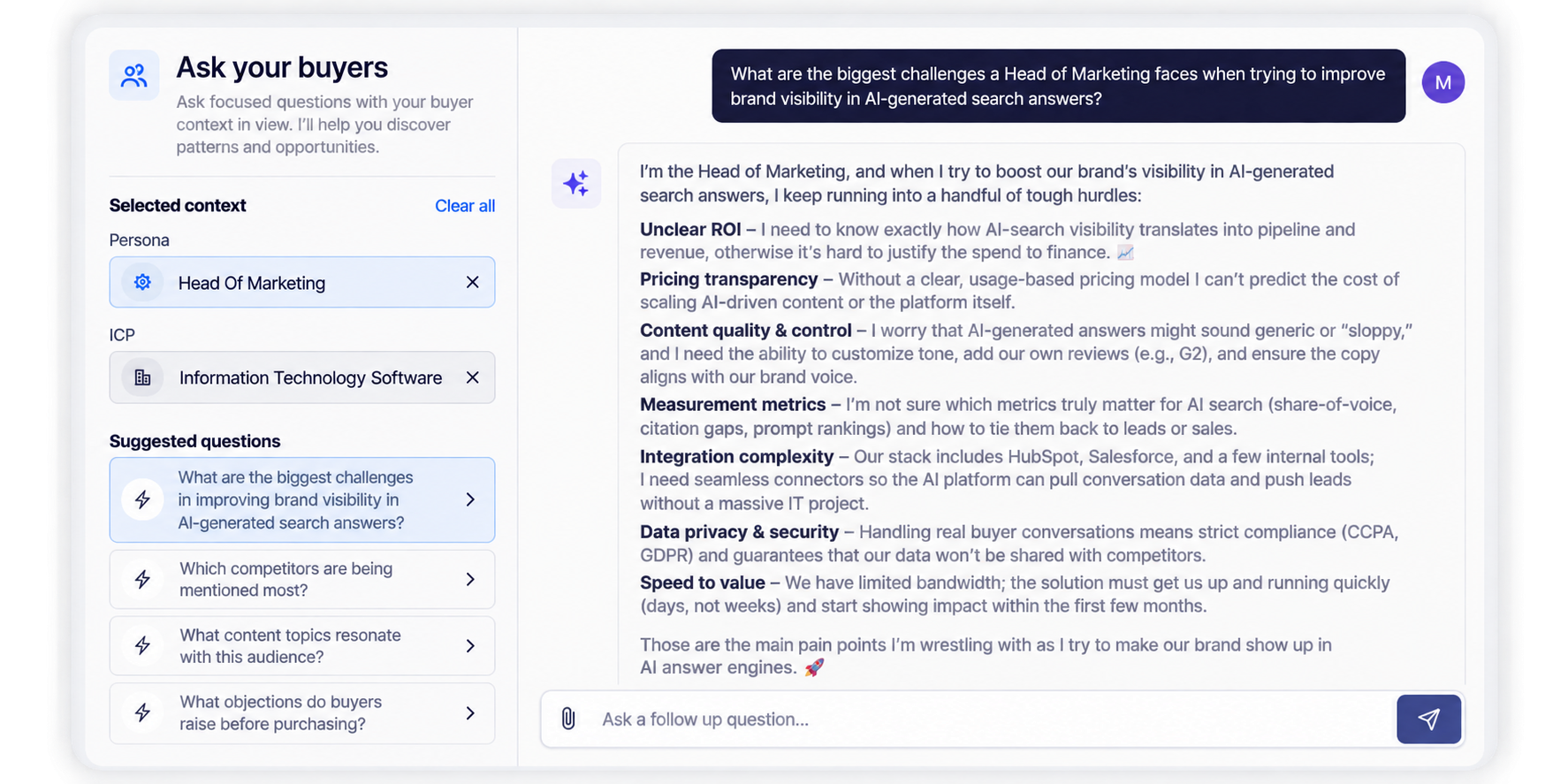
Check messaging against personas
Use the ICP/Persona chat to examine a proposed message or question through synthetic customer profiles before committing to a campaign direction.
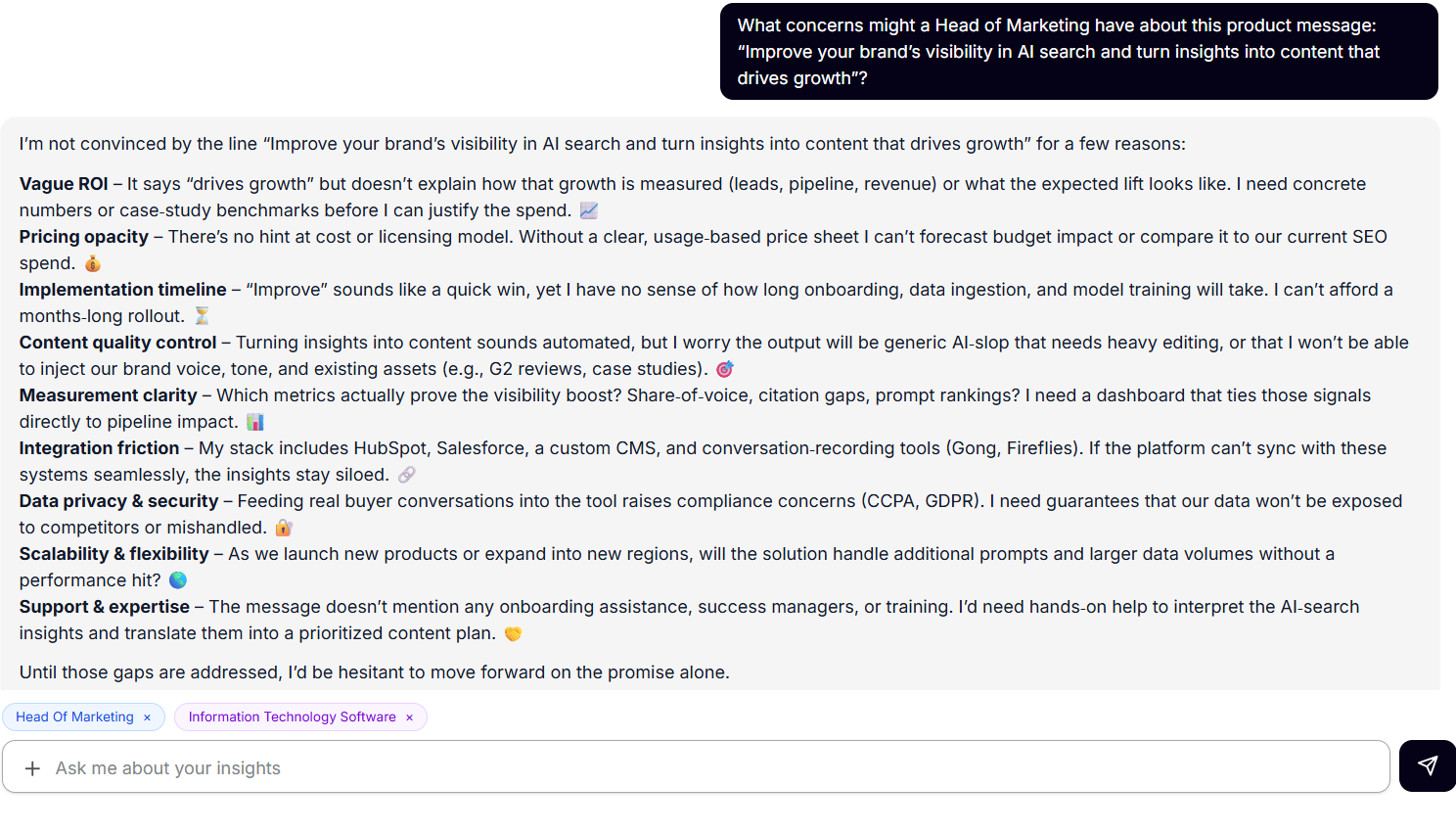
Turn research into next steps
Use the themes and opportunities surfaced in the conversation to decide what to investigate further, clarify, or develop into content.
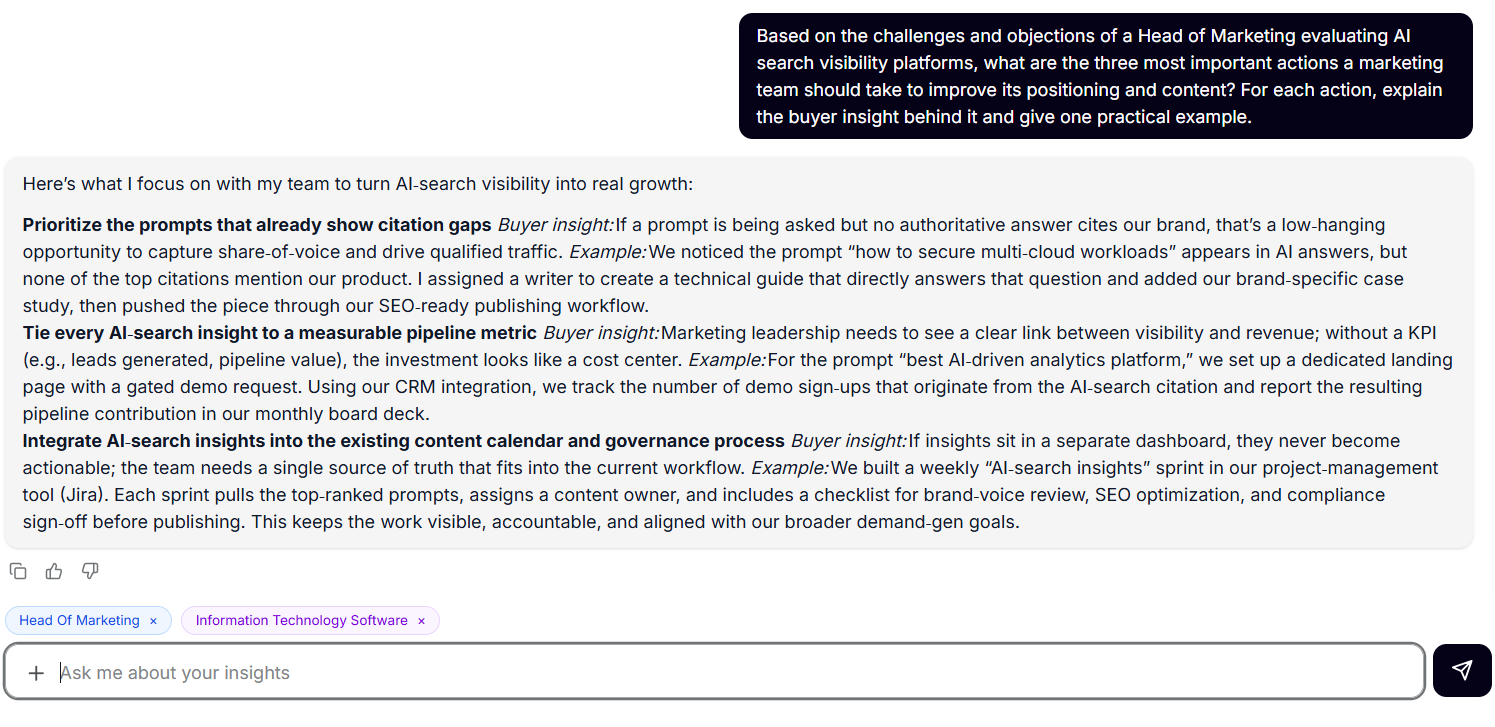
Try the question before you ship the message
A message that sounds clear internally may not address a buyer’s actual concern. Use buyer and persona context to explore how a value proposition, campaign angle, or discovery question could be interpreted.
✔ Compare alternative value propositions or headlines.
✔ Explore possible objections and unanswered questions.
✔ Check whether a message speaks to a defined persona’s priorities.
✔ Identify areas where your team needs real customer evidence.
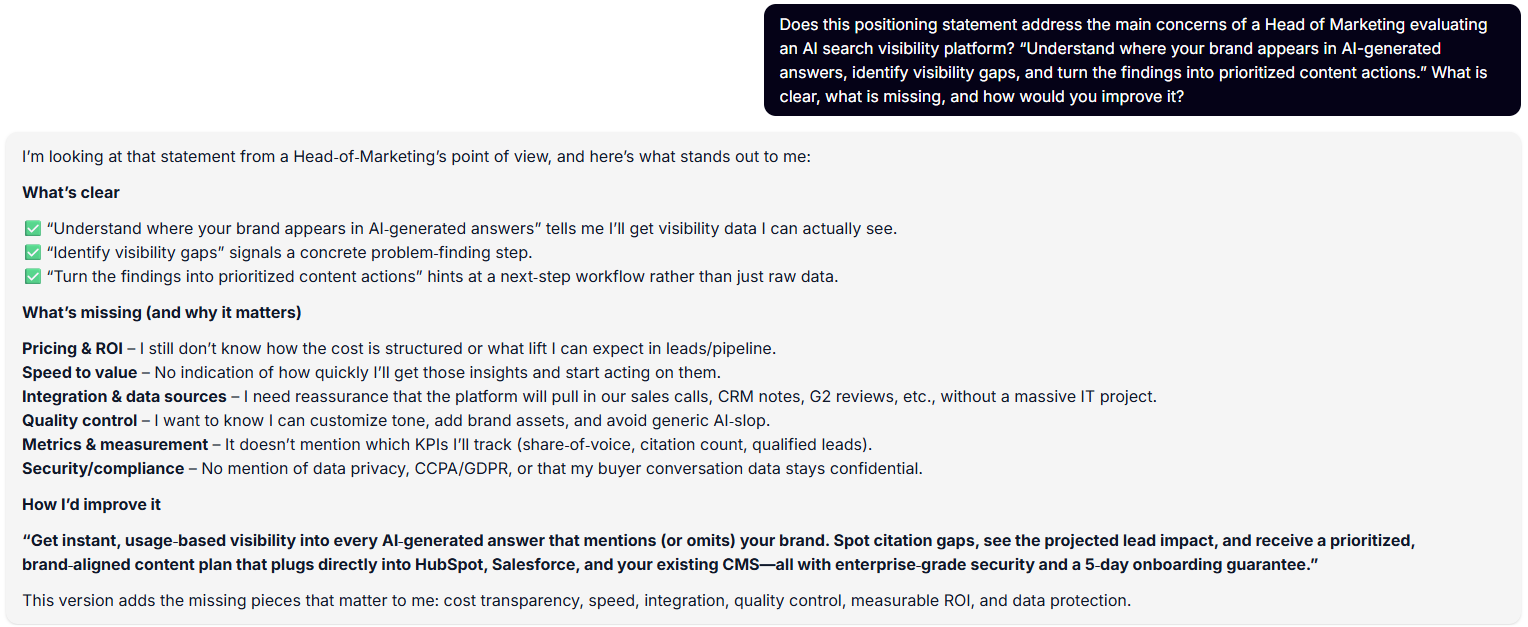
How it works
Move from a question to a better-informed decision
Choose the context
Start with the relevant ICP, persona, or buyer insight you want to investigate.
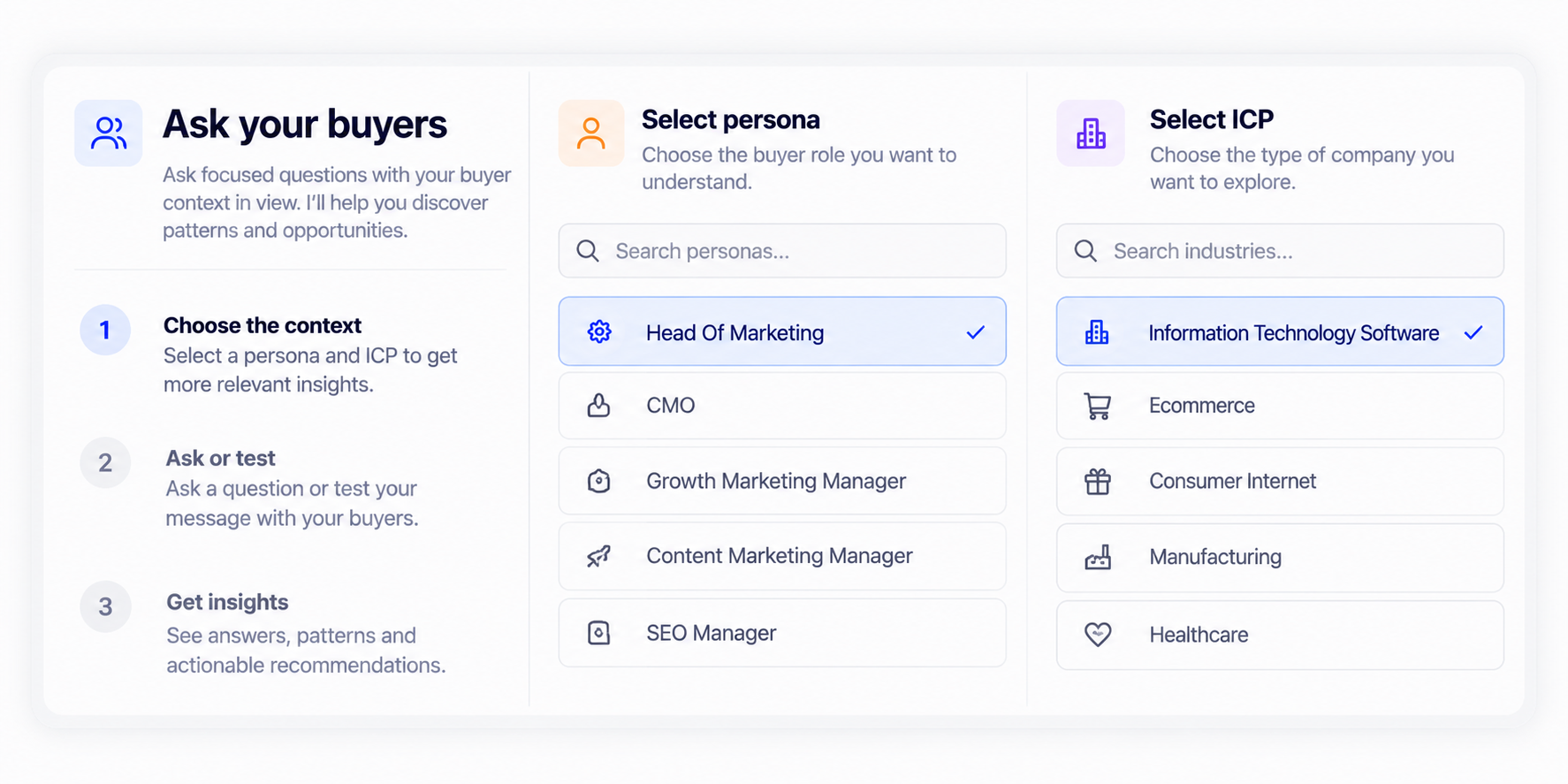
Ask or test
Ask a research question or bring a draft message to the ICP/Persona chat for structured exploration.
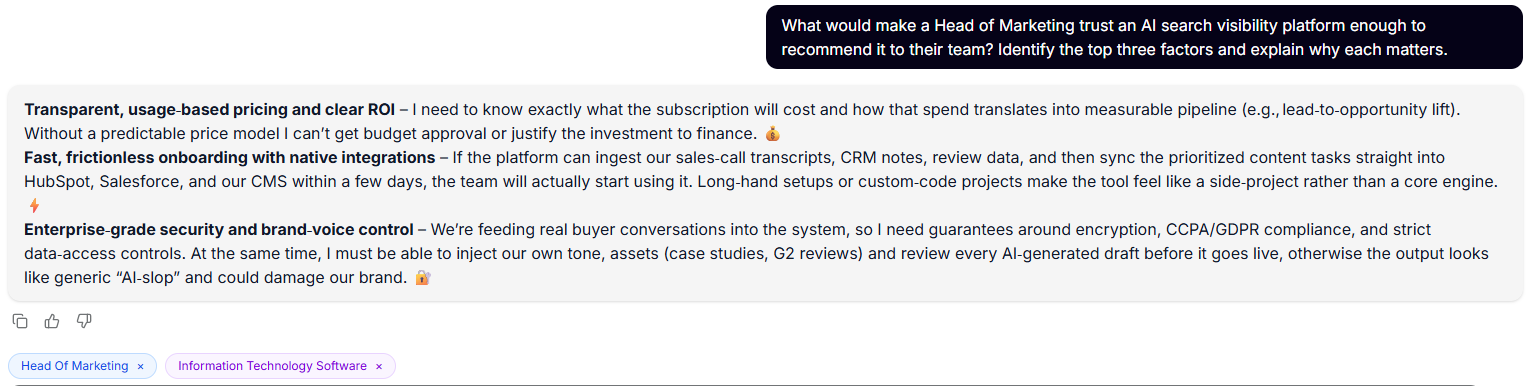
Review and refine
Use the conversation to sharpen your question, identify gaps, and decide what needs customer evidence or a content follow-up.