

95% of B2B buyers ultimately purchase from a vendor that was already on their “Day One” shortlist. That reality defines marketing in 2026, where strategy must be built on real customer signals that shape ICPs, personas, and positioning long before sales ever enter the conversation.
Key Takeaways
|
Key Question |
Answer |
|---|---|
|
What is unified context for ICPs, personas, and positioning? |
A shared intelligence layer that connects customer signals, audience understanding, and positioning strategy into one continuous system. |
|
Why do ICPs and personas need alignment? |
Without alignment, messaging targets the wrong people. Tools like Omnibound’s Context Engine unify signals that keep strategy synchronized. |
|
How does AI improve ICP development? |
AI analyzes CRM, conversation data, and product usage to identify the most valuable customer segments. |
|
What role does content intelligence play? |
Content intelligence connects research, messaging, and execution through systems like Intelligent Research. |
|
How do teams operationalize unified customer intelligence? |
Platforms like the B2B Marketing Context Engine unify CRM signals, market insights, and buyer behavior into strategy. |
|
Where does strategy connect to execution? |
A platform such as the AI Content Marketing Platform for B2B Teams converts insights into campaigns and content. |
The Real Marketing Problem: Strategy Built in Silos
Most B2B teams still treat ICPs, buyer personas, and positioning as separate exercises. Each document exists, but they rarely share the same intelligence.
Marketing defines the ICP. Product marketing writes personas. Leadership creates positioning statements.
The result is predictable: campaigns aimed at one audience, sales targeting another, and messaging that lacks clarity.
Modern marketing requires a unified context layer where signals continuously inform all three elements.
Understanding ICP vs Buyer Persona vs Positioning
These three elements define the foundation of B2B marketing strategy. The problem is not their importance; it is how rarely they are connected.
Ideal Customer Profile (ICP)
- Defines the companies most likely to benefit from the product
- Includes firmographic attributes like industry, revenue, and tech stack
- Guides targeting and account-based marketing
Buyer Personas
- Represent decision makers inside the ICP organization
- Define motivations, goals, and objections
- Guide messaging and content development
Positioning
- Defines how a product wins against alternatives
- Explains differentiation and value
- Shapes the narrative used in campaigns and sales
When these elements share the same customer intelligence, marketing execution becomes precise.
Why ICPs, Personas, and Positioning Become Disconnected
In many companies, different teams own each strategic asset. Updates happen independently, often based on assumptions rather than signals.
ICPs are frequently built from firmographic guesses rather than real customer data. Personas rely on interviews conducted years ago.
Positioning often reflects leadership intuition instead of verified customer evidence.
The outcome is generic messaging that blends into the market.
What Is Unified Customer Context?
Unified customer context is a shared intelligence layer built from real signals. It connects customer behavior, conversations, and market insights into one system.
This context layer informs ICP development, persona refinement, and positioning strategy simultaneously.
Instead of static documents, these assets become living intelligence systems.
Signals typically include:
- CRM and pipeline data
- Sales conversation transcripts
- Product usage signals
- Customer feedback and reviews
- Market and competitor activity
Did You Know?
Organizations that use both ICPs and buyer personas together see a 208% increase in marketing-generated revenue.
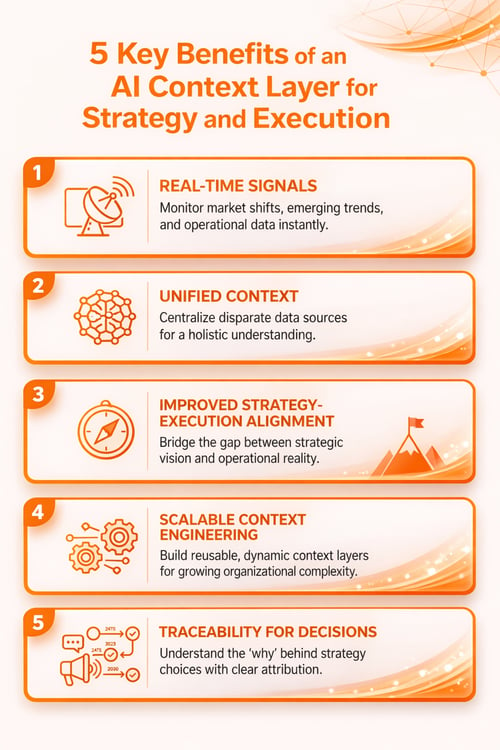
This infographic visualizes the five key benefits of an AI context layer for strategy and execution. It explains how context-aware AI enhances decision-making and drives execution.
How Unified Context Improves ICP Development
Traditional ICPs are static spreadsheets. They describe companies but rarely reflect real buying behavior.
A unified intelligence layer analyzes signals across accounts to identify which customers actually succeed with the product.
Signals that define strong ICPs include:
- Highest lifetime value accounts
- Fastest sales cycles
- Strongest product adoption
- Highest retention rates
AI systems continuously analyze these patterns and refine the ICP automatically.
How Context Improves Persona Intelligence
Buyer personas often rely on outdated assumptions. In reality, buyer motivations change constantly.
Unified customer intelligence continuously captures real buyer behavior from multiple sources.
- Sales calls and discovery conversations
- Support tickets and product feedback
- Product usage patterns
- Content engagement data
- Customer reviews and analyst insights
This approach creates personas grounded in reality instead of guesswork.
How Unified Context Strengthens Positioning Strategy
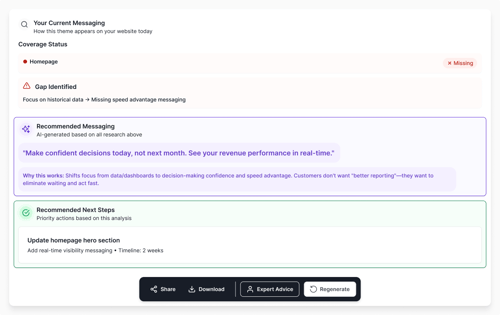
Positioning improves when it is grounded in evidence from real customer conversations.
Unified context layers capture signals about competitor comparisons, objections, and value drivers.
Examples of signals used for positioning include:
- Competitor mentions in sales calls
- Most requested features
- Repeated pain points across deals
- Industry trends and narratives
These signals shape messaging that reflects how buyers actually evaluate solutions.
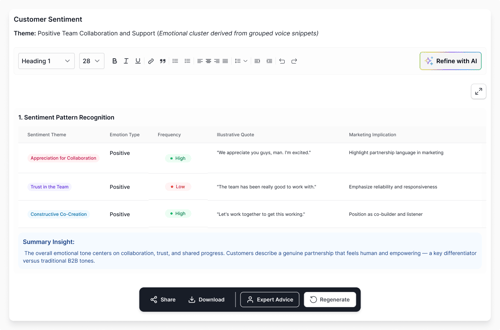
Framework: Connecting ICPs, Personas, and Positioning
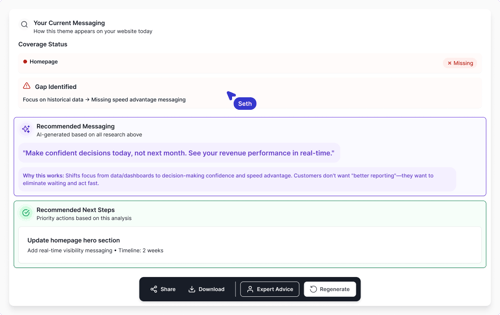
Modern B2B teams follow a structured intelligence framework to align strategy and execution.
- Collect customer and market signals
- Identify high-performing customer segments
- Develop personas using behavioral data
- Identify value drivers
- Build positioning around those drivers
This creates a continuous intelligence flow from signals to campaigns.
Did You Know?
73% of B2B buyers actively avoid suppliers that send irrelevant outreach.
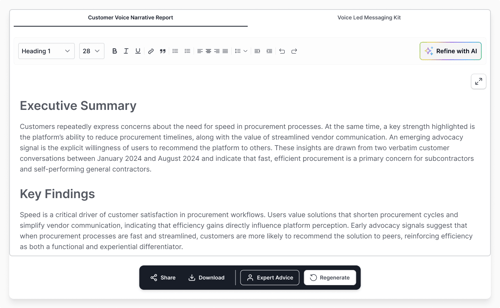
Real B2B Use Cases for Unified Customer Intelligence
Unified context impacts multiple areas of B2B marketing execution.
|
Use Case |
Impact |
|---|---|
|
Account-Based Marketing |
Improved targeting through ICP and persona alignment |
|
Content Strategy |
Topics derived from real customer conversations |
|
Sales Enablement |
Messaging reflects real buyer objections |
|
Demand Generation |
Campaigns target emerging demand signals |
These capabilities allow marketing teams to move from insight to execution without translation loss.
The Role of AI in Maintaining Unified Customer Context
Maintaining a unified context layer manually is impossible. Modern B2B marketing relies on AI to continuously process signals.
AI systems analyze conversation data, product usage patterns, CRM activity, and market intelligence simultaneously.
This allows ICPs, personas, and positioning to evolve automatically as customer behavior changes.
Platforms like Omnibound turn this intelligence into campaigns, messaging, and pipeline-driving content.
Conclusion
In 2026, B2B marketing success depends on connecting strategy with real customer intelligence. ICPs, personas, and positioning cannot exist as separate documents.
They must be built from a shared context layer powered by customer signals, market intelligence, and AI analysis.
When this intelligence flows across teams, strategy becomes consistent, messaging becomes relevant, and execution becomes faster.
This is the foundation of unified customer intelligence marketing. Strategy driven by signals, not assumptions.
.png?height=245&name=Why%20B2B%20AI%20Search%20Requires%20More%20Than%20a%20CMS%20(And%20What%20Modern%20Marketing%20Stacks%20Must%20Do%20Instead).png)