


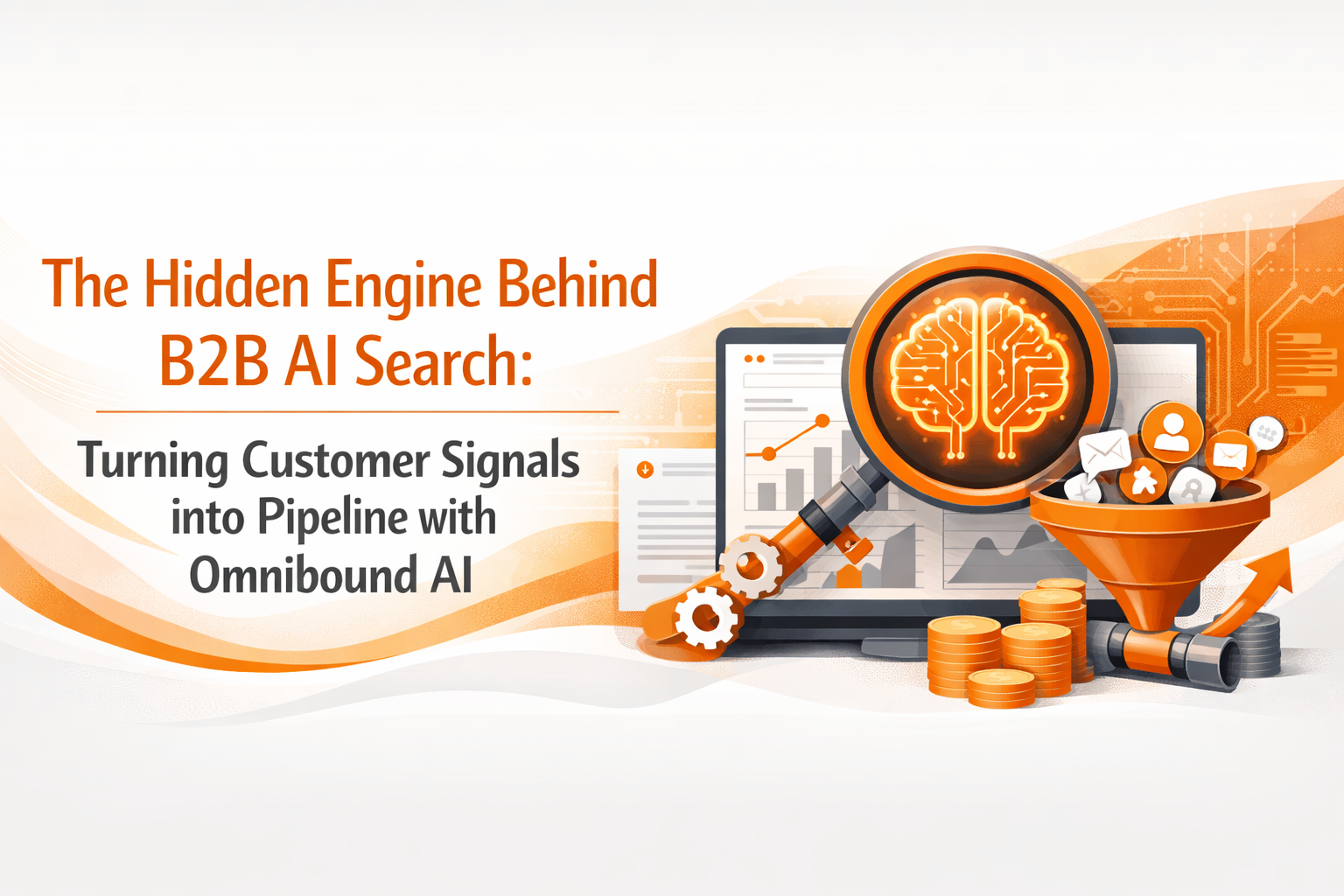


67% of B2B buyers use AI search tools like ChatGPT, Perplexity, and Gemini during their purchase research process, yet most teams still focus on content and keywords instead of the real driver, customer signals.
Key Takeaways
|
Question |
Answer |
|---|---|
|
What is b2b customer signals ai? |
It refers to using behavioral and intent data to guide AI-driven content and pipeline strategy. |
|
How does intent data b2b marketing work? |
It tracks buyer behavior across channels to identify real purchase intent. |
|
What drives customer signals pipeline growth? |
Aligning content with real buyer activity increases early engagement and deal velocity. |
|
What are b2b buyer intent data platforms? |
Platforms like Omnibound AI unify CRM, conversations, and signals into strategy. |
|
How do predictive signals marketing models help? |
They anticipate buyer needs and guide content before demand peaks. |
|
What is data-driven b2b marketing today? |
It connects signals, AI visibility, and pipeline outcomes into one system. |
The Missing Layer in B2B AI Search
Most teams believe AI search success comes from content volume and keyword coverage.
In reality, AI systems prioritize content aligned with real buyer behavior signals.
This shift defines ai intent signals b2b strategies in 2026.
AI does not guess relevance. It follows signals.
What Are Customer Signals in B2B Marketing?
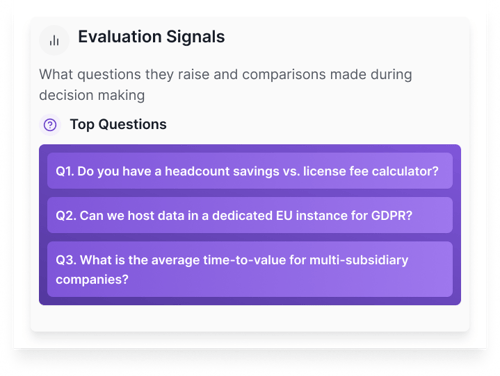
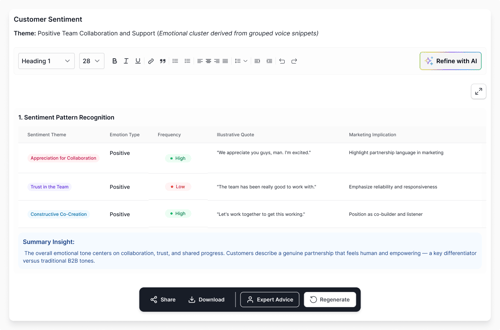
Customer signals combine behavioral data, firmographics, intent data, and CRM activity.
They show what buyers actually care about, not what we assume.
- Clicks and engagement patterns
- Search and research behavior
- Product usage signals
- Sales conversations
In 2026, signals power content intelligence, not just targeting.
The Old Model: Signals Were Used for Sales Only
Traditionally, signals were used for lead scoring and account prioritization.
Marketing teams rarely used them to guide content or narrative.
|
Old Model |
New Model |
|---|---|
|
Lead scoring |
Content direction |
|
Sales alerts |
AI visibility |
|
Campaign triggers |
Narrative shaping |
This reactive approach limits growth.
How Signals Now Power AI Search Outcomes?
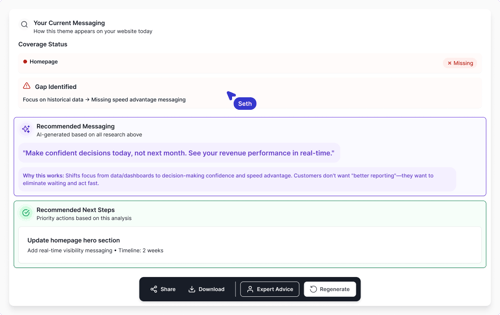
AI systems evaluate relevance, recency, and behavioral alignment.
Signals directly influence what content is surfaced and trusted.
That is why intent data b2b marketing now shapes visibility outcomes.
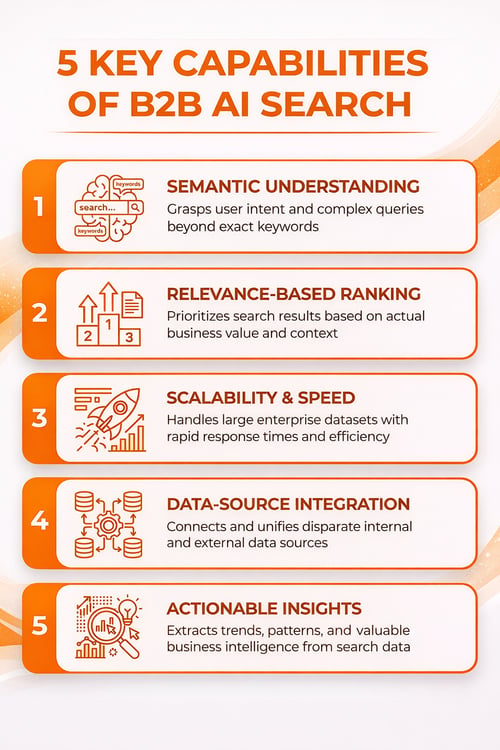
This infographic highlights the five core capabilities of B2B AI Search. It shows how each capability enables faster, more accurate business search results.
Did You Know?
75% of enterprise B2B pipeline decisions are projected to be influenced by AI systems by the end of 2026.

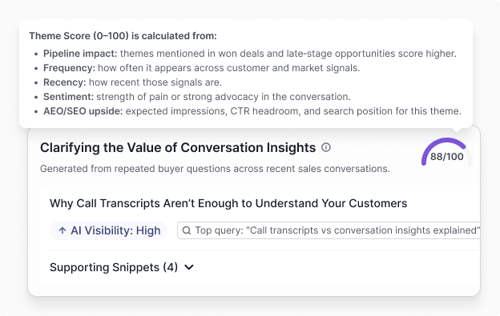
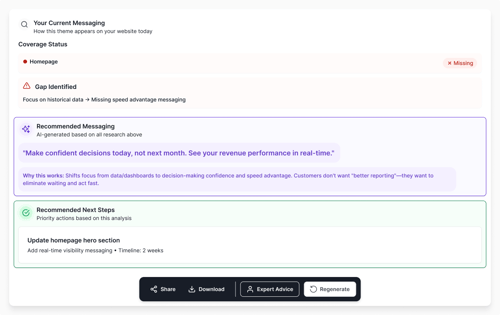
Signal to Pipeline Flow Explained
Pipeline growth now starts inside AI systems, not sales calls.
This is the core of customer signals pipeline growth.
- Signals reveal real buyer questions
- Content aligns with those signals
- AI surfaces that content
- Buyers engage earlier
- Pipeline forms before sales contact
Pipeline is shaped upstream, inside AI interfaces.
Why Most B2B Teams Miss Signal-Led Strategy?
Teams still separate data and content into different workflows.
This disconnect prevents true data-driven b2b marketing.
- Content teams ignore behavioral data
- SEO runs without feedback loops
- Signals stay locked in CRM systems
The result is content that AI systems ignore.
The Omnibound AI Approach to Signal-Led Content
We connect CRM data, conversations, engagement signals, and market intelligence into one system.
This creates a unified engine for b2b customer signals ai.
- Identify high-intent topics automatically
- Align content with real buyer journeys
- Continuously improve via feedback loops
Explore how this works in the Marketing Context Engine.
Did You Know?
Companies that integrate AI-driven intent data into their demand generation see a 3x improvement in pipeline velocity.
Real Use Cases of Signal-Driven Content
Signal-driven systems solve real business problems across the funnel.
They turn predictive signals marketing into measurable outcomes.
- Topic discovery: Find high-intent opportunities early
- AI visibility: Align content with AI retrieval logic
- Pipeline acceleration: Engage buyers earlier
- ROI improvement: Focus on content that converts
Implementation Framework for Signal-Led B2B AI Search
We recommend a structured approach to operationalize signals.
This connects data directly to pipeline outcomes.
- Centralize CRM, product, and web signals
- Identify intent clusters
- Map signals to content themes
- Build AI-first content
- Measure signal impact on pipeline
Start with a guided approach via free trial access.
Metrics That Matter in B2B AI Search
Traditional metrics no longer reflect performance.
We focus on signal-aligned outcomes instead.
|
Traditional |
AI Era |
|---|---|
|
Traffic |
Influence |
|
Rankings |
AI visibility |
|
Leads |
Pipeline impact |
Signal alignment is now the most important performance indicator.
Conclusion
B2B AI search in 2026 is not driven by content volume.
It is driven by how well content aligns with real buyer signals.
The companies that win will not create more content.
They will create signal-aligned content that shapes pipeline before buyers ever speak to sales.


.webp?height=245&name=10%20Ways%20AI%20Semantic%20Analysis%20Improves%20B2B%20Content%20Strategy%20in%20the%20AI%20Search%20Era%20(2).webp)