• Blog
  • Brand Marketing: What It Is, How It Works, and How to Build a Brand People Actually Trust 

Brand Marketing: What It Is, How It Works, and How to Build a Brand People Actually Trust 

Table Of Contents

Trust has become the real currency of modern marketing, and 80% of people now say they trust the brands they use. Brand marketing refers to a comprehensive approach to promoting a company's overall brand identity, values, and emotional connection with consumers, making it the backbone of growth rather than an option. 

Brand marketing drives brand recognition, which is crucial for building trust and fostering loyalty among customers. 

Small businesses, as well as large enterprises, benefit from strong brand marketing strategies that help them stand out and compete effectively. 

Key Takeaways 

Question 

Answer 

What is brand marketing in simple terms? 

Brand marketing is the ongoing process of shaping and promoting your brand identity, values, and reputation so that customers recognize you, trust you, and choose you repeatedly, not just once. 

How is brand strategy different from marketing strategy? 

Brand strategy defines who you are, what you stand for, and how you are perceived, while marketing strategy decides where, when, and how you communicate that identity through campaigns and channels, as we structure in our AI marketing strategy platform. 

Why does brand marketing matter more in 2026? 

Budgets are tight, competition is intense, and performance campaigns work better when backed by strong brand awareness and trust, so brand marketing protects pricing power and improves all other marketing activity. Performance marketing and brand marketing work together to drive results, with performance marketing delivering measurable outcomes and brand marketing building long-term value. 

What are the core components of a brand marketing strategy? 

Clear brand identity and purpose, sharp audience definition and positioning, consistent messaging, cohesive experiences across touchpoints, and internal culture that actually lives the brand, all supported by context and research like our intelligent research engine. These are the foundation of effective brand marketing strategies. 

What are examples of effective brand marketing tactics? 

Long-term storytelling campaigns, a consistent visual identity, video series that build emotional connection, and always-on content production, which our AI content production workflows are designed to support. 

How should we measure our brand marketing? 

Track awareness, perception, engagement, and loyalty using metrics like aided and unaided recall, sentiment, repeat purchase, advocacy, and frameworks such as NPS, then tie those to pipeline and revenue using unified context like our marketing context engine. Measurement should include setting and monitoring key performance indicators (KPIs) to evaluate brand marketing efforts. Use analytics to assess how well your brand marketing efforts are performing and optimize based on KPI results. 

Where should we start if we have no formal brand marketing strategy? 

Start by clarifying your brand purpose and audience, then define positioning, brand voice, and a simple content roadmap, and if you want a structured, AI-ready starting point you can use our marketing AI readiness assessment to see where you stand. 

What is Brand Marketing? Definition, Purpose, and Real Impact 

Brand marketing is the strategic process of promoting your brand identity, values, and reputation to the right audience over time, not just pushing products or offers. It focuses on shaping perception, building recognition, and deepening emotional connection so that people prefer you even when alternatives look similar on paper. Effective brand marketing also shapes customer experience at every touchpoint and influences your overall brand image, helping to differentiate your business and foster lasting loyalty. 

In practice, brand marketing answers three questions: who are we, why should anyone care, and how do we show that consistently in everything we say and do. It blends long-term storytelling, consistent visuals, and memorable experiences to establish a mental shortcut in your buyer’s mind that leads to your name first. 

How Brand Marketing Differs From Tactical Marketing 

Tactical marketing is about near-term actions, like running a limited promotion or launching a short campaign around a feature. Brand marketing is about the compounding effect of hundreds of those touchpoints creating one coherent, trusted story in the market. 

We see brand marketing as the operating system, and tactical marketing as the applications that run on it. Without a defined brand, your tactics compete with each other and feel random to buyers, which erodes trust and wastes budget. Consistent execution in brand marketing is essential to avoid random tactics and build lasting trust with your audience. 

Why Perception Must Come Before Conversion 

Most buyers will not click, book a demo, or talk to sales until they believe you are credible, relevant, and safe to choose. That belief is what brand marketing builds over time, so performance campaigns have a higher chance to convert. 

When we connect customer and market signals into a unified context, then use that context to guide brand narratives and content, we see performance channels improve because buyers already recognize the story when they reach a landing page. 

It's important to track brand awareness using metrics like social media mentions, website traffic, and customer engagement to understand how brand perception influences conversion rates. 

Brand Marketing Examples In The Real World 

Classic B2C examples include category-defining campaigns that run for years, where the brand stands for a feeling or belief, not just a product attribute. Brand marketing campaigns play a crucial role in building long-term brand recognition and customer loyalty by executing memorable advertising strategies and maintaining consistent brand management. In B2B, strong brand marketing looks like a clear point of view on the market, consistent thought leadership, and a recognizable narrative that runs through webinars, sales decks, and product pages. 

Our own work with pipeline-driven teams focuses on turning verified customer language into repeating themes in their brand story, so they show up as the brand that understands buyer problems best, instead of just another vendor with similar features. 

Brand vs Marketing Strategy: How They Fit Together 

Many teams treat brand strategy and marketing strategy as separate or competing priorities, which creates internal friction and scattered execution. In reality, brand strategy sets the foundation, and marketing strategy decides how to deploy that foundation across channels and campaigns. Marketing communications play a critical role in this process by ensuring consistent messaging and integrated promotional efforts across all touchpoints. 

Brand marketing sits at the intersection, turning brand strategy into repeatable marketing patterns across the funnel. When both strategies are aligned, every program reinforces a core set of ideas about who you are and why you matter. 

Brand Strategy: Identity and Perception 

Brand strategy answers identity questions such as what we stand for, how we speak, how we look, and what position we claim in the market. It includes your mission, vision, values, personality, visual language, and key narrative themes. Aligning your brand strategy with your brand's values is essential for creating consistent and authentic branding materials that truly reflect your core principles. 

For example, a brand might choose to stand for reliability in a volatile market, then encode that into its tone, color choices, and messaging pillars so buyers associate them with stability every time they see a campaign or product update. 

Marketing Strategy: Tactics, Channels, and Timing 

Marketing strategy determines objectives, audiences, messages, and the mix of marketing channels for a specific timeframe. It ties brand positioning to concrete programs such as content series, events, lifecycle journeys, and partner initiatives. 

We use verified customer and competitive context to help teams decide which problems to speak to at each stage of the funnel, so the brand story stays consistent even as tactics and marketing channels change quarter to quarter. 

Brand vs Marketing Strategy Infographic Concept 

A useful way to explain this to stakeholders is a simple comparison view. On one side, branding equals identity and perception, on the other, marketing equals activation and distribution. 

Visually separating these concepts while showing arrows between them helps executives see that brand and marketing are not a choice, but a sequence: define the brand, then deploy it through marketing programs. 

Core Components of a Modern Brand Marketing Strategy 

A strong brand marketing strategy combines clear identity, sharp audience focus, and disciplined execution across touchpoints. A solid brand marketing strategy not only builds recognition and trust but also drives long-term customer loyalty and differentiates your brand in a competitive marketplace. We recommend thinking about it in five connected components that teams can own and improve quarter by quarter. 

These components also map well to how AI-assisted platforms can help, because each one involves structured inputs, repeatable outputs, and measurable outcomes.

1. Brand Identity and Purpose 

Identity is the collection of signals that make your brand recognizable, including company name, logo design, logo, color palette, typography, voice, and narrative. Purpose explains why your brand exists beyond making money and what change you want to create for customers or the market. 

Documenting this clearly is the first practical step in brand marketing, so every writer, designer, seller, and partner can make consistent choices without guessing at the brand.

2. Target Audience and Positioning 

Effective brand marketing requires a tight definition of your target market and a clear understanding of your customer persona - who you are for and what specific place you claim in their mental landscape. This includes segment definitions, ICPs, customer personas, and positioning statements that explain how you are different and better for that group. 

We use unified customer and market intelligence to keep those definitions live, not static, so brand teams see how buyer language, objections, and expectations are shifting over time.

3. Consistent Brand Messaging and Voice 

Brand messaging turns positioning into words people will actually read and remember. That means clear message hierarchies, benefit led headlines, supporting proof, and a recognizable voice that feels like one personality regardless of channel. Maintaining the brand's tone across all messaging ensures your communication style and vocabulary consistently reflect your company's personality and resonate with your target audience. 

Codifying brand voice in frameworks and templates makes it far easier to scale content production without diluting identity, especially when using AI for drafts or ideation.

4. Experiences Across Every Touchpoint

Every interaction is brand marketing, whether it is a homepage visit, onboarding email, sales follow up, or support chat. The goal is to make the experience feel coherent, helpful, and on-brand, regardless of the team or tool behind it. 

We encourage mapping your end to end customer journey and marking each touchpoint with the intended brand feeling, then designing content and scripts that deliver that feeling consistently. This approach not only strengthens your brand but also improves customer engagement by fostering deeper connections and encouraging more meaningful interactions at every stage.

5. Internal Brand Culture and Alignment 

Brand marketing fails when internal behavior contradicts external promises. Aligning culture, enablement, and incentives with brand values turns employees into credible brand ambassadors, not just message repeaters. 

That includes practical tools like internal brand hubs, enablement content, and training that ties brand principles to real decisions across marketing, sales, and product. 

 Infographic showing 5 key elements of brand marketing: strategy, messaging, identity, audience, and metrics.

A concise visual guide to the five essential elements of brand marketing. Learn how strategy, messaging, identity, audience, and metrics shape a successful brand. 

How to Build a Brand Marketing Strategy Step by Step 

Brand marketing often feels abstract until you anchor it in a concrete process. We use a five step approach that moves from research to rollout, and it works whether you are refreshing an existing brand or building a new one. 

The key is to treat this as an ongoing loop, not a one time project, because buyer expectations and market conditions keep changing. Ongoing marketing efforts are essential to continually adapt your strategy, ensuring your brand remains relevant and effective as the market evolves. 

Step 1: Research and Audience Understanding 

Start with a clear view of customers, competitors, and market dynamics. That includes qualitative insight from interviews, quantitative data from your systems, market research, and external signals like reviews, social conversations, and social listening tools. 

Our unified research pulls these signals into one view so brand teams can uncover insights, spot real pain points, language patterns, and unmet expectations before writing a single tagline. 

Step 2: Brand Identity Creation or Refresh 

Use those insights to define or refine your purpose, positioning, narrative, and visual system. Make sure the identity is differentiated, credible, and aligned with what your audience actually values, not just what you want to say. Ensure your identity and messaging are also connected to the stories behind your brand's products, as this strengthens brand marketing and builds emotional connections. 

Document the outputs in clear guidelines that include examples, not just abstract principles, so teams can see what on brand and off brand looks like in practice. 

Step 3: Message Development and Frameworks 

Translate brand strategy into a practical messaging architecture. That usually includes a master narrative, 3 to 5 positioning pillars, proof points, and modular copy blocks that can be reused across content types. Messaging frameworks also ensure the creation of consistent marketing collateral, helping communicate your brand's identity and values across all channels. 

We then feed these frameworks into AI assisted tools so every piece of content starts from a brand aligned base instead of a blank page. 

Step 4: Channel Rollout and Content Production 

Next, map priority audiences to key channels across the funnel and build a content plan focused on content creation. Brand marketing requires a mix of evergreen assets, ongoing thought leadership, and episodic campaigns that reinforce your core narrative, including content types such as social media posts and email marketing. 

Our content production workflows keep this consistent by tying each asset to strategy, funnel stage, and brand messaging blocks so teams avoid one off content that confuses the market. 

Step 5: Measurement and Ongoing Optimization 

Finally, set up dashboards and rituals to review brand metrics, creative performance, qualitative feedback, and website traffic. Tools like Google Analytics can help track these brand marketing metrics, and many offer free versions for small businesses starting out. Use those insights to refine messaging, creative direction, and channel investment over time. 

Brand marketing is successful when you see improvements in both perception and downstream outcomes like pipeline quality and win rates, not just vanity metrics. 

Did You Know? 

90% of video marketers say video has given them a good ROI, and close to 90% also report that video increases brand awareness, traffic, and leads. 

Source: Wyzowl 

Brand Marketing Best Practices and Campaign Examples 

Good brand marketing is repeatable, not random. Successful brand marketing is built on repeatable best practices that drive business growth, create a strong brand identity, and foster customer loyalty. While every brand is unique, we see a set of practices show up consistently in organizations that build durable awareness and loyalty. 

These practices also make it much easier to integrate AI and automation without losing the human side of your brand. 

Lead with Story, Then Support with Proof 

Memorable brands lead with a clear story about the problem they exist to solve and the future they are helping customers reach. A compelling origin story - sharing the brand’s beginnings, motivation, and purpose - serves as a foundational part of this master narrative, connecting emotionally with customers. They then layer proof, such as data, customer quotes, and demos, under that story instead of flooding audiences with disconnected claims. 

We encourage teams to define one master narrative and then build multi part content series across channels that explore different angles of that story over time. 

Maintain Visual and Verbal Consistency 

Consistency is the shortcut your audience uses to recognize you in a crowded feed or inbox. Brand consistency is crucial for building recognition and trust, as it ensures your visual system, message architecture, and tone remain unified across social, product pages, ads, events, and sales materials. 

Templates, component libraries, and shared content systems help here, especially when multiple regions or business units create content in parallel. 

Use Emotion and Humanity, Even in B2B 

Emotion does not mean being dramatic, it means signaling that you understand the stakes, pressures, and aspirations of your buyers. Brands that talk only about features feel interchangeable, while those that speak to real human outcomes get remembered. 

Examples include campaigns that show the people behind the product, spotlight customers as heroes, or take a stand on industry issues that matter to your audience. Emotional storytelling can turn loyal customers into repeat buyers and brand advocates, strengthening your brand marketing by building lasting relationships and amplifying your message through genuine customer advocacy. 

Integrate Brand Across the Funnel 

Brand marketing is not limited to the top of the funnel. Strong brands reinforce key themes in middle and bottom funnel content, such as comparison guides, product sheets, and renewal campaigns. Consistently reinforcing brand themes across the funnel helps build brand loyalty by encouraging customer retention and repeat purchases. 

We structure content production so top of funnel thought leadership, mid funnel education, and bottom funnel validation all speak the same brand language, just with different depth and specificity. 

Brand Metrics: What to Measure and How to Track Progress 

Brand marketing is only as strong as your ability to measure and communicate its impact. The goal is not to force everything into last click attribution, but to create a clear line of sight from brand investments to business outcomes. 

We group brand metrics into four main categories: awareness, perception, engagement, and loyalty, then connect those to pipeline and revenue indicators. 

Brand Awareness Metrics 

Awareness answers whether people know you exist and can recognize you. Common metrics include aided and unaided recall, share of voice in key categories, branded search volume, and direct traffic trends. 

In social and content channels, especially on social media platforms, you can also watch impressions, reach, and the growth of owned audiences, although these need context to avoid chasing vanity numbers. 

Brand Perception and Equity Metrics 

Perception addresses what people think and feel about your brand. Surveys, interviews, sentiment analysis, and competitive preference studies help here. 

Brand equity frameworks often combine attributes like trust, relevance, differentiation, and esteem into a composite score that you can track over time against key competitors. 

Engagement and Loyalty Metrics 

Engagement indicators include repeat visits, content consumption depth, social interactions, and time spent with your assets. Loyalty shows up in repeat purchases, upsell rates, retention, and customer advocacy. Tracking customer loyalty is essential, as it helps you understand how effective your brand marketing efforts are at building long-term relationships and differentiating your business. 

Net Promoter Score is commonly used as a simple proxy for loyalty, but you should also track actual behavior like referrals, review volume, and participation in communities or events. 

Example Brand KPI Dashboard Structure 

A practical dashboard might show awareness and perception for executives and then break down engagement and loyalty by segment or product for operational teams. The key is to keep a stable core set of metrics while allowing flexible views for different stakeholders. 

We layer customer and market intelligence under these dashboards so leaders can see not just the numbers but also the narratives and signals driving them. 

Common Brand Marketing Challenges and How to Solve Them 

Most teams know brand marketing is important, but they run into predictable obstacles when trying to operationalize it. The good news is that these issues have practical fixes once you name them clearly. 

Below are some of the most frequent challenges we see, along with approaches that help resolve them. 

Challenge 1: Inconsistent Messaging Across Teams 

When product marketing, demand generation, and sales tell slightly different stories, customers get confused and trust drops. This often happens when there is no single source of truth for messaging and brand guidelines. 

The fix is to centralize messaging frameworks, make them accessible, and tie content workflows to those frameworks so every new asset starts with the same building blocks. 

Challenge 2: Brand Feels Detached From Customer Reality 

Another common issue is a brand story that sounds great internally but does not match how buyers talk about their problems. This leads to campaigns that look polished but fail to resonate. 

Embedding live customer and market signals into brand decision making keeps your narratives grounded in reality and relevant as the market shifts. 

Challenge 3: Difficulty Justifying Brand Investment 

In tighter budget environments, brand programs are often the first to face scrutiny. Without a clear framework for measurement, they can be mischaracterized as purely discretionary spend. 

Linking brand metrics to downstream results like lead quality, win rates, and pricing power makes a stronger case. You can also pilot focused brand initiatives and track their impact on specific segments or regions to build internal proof. 

Challenge 4: Scaling Content Without Losing Brand Integrity 

As the volume of content increases, so does the risk of off brand experiences. Multiple agencies, partners, and internal creators may interpret brand guidelines differently, leading to drift over time. 

To counter this, we combine structured brand guardrails with AI assisted content tools that bake identity and messaging into the creation process, so scale does not equal chaos. 

Did You Know? 

73% of people say their trust in a brand would increase if it authentically reflected today’s culture. 

Source: Edelman Trust Barometer 2025 

Brand Marketing Metrics Infographic: Awareness, Engagement, Loyalty, ROI 

Teams often struggle to explain brand metrics in a simple way to executives. An infographic that maps metrics by category helps non marketers see where each number fits in the bigger picture. 

We recommend grouping metrics into four quadrants, then listing 2 to 4 examples in each so leaders can quickly understand how brand health is monitored. 

Awareness and Reach Metrics 

  • Aided and unaided brand recall in key segments 
  • Share of voice across priority topics or categories 
  • Branded search trends and direct traffic over time 

These show whether your brand is even in the consideration set for your target audience. 

Engagement and Consideration Metrics 

  • Content engagement rates across owned channels 
  • Event and webinar attendance and reattendance 
  • Time spent with brand assets such as interactive tools or demos 

These indicate depth of interest and how compelling your brand story is in practice. 

Loyalty and Advocacy Metrics 

  • Retention and expansion rates for key cohorts 
  • Number and quality of reviews, testimonials, and case studies 
  • Community participation and referral activity 

These reveal the strength of your customer relationships and the durability of your brand promises. 

ROI and Business Impact Indicators 

  • Impact of brand campaigns on pipeline creation and win rates 
  • Ability to maintain or raise prices without losing share 
  • Reduced sales cycle lengths in segments with high awareness

Plotting these on an infographic and reviewing them regularly keeps brand marketing grounded in business outcomes rather than isolated vanity metrics. 

Brand Marketing Trends to Watch in 2026 

Brand marketing is shifting as customer expectations, technology, and culture evolve. For 2026 planning, several trends are shaping how leading brands design their strategies and experiences. 

These trends are not fads, they reflect deeper shifts in how people choose and stay with brands. 

Inclusive and Purpose Driven Branding 

Customers expect brands to have a clear stance on issues that matter to them and to demonstrate that stance in actions, not just campaigns. Inclusive storytelling, representation, and accessible experiences are now table stakes, not differentiators. 

Brands that define a focused, authentic purpose and back it with consistent behavior build stronger trust and resilience in volatile markets. 

Multisensory and Experiential Branding 

As digital and physical experiences blend, brands are investing in consistent cues across sight, sound, and sometimes even touch. That can include sonic branding, motion language, and interface patterns that feel uniquely theirs. 

In B2B, this might show up as distinctive visual and interaction patterns inside product interfaces, support flows, and learning environments that extend the brand beyond marketing into the product itself. 

Personalized Brand Experiences at Scale 

Customers expect brands to recognize context and respond accordingly. That means moving from generic journeys to experiences that adapt by segment, role, and behavior, while still feeling coherent and on-brand. 

Unified context engines and AI orchestration are making it easier to maintain one brand identity while tailoring timing, content, and offers to the individual. 

Socially Responsible and Culturally Attuned Brands 

Research shows that 93% of consumers believe it is important for brands to keep up with online culture, but they also prefer authenticity over trend chasing. Brands that observe, listen, and participate thoughtfully in cultural conversations earn more credibility than those that simply jump on every meme. 

We advise teams to define guardrails around cultural engagement so they can act quickly while staying true to their brand values and audience expectations. 

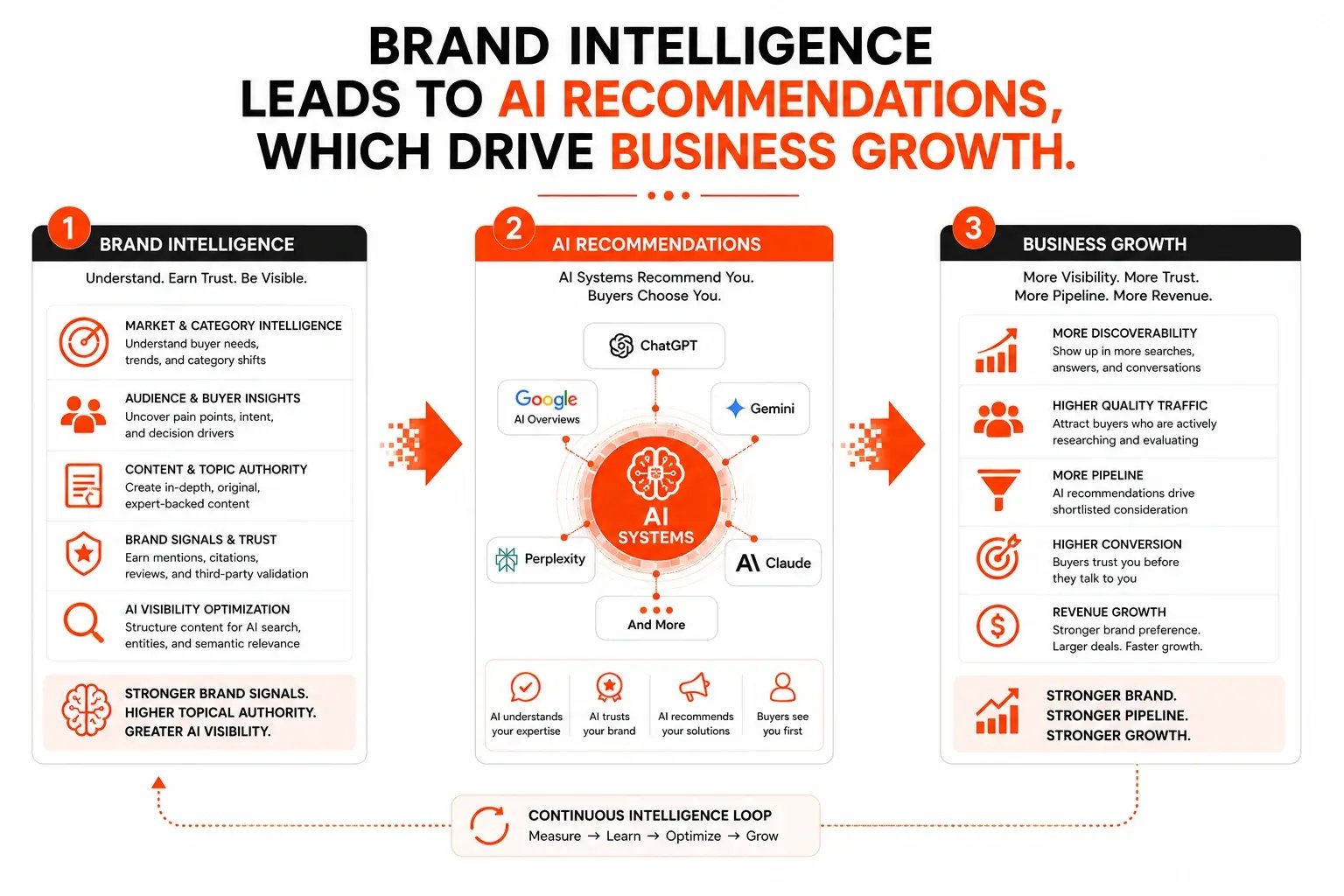
How AI and Context Engines Support Brand Marketing 

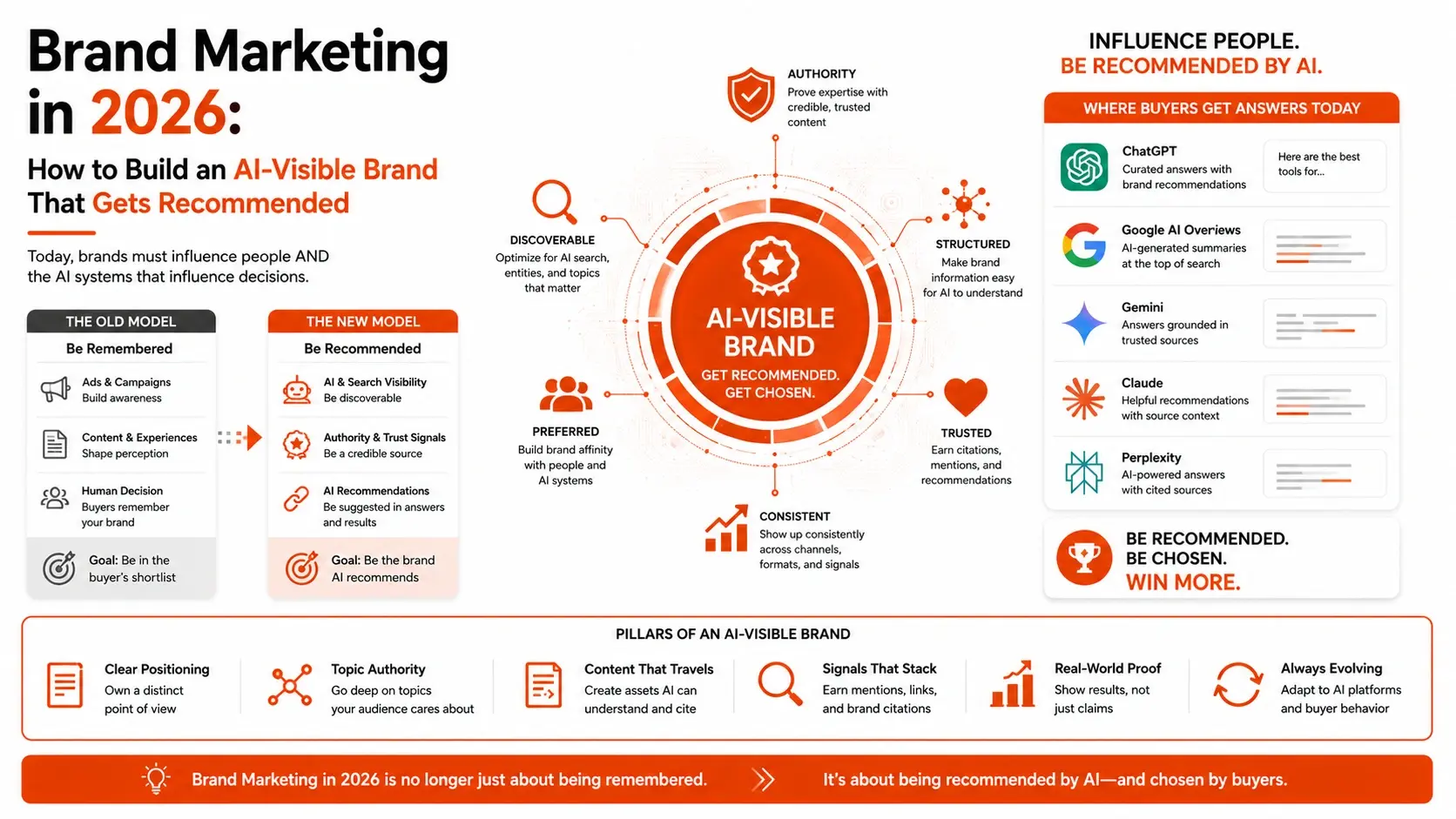
AI is changing how teams research, plan, and execute brand marketing, but it only works if you feed it with the right context and guardrails. Without that, you risk generic content that dilutes your brand instead of strengthening it. 

Our perspective is that AI should extend brand thinking, not replace it, by making it easier to apply your identity and strategy at scale. 

Unified Customer and Market Intelligence as Brand Fuel 

Brand decisions are stronger when they are grounded in live insight rather than outdated personas or one-off surveys. Unified intelligence brings together buyer behavior, voice of customer, competitor moves, and macro trends into one source. 

We use this context to update brand positioning, messaging, and content priorities regularly, so your brand story stays aligned with reality instead of drifting into wishful thinking. 

Context Engines for Brand Aware Content Generation 

AI can help create and adapt content far faster than manual workflows, but only if it knows how your brand speaks and what it stands for. A context engine that encodes brand voice, messaging frameworks, and audience nuances can guide generation across top, mid, and bottom of funnel assets. 

This reduces rewriting cycles, keeps campaigns on brand, and lets human creators focus on higher order creativity, judgment, and experimentation. 

Agentic AI For Brand Aligned Decisions 

Agentic AI refers to systems that can not only generate content but also propose decisions, options, and next steps based on goals and constraints. In brand marketing, that might look like recommending message angles, channel mixes, or content refresh priorities based on live performance and brand rules. 

We build playbooks that help marketers interrogate these suggestions, keeping people in control while benefiting from faster analysis and ideation. 

FAQ: Brand Marketing Basics Answered 

To close, we want to address some of the most common questions brand leaders and marketers ask when building or revisiting their brand marketing strategy. These short answers can support internal education and alignment. 

You can adapt them into internal documentation, training materials, or onboarding for new team members and agencies. 

What are Essential Brand Marketing Strategies? 

Essential brand marketing strategies include content marketing, performance marketing, brand storytelling, consistent visual identity, customer engagement, and leveraging data-driven insights. Content marketing is especially important, as it involves creating messaging that conveys your brand voice, tells your company’s story, and builds customer relationships and loyalty. Dedicated team members or hiring efforts focused on content marketing can help produce effective content and grow your brand. 

What is Brand Marketing and Why Does it Matter? 

Brand marketing is the long-term practice of shaping how your market perceives your company's brand, so that more of the right people know you, trust you, and prefer you. It matters because trust is now a core decision factor for buyers, and strong brands make all other marketing and sales activities more effective. 

How is Brand Marketing Different from Traditional Marketing? 

Traditional or tactical marketing focuses on immediate actions such as leads, clicks, or signups within a short time frame. Brand marketing works over a longer horizon, focusing on awareness, trust, and loyalty that compound and support repeated growth. 

What are Essential Brand Marketing Strategies? 

Essential strategies include defining a clear brand purpose and positioning, building consistent messaging and visuals, investing in marketing campaigns, storytelling and video, integrating the brand across the full funnel, and aligning internal culture with external promises. Measurement and regular optimization are also critical parts of the strategy. 

What Metrics Should Brand Marketers Track? 

Brand marketers should track awareness, perception, engagement, and loyalty metrics, then link them to business outcomes like pipeline, win rates, retention, and pricing power. This mix provides a complete view of both brand health and commercial impact. 

How Do We Start Building a Brand Marketing Strategy? 

Start with research into your audience and market, define or refine your brand identity and positioning, create messaging frameworks, map key channels and content needs, and set up simple dashboards for measurement. From there, treat brand marketing as a continuous process of learning, refining, and reinforcing your story at scale. 

Conclusion 

Brand marketing is no longer a soft, nice to have discipline that sits apart from performance. It is the strategic backbone that shapes perception, builds trust, and supports every interaction your audience has with you, from first impression to renewal. 

By defining a clear identity, grounding decisions in real customer and market signals, and using structured frameworks and AI enabled tools to execute consistently, we can treat brand marketing as a rigorous, measurable growth lever. The brands that win in 2026 will be those that combine strong, differentiated stories with disciplined execution and continuous learning across every touchpoint. 

Image (29)

Turn Marketing Insights Into Action

See how Omnibound helps teams connect ideas, data, and execution - without extra tools or guesswork.

Marketing doesn’t fail from lack of ideas - it fails at execution. Omnibound helps teams prioritize what matters and act on it. So, strategy doesn’t stay stuck in docs, decks, or dashboards.

Move faster from insight to impact - without manual handoffs.

Related Posts

Join 2,000+ subscribers

Stay in the loop with everything you need to know.