See How AI Search Describes Your Brand
Go beyond whether your brand appears in AI-generated answers. Explore the claims that shape its perceived reputation, see how those claims are classified, and trace them back to the prompts and AI responses behind them.
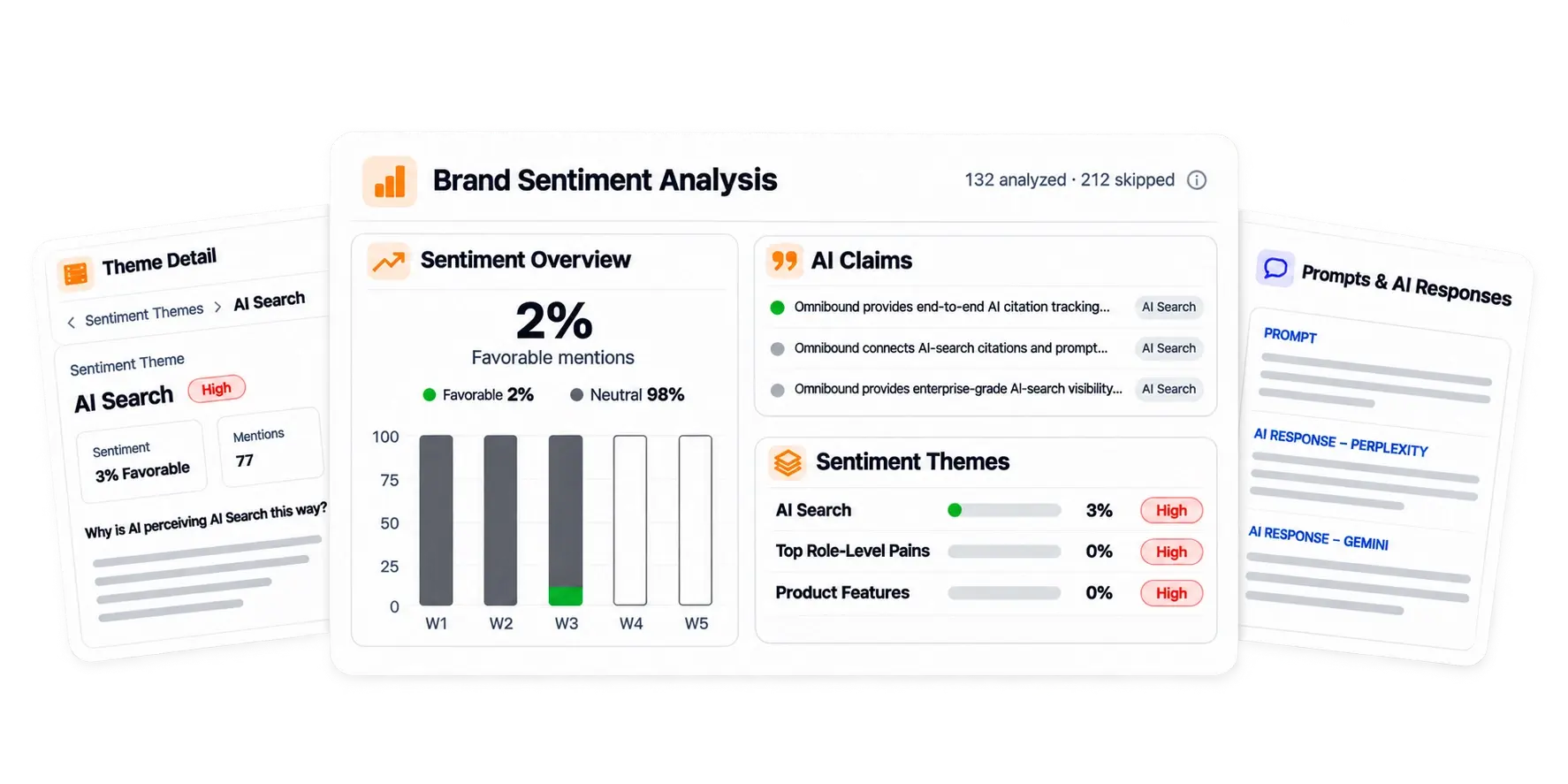
The overall picture, week by week
See the share of favorable and neutral mentions across AI engine responses, and how the split moves over time. Responses that never mention your brand are counted separately, so the percentage always reflects real mentions.
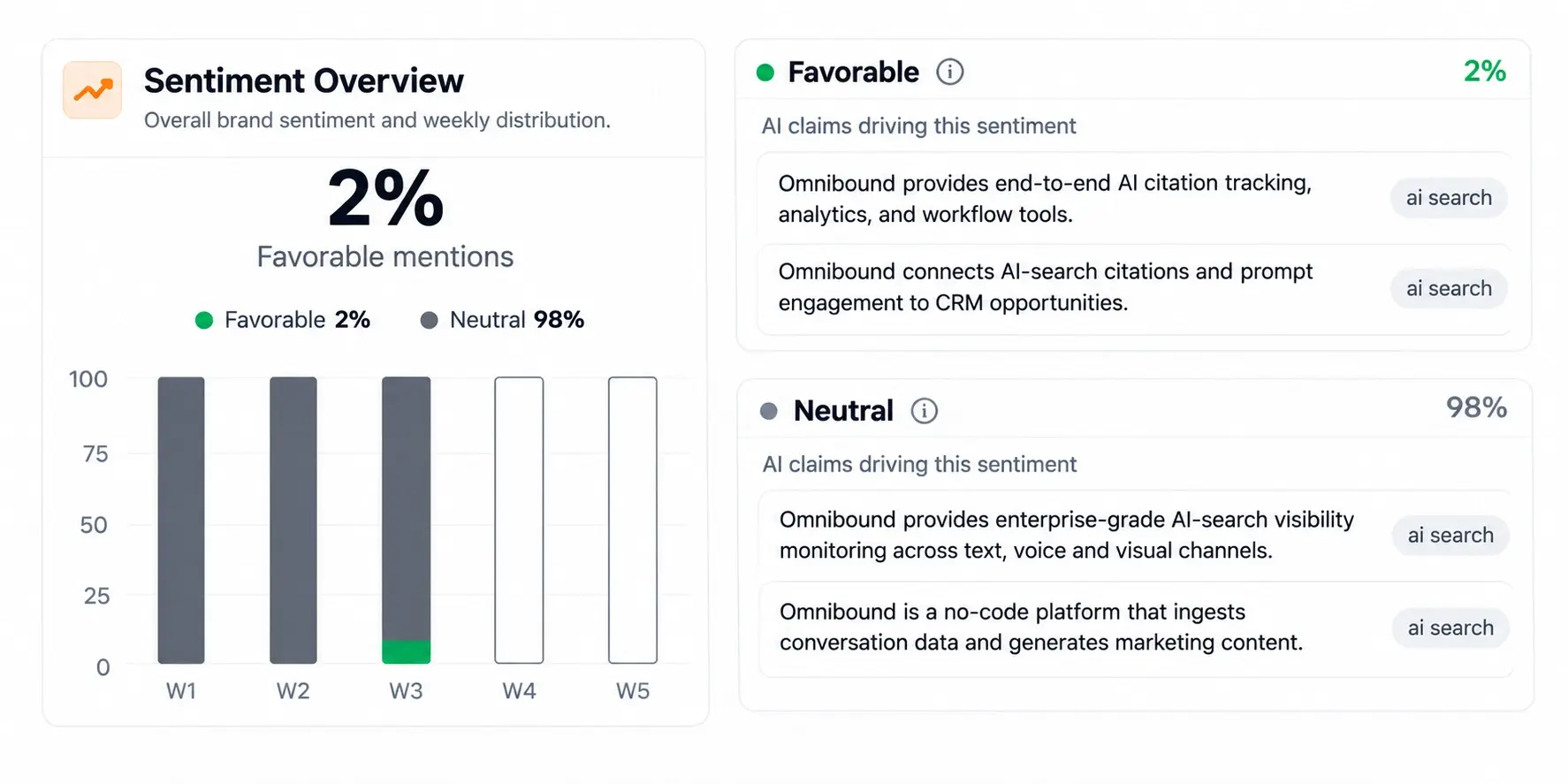
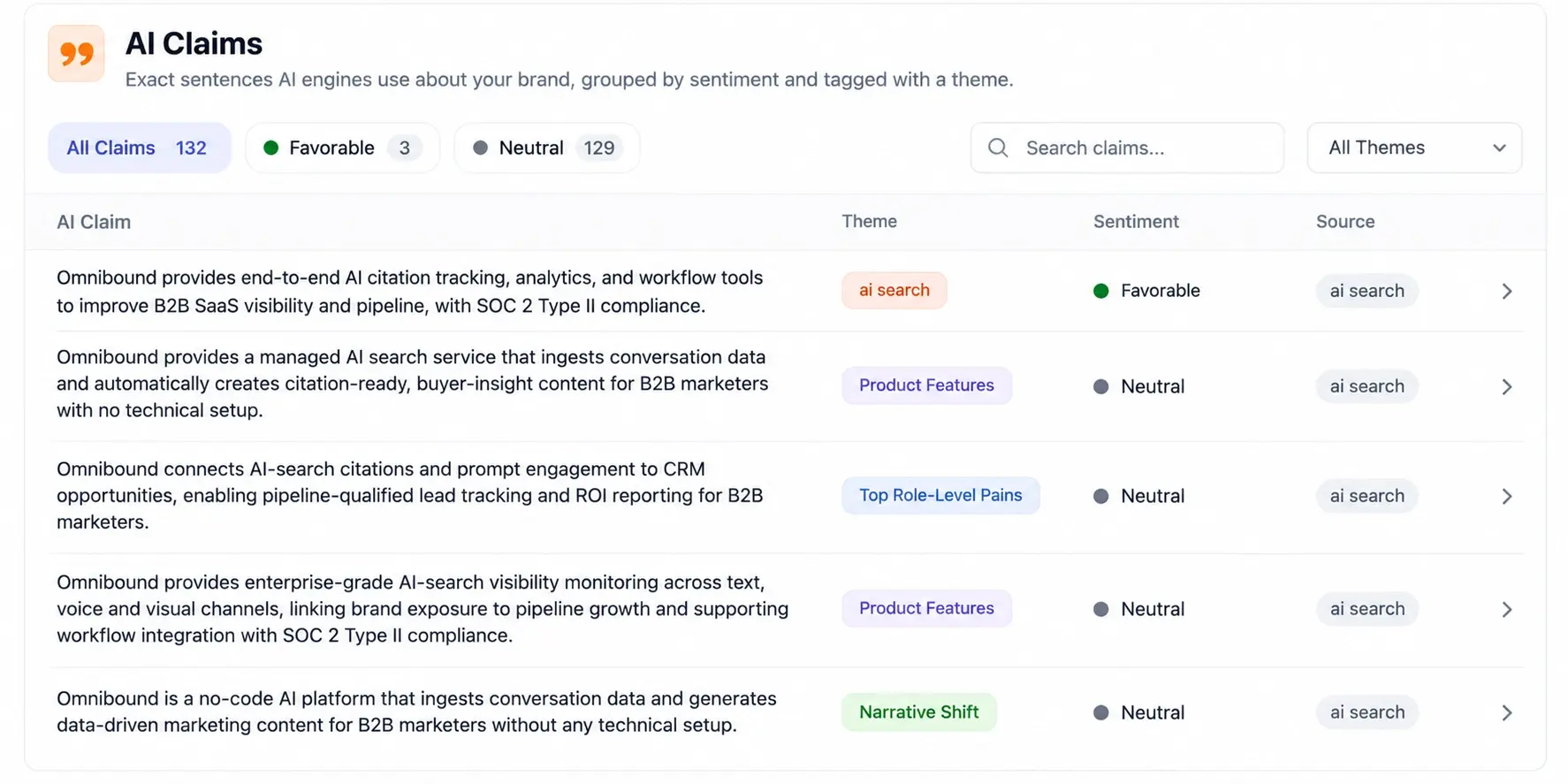
Read the exact sentences AI engines uses about you
Browse the claims behind each sentiment label, each tagged with its theme. You see the specific wording engines repeat to buyers, not just a score.
Understand why AI engines frame you this way
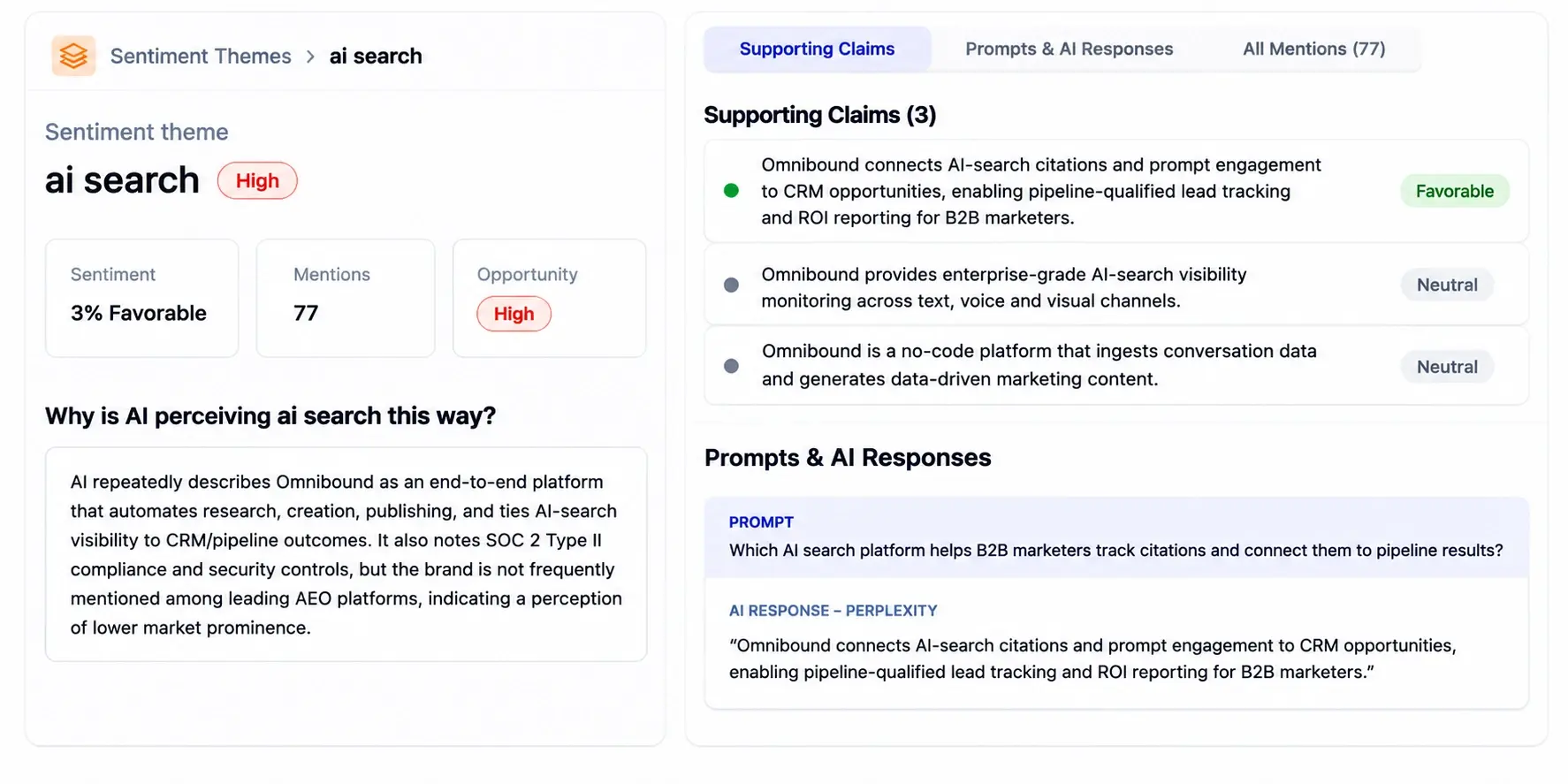
Open any theme to see its sentiment, its opportunity rating, a plain-language explanation of how AI engines are reading your brand, and the supporting claims behind it.
● An explanation of why AI perceives the theme the way it does● The supporting claims, each with its sentiment label
● The prompts and AI responses behind each claim
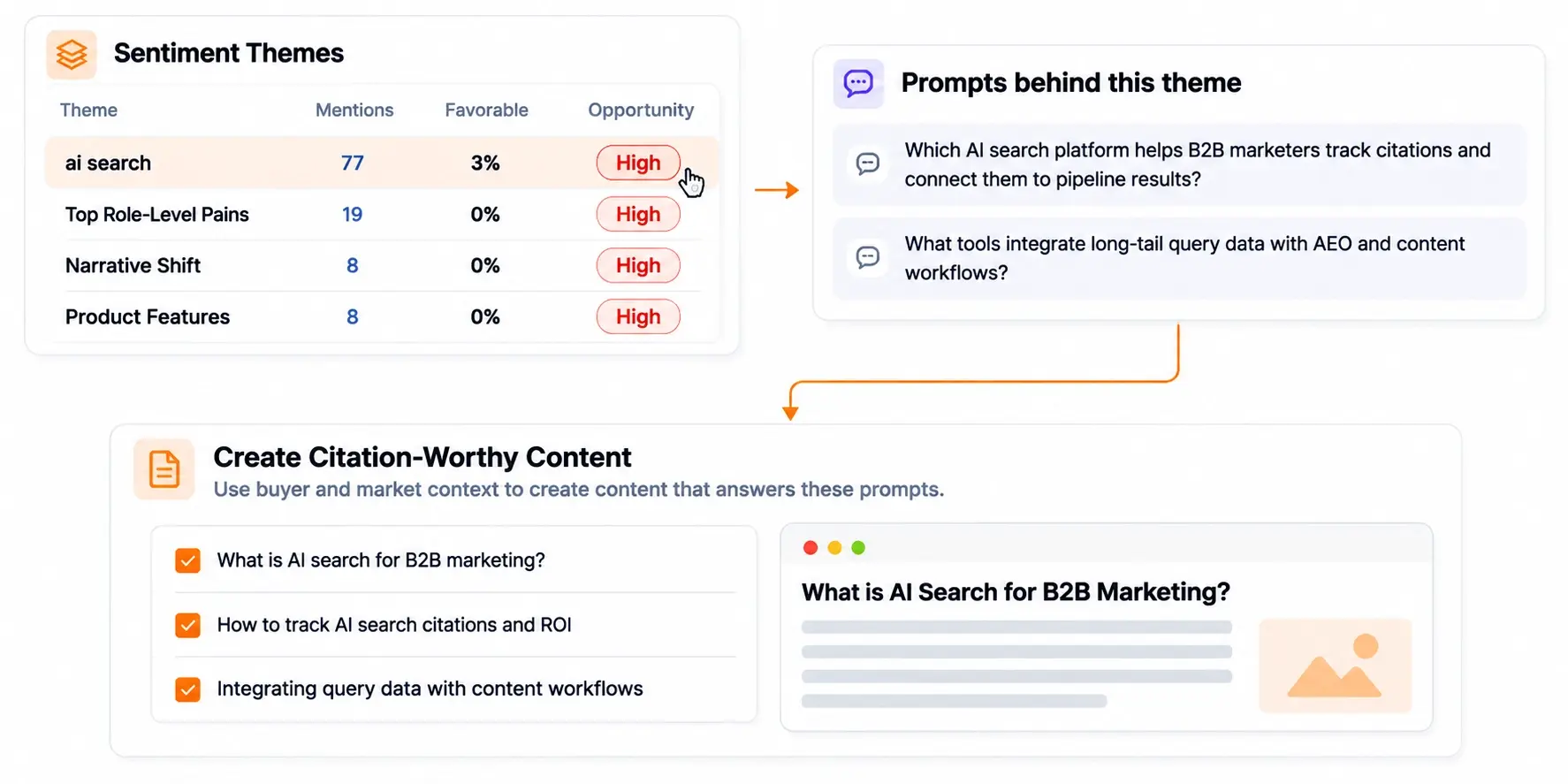
Turn weak themes into content AI engines cite
Once you know which theme needs work, Omnibound uses buyer and market context to build content that answers the prompts behind it. Content that gets cited keeps bringing in qualified inbound leads from AI search.