

Table Of Contents
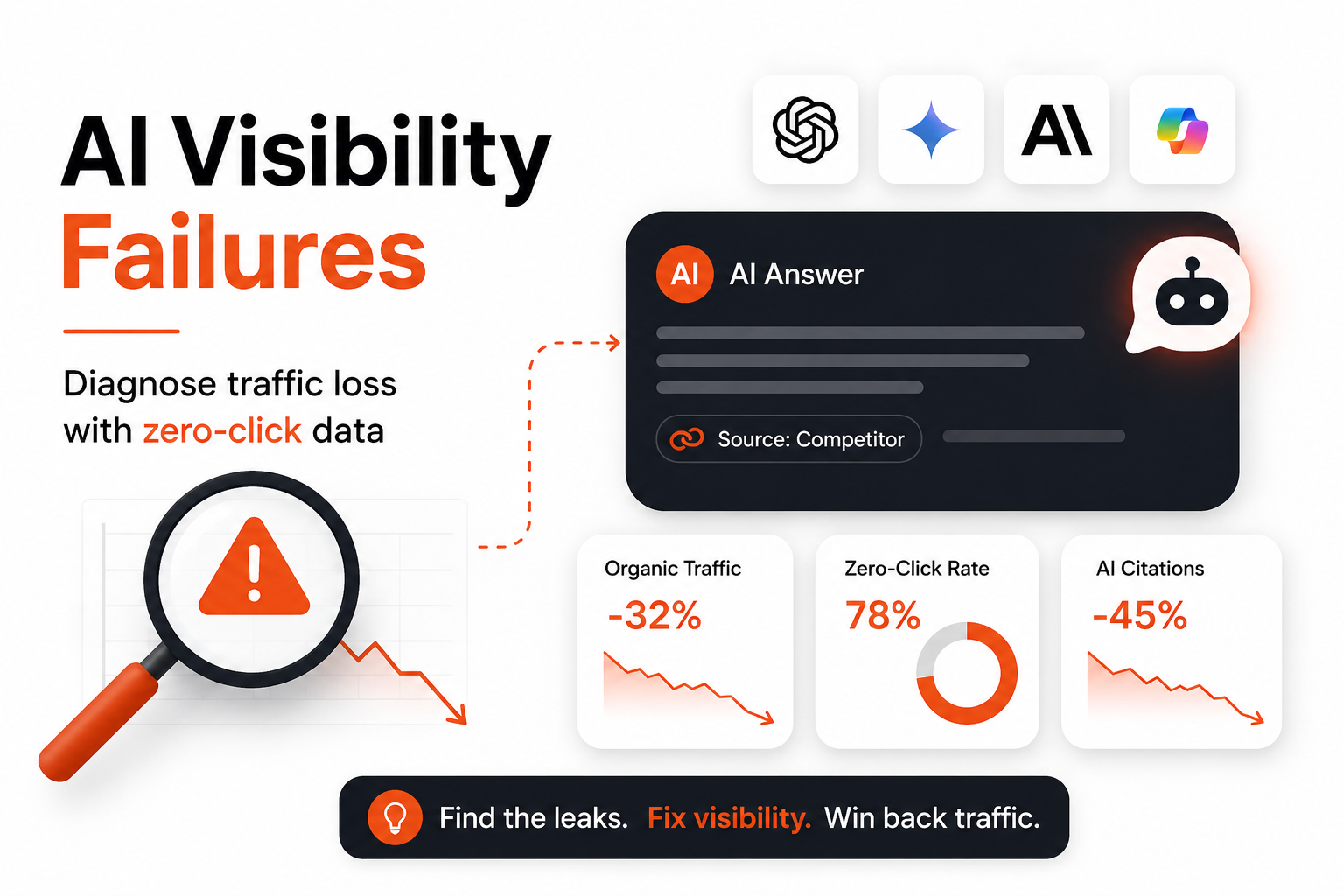
Mid‑market B2B SaaS SEO directors are waking up to a puzzling reality: the traffic graphs that once rose steadily are now flat or even dipping, yet the usual SEO dashboards show no obvious drop in rankings or clicks. The culprit is not a broken link or a missing meta tag – it is the rise of AI‑driven answer engines that deliver answers directly in the SERP, often without a click. This shift, known as zero‑click search, hides true visibility and leaves marketers blind to where their content is being cited or ignored. In this guide we unpack why traditional metrics miss these gaps, walk through a systematic method for collecting and interpreting zero‑click data, and show how to turn those insights into concrete content and citation strategies that restore traffic and protect pipeline health. By the end you will have a repeatable framework you can apply today to diagnose AI visibility failures and keep your demand‑generation engine humming.
Understanding Zero‑Click Search and AI Answer Engines
Zero‑click search occurs when a user’s query is answered instantly on the search results page, whether through a featured snippet, a knowledge panel, or a conversational response from an AI engine such as ChatGPT, Perplexity, Gemini or Claude. For a Director of SEO, this means that impressions may still be recorded, but the click that traditionally signaled engagement disappears. The result is a silent erosion of measurable traffic that standard tools like Google Search Console do not surface. Zero‑click search therefore demands a new lens for visibility that looks beyond clicks to impressions and citation share.
In practice, AI answer engines pull from a pool of indexed content, rank it based on relevance, authority and freshness, and then surface the most appropriate excerpt. When your content is selected, the engine creates a citation that points back to your site – even if the user never clicks. This is where AI visibility becomes a critical metric: the proportion of AI‑generated answers that reference your assets directly impacts brand authority and, ultimately, pipeline signals. According to a Zero‑Click Searches in 2026 study, a substantial share of queries now resolve without a click, underscoring the urgency of tracking these impressions.
To start, map the AI answer engines that are most relevant to your audience and set up monitoring for citation mentions. This baseline will reveal whether you are already appearing in AI answers and where the gaps lie.
When you begin this mapping exercise, think about the specific buyer personas your SaaS targets – for example, IT managers looking for integration guides or finance leaders searching for ROI calculators. Aligning engine monitoring with those personas ensures you capture the most valuable citation opportunities.
Recommended Read: AI Content Gap Analysis Tools: 10 Ways to Find Missed Opportunities - A practical checklist for uncovering citation gaps across AI answer engines.
Why Traditional SEO Metrics Miss AI Visibility Gaps
Conventional SEO dashboards focus on clicks, average position, and organic traffic volume. Those metrics assume that a user must click a link to signal interest, an assumption that no longer holds true in the era of AI‑driven search. When a query is answered directly, the click metric drops to zero while the impression count may stay steady or even increase. This mismatch creates the illusion of a healthy site even as real engagement and lead flow decline.
For a SEO director overseeing demand‑generation alignment, the missing piece is search visibility measured through AI citations and zero‑click impressions. Without this view, you cannot attribute traffic loss to AI answer engines versus traditional organic search. The lack of visibility also obscures the impact of buyer intent signals that are embedded in the phrasing of the user’s prompt. When those prompts evolve, your content may no longer match, leading to a silent drop in AI citation share.
Address this blind spot by integrating zero‑click data into your regular reporting cadence. Treat AI citation share of voice as a KPI alongside organic traffic and monitor it for sudden shifts that could signal a visibility failure.
Recommended Read: AI for Content Marketing: Supercharge Your Content Strategy - Guidance on aligning content creation with AI‑driven discovery patterns.
How to Capture and Analyze Zero‑Click Data
Collecting zero‑click data begins with the tools that expose AI‑generated impressions. Google Search Console now surfaces a “Zero‑Click” report that lists impressions, average position and the specific SERP feature that delivered the answer. Complement this with third‑party platforms such as Ahrefs or SEMrush, which provide AI citation analytics and competitor benchmarking. Combine these sources into a unified dashboard that tracks three core dimensions: total zero‑click impressions, citation share of voice, and the associated buyer intent signals.
Below is a concise reference table that outlines the primary data sources, the key metrics they deliver, and the typical frequency for refresh. This structure helps you build a repeatable data‑collection workflow without overwhelming your reporting stack.
| Data Source | Metrics Provided | Refresh Frequency | Primary Use |
|---|---|---|---|
| Google Search Console – Zero‑Click Report | Impressions, SERP feature type, average position | Daily | Baseline visibility tracking |
| Ahrefs AI Citation Dashboard | Citation count, competitor citation share | Weekly | Competitive intelligence |
| Internal CRM / Sales Enablement | Buyer intent signals from calls, tickets, notes | Real‑time | Prompt discovery |
The table shows that a mix of search‑engine data and internal intent data creates a holistic view. After gathering the data, segment impressions by device, geography and funnel stage to spot where AI citations are strongest and where they are missing. Look for patterns such as a high impression count but low citation share – this indicates that the engine is answering the query using other sources, a clear opportunity for you to improve content relevance.
Finally, enrich the raw numbers with qualitative intent signals extracted from sales conversations and support tickets. Mapping those prompts to the zero‑click queries you see in the dashboard creates a feedback loop that fuels continuous content optimization.
Recommended Read: Webinar | From AI Visibility to Pipeline: How Buyer‑Focused AI Search Optimization Translates into Revenue - A deeper dive into turning AI citation data into pipeline growth.
Diagnosing Traffic Loss: A Step‑by‑Step Framework
When you notice a dip in AI‑driven traffic, follow this structured diagnostic process. First, verify the raw zero‑click impression trend in your Search Console report. If impressions are stable but overall traffic has dropped, the issue is likely a loss of citation share. Second, cross‑reference your citation share against competitor benchmarks using the Ahrefs dashboard. A widening gap signals that rivals are capturing prompts you previously owned.
Third, pull the latest buyer intent prompts from your CRM – look for recurring phrases that match high‑volume zero‑click queries. Fourth, conduct a content gap analysis: compare the topics that generate citations with those that do not. Identify missing schema markup, thin content, or outdated information that could be preventing the AI engine from selecting your page. Fifth, run a quick A/B test by updating a target page with richer structured data (FAQ, How‑To, Product schema) and monitor citation lift over a two‑week period.
Throughout the process, track the impact on pipeline signals. When citation share improves, you should see a corresponding uptick in qualified leads, as the AI engine now points prospects toward your content earlier in the buyer journey. Document each hypothesis, test, and outcome in a shared spreadsheet to maintain a clear audit trail for future iterations.
It can be helpful to schedule a brief cross‑functional review after each test cycle. Involving product marketing, sales enablement, and content teams ensures that the insights you gather are turned into actionable road‑maps that align with revenue goals.
Turning Insights into Actionable Content and Citation Strategies
With the diagnostic data in hand, the next step is to translate insights into concrete content actions. Prioritize the prompts that generate the highest zero‑click impressions but have low citation rates. For each prompt, create a dedicated, AI‑friendly asset that directly answers the question, incorporates relevant intent data, and includes structured markup to signal relevance to the answer engine.
As one marketing director put it, "AI visibility" which we know is not working. That stark observation underscores the need for a focused remediation plan. Start by updating existing pages with clear headings, concise answers, and schema that matches the prompt’s intent. Then, develop new assets such as short videos, infographics, or downloadable guides that address uncovered buyer intent gaps. Ensure each asset is linked from a central hub page that the AI engine can crawl easily.
Finally, monitor the effect of these changes on your competitive intelligence metrics. A rise in citation share relative to rivals confirms that your content is now being favored by AI answer engines. Continue the cycle by feeding fresh intent signals from sales and support back into your content roadmap, keeping your AI visibility strong and your pipeline healthy.
Practical Example: A Mid‑Market SaaS Reclaims Citation Share
Imagine a mid‑market SaaS that provides workflow automation for finance teams. Six months ago the company noticed a 12% dip in organic leads despite stable keyword rankings. By pulling the Zero‑Click report, they saw that impressions for “how to automate invoice approvals” remained high, but their citation share had fallen from 18% to 7%.
Using the diagnostic framework, they identified a competitor’s new knowledge‑base article that answered the same question with richer FAQ schema. The SaaS team updated their own page, added structured data, and published a concise video walkthrough. Within three weeks, citation share climbed back to 15% and qualified lead volume rose by 9%.
This scenario illustrates how a focused, data‑driven approach can reverse hidden traffic loss and directly impact the sales pipeline.
Key Takeaways for SEO Leaders
- Zero‑click impressions are now a core visibility signal; monitor them alongside clicks.
- Integrate buyer‑intent data from CRM systems to surface the exact prompts your audience uses.
- Use a repeatable diagnostic framework to pinpoint citation share gaps before they erode pipeline health.
- Prioritize structured markup and AI‑friendly content formats to increase citation likelihood.
- Continuously benchmark against competitors to stay ahead in the AI answer engine landscape.
FAQs
1. How can I tell if my traffic loss is due to zero‑click search rather than a technical issue?
Start by comparing the trend in traditional click‑through metrics with the zero‑click impression data from Search Console. If clicks decline while impressions remain steady or rise, the loss is likely tied to AI answer engines. Cross‑check with server logs for crawl errors to rule out technical problems.
2. What tools should I use to monitor AI citation share of voice?
Google Search Console’s Zero‑Click report provides the core impression data. Complement it with Ahrefs or SEMrush AI citation dashboards for competitor benchmarking. For deeper insight, integrate internal CRM data to capture buyer intent signals that align with the AI queries.
3. How often should I refresh my zero‑click data and content audits?
Zero‑click impressions can shift weekly as AI models are updated, so a weekly refresh of the dashboard is recommended. Conduct a full content audit at least quarterly to ensure schema, freshness, and relevance remain aligned with evolving buyer prompts.
4. Can improving AI citation share directly impact my sales pipeline?
Yes. When AI engines cite your content, they expose prospects to your brand earlier in the decision process, increasing the likelihood of downstream engagement. By mapping citation lift to lead conversion metrics, you can quantify the pipeline impact of improved AI visibility.
5. What role does competitive intelligence play in AI visibility?
Competitive intelligence helps you understand which rivals are capturing the same AI citations. By monitoring their citation share, you can identify content gaps and prioritize updates that reclaim lost prompts, thereby strengthening your own AI visibility.
Conclusion
AI‑driven answer engines have reshaped how B2B buyers discover information, turning many queries into zero‑click experiences. Traditional SEO metrics no longer capture the full picture, leaving directors of SEO vulnerable to invisible traffic loss. By systematically gathering zero‑click impressions, mapping buyer intent signals, and applying a repeatable diagnostic framework, you can pinpoint where visibility is slipping and take targeted actions to restore citation share. The result is a clearer view of AI visibility, stronger competitive intelligence, and a healthier pipeline that reflects the true impact of your content in the AI search landscape.
Recommended Authority Resources
- Reference: Zero‑Click Searches in 2026 - Provides recent data on the prevalence of zero‑click searches and their implications for SEO.
- Reference: Artificial intelligence (AI) use in marketing - statistics & facts - Offers industry‑wide statistics on AI‑driven marketing spend growth, supporting the importance of AI visibility.
- Reference: FTC Announces Crackdown on Deceptive AI Claims and ... - Highlights regulatory scrutiny around AI‑generated content, underscoring the need for transparent, accurate AI citation practices.
Turn Your Content Into AI-Search Winners
Get cited across ChatGPT, Claude & Perplexity — not just ranked on Google.
- Increase AI citations
- Improve answer visibility
- Track brand mentions in LLMs