

AI Search Visibility - User Engagement & Behavioral Signals are reshaping how brands get found, cited, and trusted in AI-powered answers. Most teams focus on keywords, backlinks, and structured content, yet here is the striking reality: only about 12% of URLs cited by major AI assistants appear in the top 10 results for the same prompt on traditional search platforms, according to an Ahrefs analysis of 15,000 prompts. That gap is not a glitch. It is proof that AI systems weigh a completely different set of signals, and behavioral intelligence sits at the center of that shift.
Do User Engagement Signals Matter in AI Search Visibility?
The short answer is yes, but the mechanics differ significantly from what most teams expect.
Traditional platforms have long used click-through rates, bounce rates, and session duration as proxies for content quality. AI systems work differently. They infer usefulness through patterns like citation reinforcement, repeated source selection, conversational success, and source consistency across ecosystems.
AI engines rarely expose their internal models publicly. But the behavioral patterns that drive recommendation systems, retrieval systems, and content prioritization are increasingly well-understood by teams who pay close attention.
The result is a new kind of visibility competition. Brands that consistently generate high-quality engagement signals earn stronger positions in AI-generated answers, not just traditional results pages.
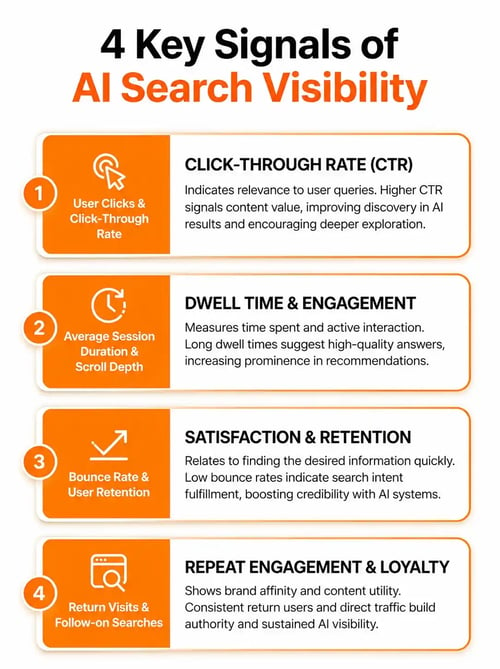
Discover the four essential signals that shape AI search visibility. Learn how user engagement and behavioral signals affect rankings and reach.
9 User Engagement & Behavioral Signals That Boost AI Search Visibility
These are the nine engagement signals we have identified as most influential in shaping how AI systems evaluate, trust, and cite content sources in 2026.
1. Content Consumption Depth
AI systems favor information sources that users actually consume rather than quickly abandon. Dwell-style engagement, interaction depth, and completion behavior all signal that a piece of content is genuinely useful.
Content types that perform well here include detailed walkthroughs, comparison frameworks, decision tables, and step-by-step guides. Thin definitions and shallow summaries carry far less weight in AI retrieval environments.
2. Query Satisfaction Signals
AI search is fundamentally optimized toward answering usefulness. When users find value in a particular content pattern and stop reformulating their questions, that satisfaction loop influences how AI systems weigh certain sources.
Strong contextual matching, reduced follow-up confusion, and successful prompt resolution all contribute to query satisfaction signals. Content designed with precise, direct answers to real questions earns this signal naturally.
3. Content Interaction Quality
Engagement goes far beyond passive reading. Saves, shares, bookmarks, community references, and repeat visitation all strengthen the authority of ecosystem around a piece of content.
These interaction signals indicate that content has utility beyond the first read, which is exactly the kind of durable value AI systems are increasingly designed to identify and reward.
4. Brand Mention & Conversation Frequency
AI systems learn from the conversations, discussions, and references happening across the web. Forums, communities, social discussions, expert references, and review platforms all contribute to the conversational prevalence of a brand.
The more consistently your brand appears in authentic, context-relevant discussions, the stronger its signal in AI retrieval models. This is one of the most genuinely AI-native engagement signals on this list.
Did You Know?
About 80% of search users rely on AI summaries at least 40% of the time on traditional search platforms, according to Bain & Company. Content that fails to satisfy AI summary standards is increasingly invisible to the majority of users.
5. Repeat Discovery Signals
Brands that surface repeatedly across prompts, communities, content ecosystems, and research workflows gain meaningfully stronger AI visibility probability over time.
A single viral article rarely builds lasting AI citation presence. Consistency across dozens of relevant touchpoints, accumulated over months, is what earns a brand a durable position in AI-generated answers.
6. Content Freshness Engagement
Updated content generates new references, ongoing interaction, and continued relevance reinforcement. In AI environments, freshness affects not just discoverability but citation confidence.
When a source is consistently maintained and updated, AI systems treat it with higher trust. Stale content, even if historically well-referenced, can lose ground to fresher, actively-engaged alternatives.
7. Authority-Driven Engagement
Not all engagement carries equal weight. AI systems appear to value expert engagement more heavily than generic interaction volume.
Industry citations, analyst references, trusted community discussions, and practitioner-level conversations send stronger authority signals than broad but shallow engagement. This ties directly into E-E-A-T frameworks and the trust architectures underpinning modern AI systems.
8. Multi-Channel Visibility Signals
AI visibility is not built from a single page or a single platform. Engagement occurring across blog content, podcasts, LinkedIn presence, webinars, communities, and research reports creates broader entity reinforcement.
Each channel adds another data point for AI systems to associate your brand with a specific topic area. The aggregate of those signals, not any single source, determines how confidently AI systems cite your brand as an authoritative answer.
9. Conversational Utility Signals
Content structured for direct answers, conversational clarity, prompt compatibility, and modular knowledge extraction performs measurably better in AI environments.
This is the most distinctly AI-native signal of the nine. Content designed to answer a single question clearly and completely, without unnecessary padding, matches how AI systems retrieve and present information to users. It is no longer just a writing preference. It is a visibility strategy.
Traditional Metrics vs. AI Engagement Signals That Drive AI Search Visibility
Understanding the translation between old signals and new ones is essential for teams adapting their content strategy to the AI-first landscape of 2026.
|
Traditional Metric |
AI-Era Equivalent |
|
Click-through rate (CTR) |
Answer usefulness and satisfaction signal |
|
Bounce rate |
Query completion and follow-up reduction |
|
Page authority score |
Citation presence and entity reinforcement |
|
Session duration |
Interaction confidence and content depth signals |
|
Keyword density |
Contextual matching and conversational relevance |
|
Backlink volume |
Authority-driven mentions across trusted communities |
Did You Know?
About 60% of searches now end without users progressing to any external destination, according to Bain & Company. In a zero-click world, AI citation presence is not a bonus — it is the primary visibility opportunity.
How Omnibound Helps Teams Understand AI Visibility & Behavioral Signals
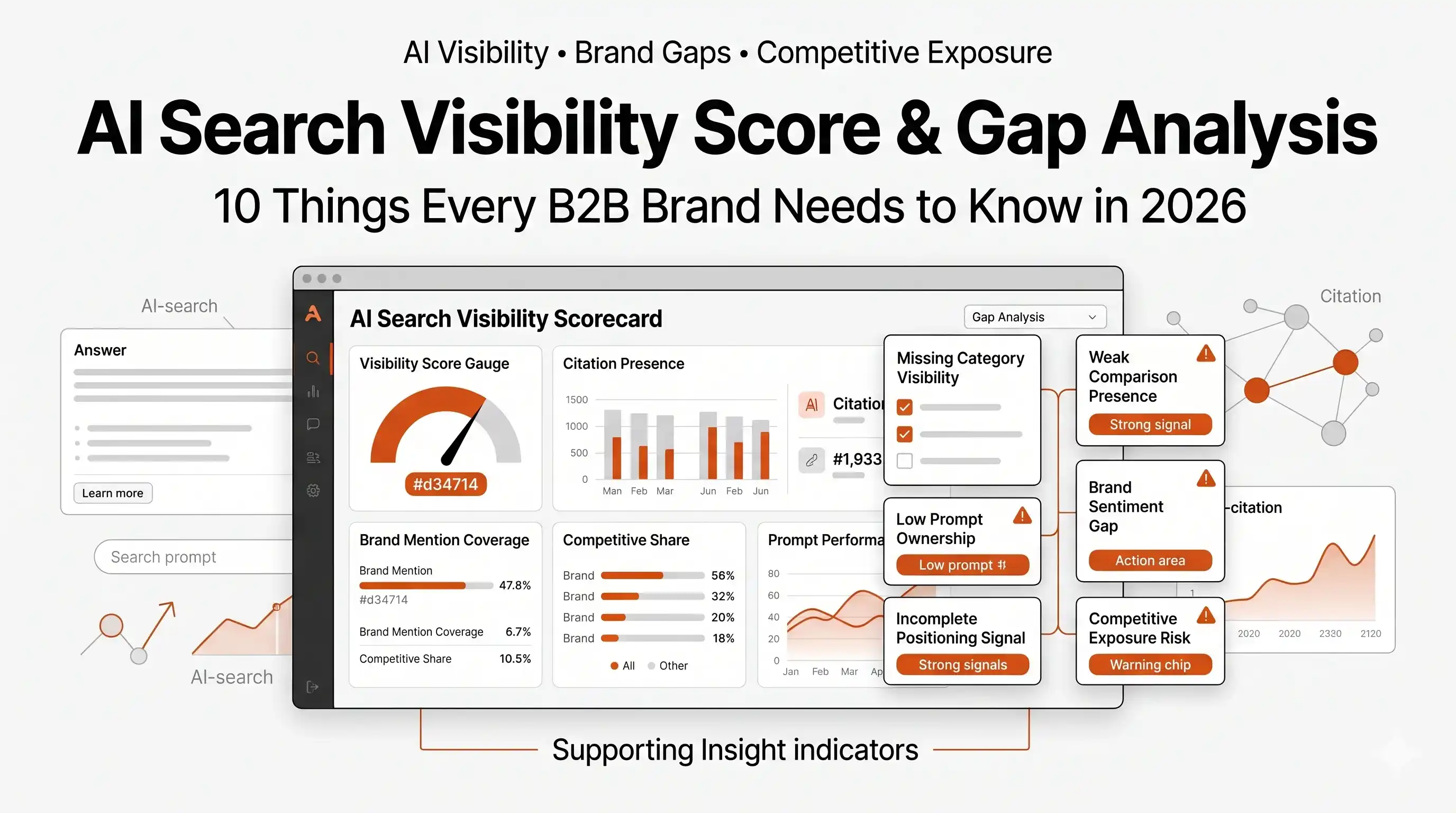
Our AI Search Intelligence tools track where your brand wins and loses in AI-generated answers. We surface citation gaps, identify which competitor content patterns are gaining traction, and help teams act on those insights with purpose.
The Marketing Context Engine centralizes behavioral context, buyer signals, and market intelligence so every content decision is grounded in the signals that actually drive AI visibility outcomes.
We also offer a dedicated citation-worthy content creation workflow that aligns every piece of content with the behavioral signals that matter most for AI visibility. From content structure to conversational utility, every output is designed to earn citations, not just traffic.
We built Omnibound to help teams build exactly that kind of presence. Start with a free AI search visibility diagnostic to see where your brand stands today, and what behavioral signals you need to strengthen to compete for AI citations tomorrow.
Frequently Asked Questions
- Do user engagement signals affect AI search visibility in 2026?
Yes - behavioral trust signals like citation reinforcement, repeat discovery, and conversational success increasingly influence AI visibility.
- What behavioral signals matter most for AI citations?
Content depth, query satisfaction, authority engagement, multi-channel visibility, and conversational utility drive stronger AI citations.
- Is AI search visibility the same as traditional search visibility?
No - AI visibility prioritizes usefulness, entities, contextual relevance, and trust signals over rankings and keywords.
- Does dwell time still matter for AI visibility in 2026?
Not directly, but deep content engagement remains a strong proxy for AI trust and citation value.
- How can brands improve behavioral signals for AI visibility?
Start by auditing AI presence, then strengthen conversational content, multi-channel reach, and expert mentions.
- Why do some brands appear in AI answers but not top search results?
AI systems reward contextual authority and conversational utility, not just traditional ranking signals.
- Is Omnibound worth using for AI search visibility in 2026?
Yes - Omnibound helps teams track AI citations, identify visibility gaps, and optimize for AI-first discovery.