Get Your Brand Cited into the Sources AI Search Engines Already Trust
Optimizing your own content is only half the battle. Omnibound identifies the external sources AI search engines cite in your category, helps you get your brand included, and measures whether that placement changes how AI recommends you.
The problem
Optimizing your own site is not enough anymore
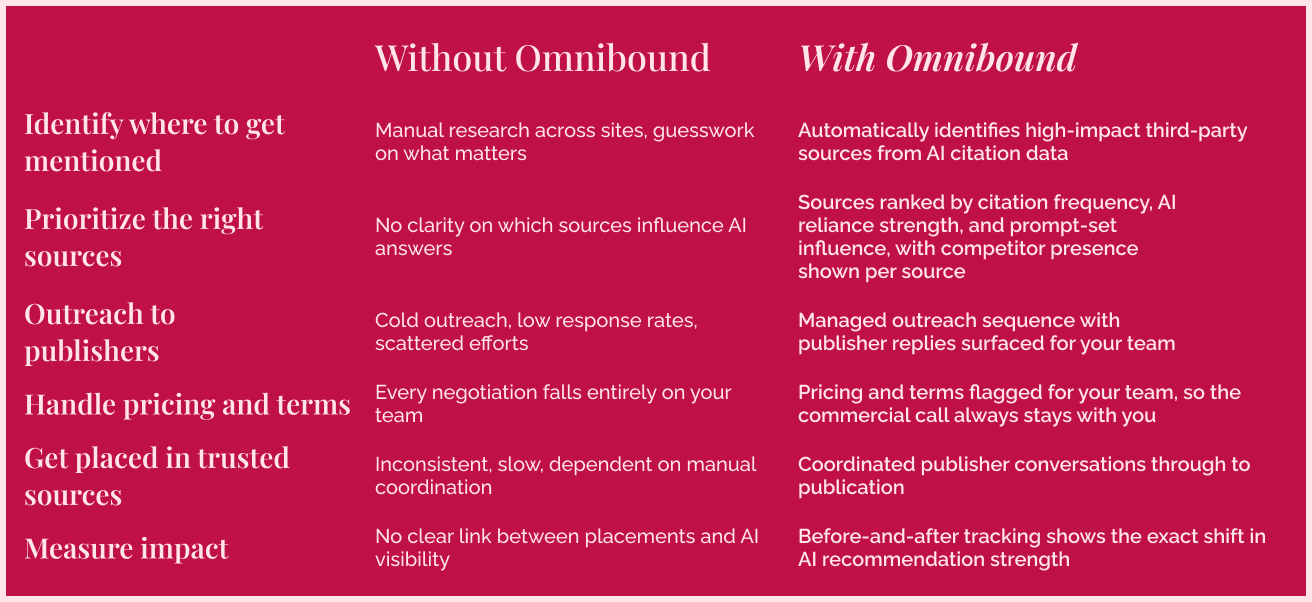
AI search engines do not just pull from your website. They synthesize answers from the sources they trust most, and most of those sources are not yours.

Your content stops at your website
You optimize what you publish, but AI engines build answers from sources beyond your control. Your presence ends where your domain ends.

Competitors are winning in places you don’t track
Your competitors are being cited across third-party sources that influence AI answers. Without visibility there, you don’t see where you’re losing.

Visibility without placement doesn't move the needle
Knowing where you're missing is not enough. If your brand isn't present in trusted sources, those gaps stay gaps.
How it works
Build presence across third-party sources that influence buyers
Step 1: Identify your citation gaps
Omnibound tracks your highest-intent buyer prompts across ChatGPT, Perplexity, Gemini, and Claude, and show you which third-party sources are being cited for those prompts. You see exactly where competitors are mentioned, and your brand is not.
→ You know which sources carry citation authority in your category before outreach begins.
Step 2: Target the right sources
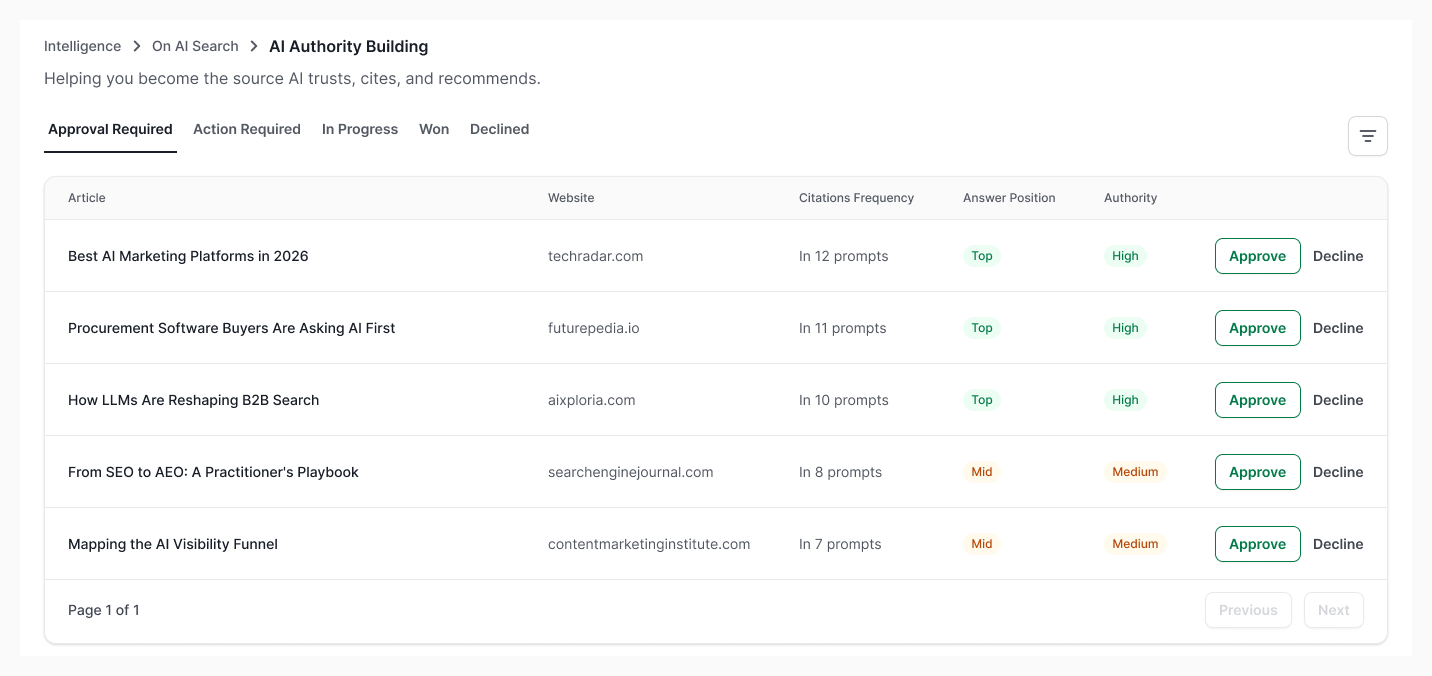
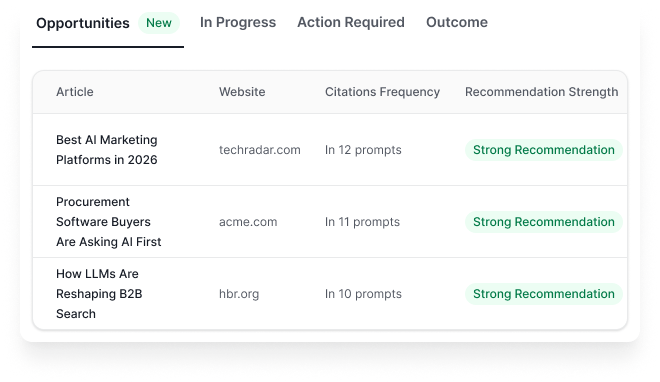
From the citation data, Omnibound identifies the specific publications, platforms, and sites where a brand mention would carry the most weight, prioritized by how often AI cites each source, how strongly AI relies on it when forming an answer, and how much of your prompt set it influences. Competitor's presence is shown alongside each source, so you can filter to target one competitor or a set of them directly.
→ Every outreach effort is focused on the sources that will move your share of voice.
Step 3: Automate outreach, keep humans on the terms
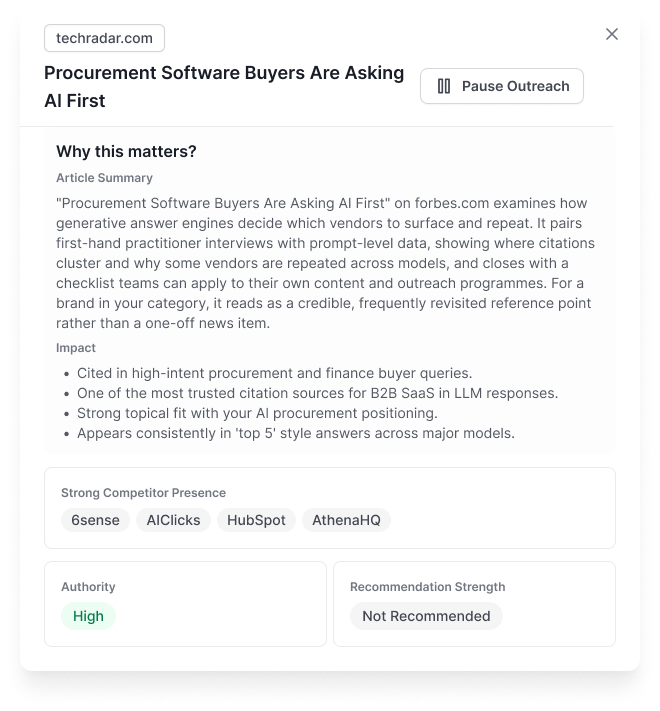
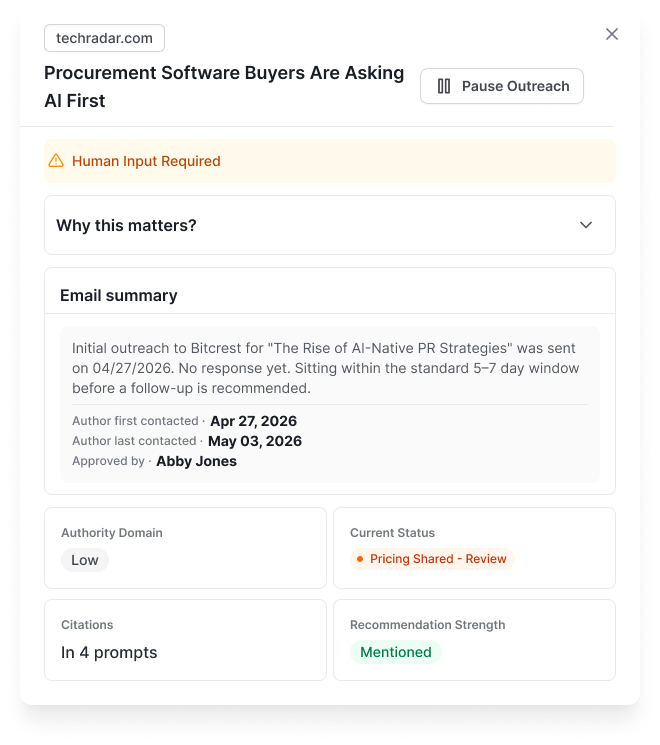
Omnibound manages the full outreach sequence to authors and publishers and surfaces every reply for your team. It flags anything involving pricing or terms, so your team always makes the call on what gets agreed to.
→ Your team approves. Omnibound handles the rest.
Step 4: Coordinate the placement and go live
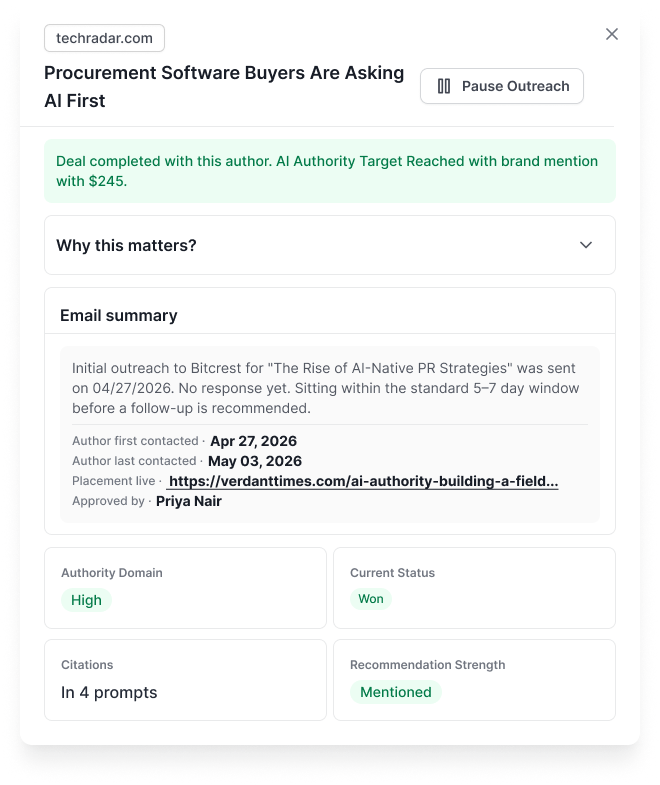
You provide the content or brief. Omnibound coordinates with the publisher, manages the conversation through to publication, and keeps your team updated, so the mention goes live without you chasing every step.
→ Your brand appears in the sources AI engines already cite in your category.
Step 5: See the actual before-and-after
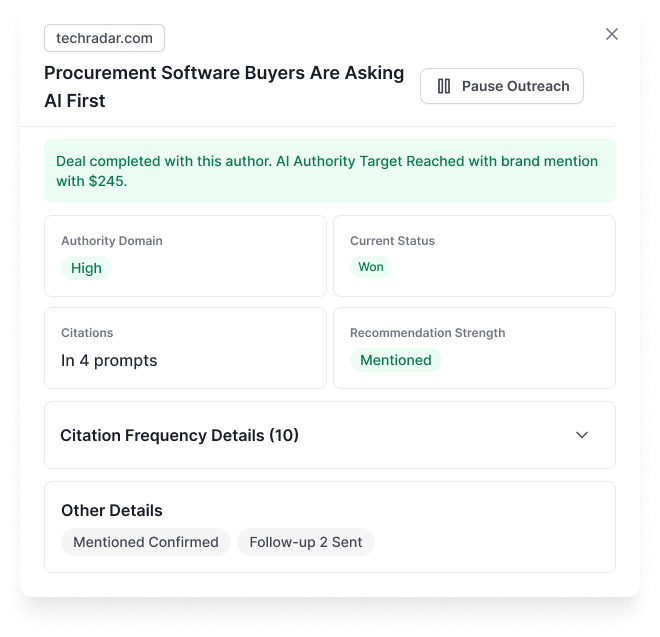
Two to four weeks after a placement goes live, Omnibound re-checks the same prompts and shows you exactly what changed: not recommended, to mentioned, to strongly recommended. A direct, provable shift in how AI talks about your brand on the prompts that matter.
→ You know exactly whether the placement worked, with the evidence to prove it.
From no presence to trusted visibility